
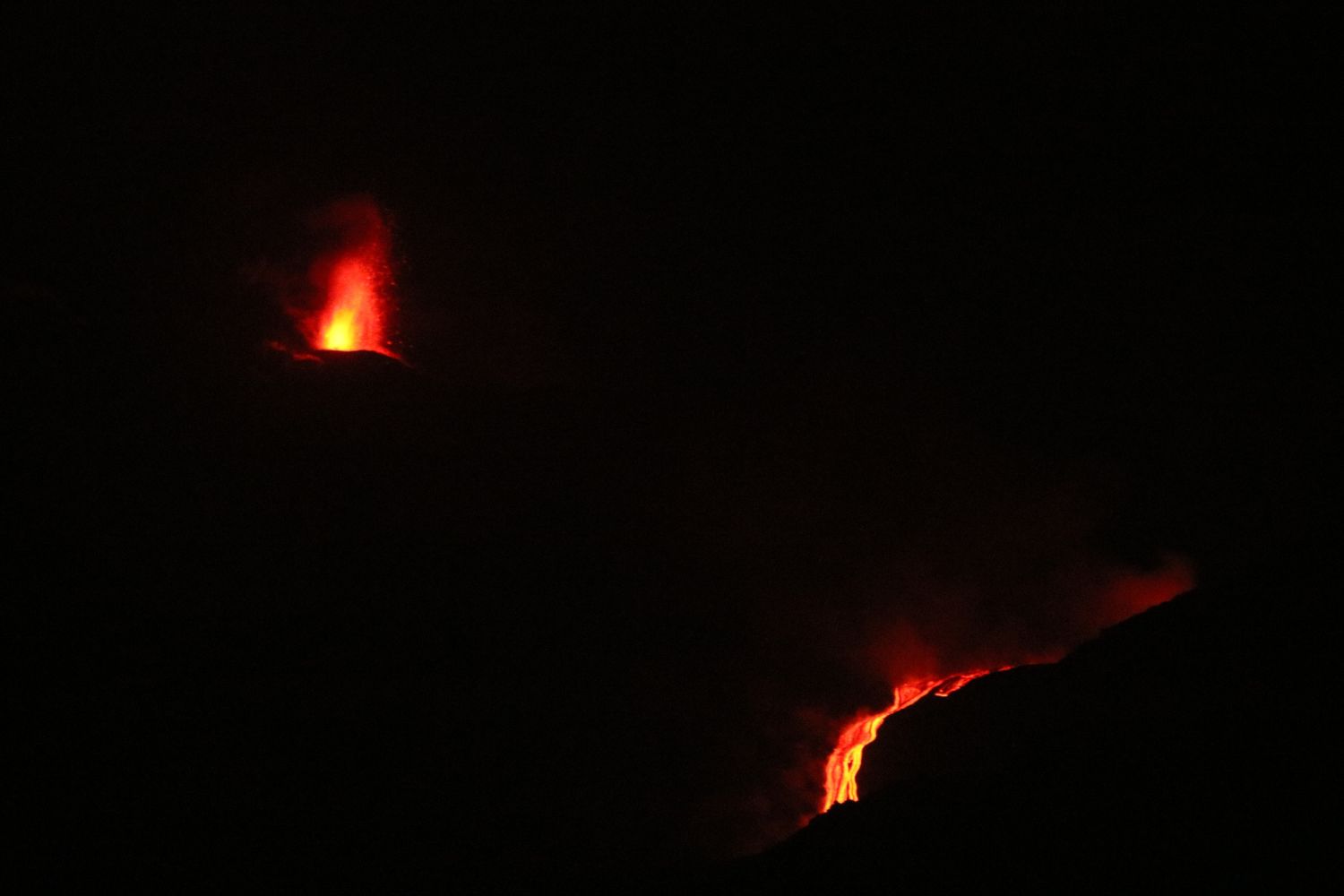
These are days of chaos and inconvenience for tourists and foreigners returning to Sicily. Due to the intense eruptive activity of Etna, Catania airport has suspended arrivals for today too, at least until 5pm.
This was communicated by Sac, the company that manages the Vincenzo Bellini international airport. The decision was taken following the closure of the air spaces affected by the cloud full of volcanic sand. The airport confirms on its website that arrivals will remain suspended until 5pm, unless further updates are linked to the evolution of the eruption.
For those who have to leave or arrive in Catania, the day promises to be particularly complicated. The suspension of arrivals can in fact also have knock-on effects on departures: a plane that fails to land in Catania cannot subsequently depart from the airport, with the risk of delays, cancellations and changes during the day.
SAC speaks of a “strong operational impact” and invites passengers not to reach the airport before checking the status of their flight directly with the airline. In the meantime, confusion and despondency reigns among those who have to leave and those who have managed to reach Sicily (with flights diverted to Palermo and Trapani). In fact, arriving in Catania becomes a real odyssey and if you want to opt for a private transfer the costs are staggering.
Explosive activity still intense
At the root of the inconveniences is an eruptive phase which remains particularly lively in the last few hours. In the update released on the morning of August 10, the National Institute of Geophysics and Volcanology – Etna Observatory reports the continuation of intense and continuous explosive activity at the Voragine crater. Fallouts of volcanic material are observed in the summit area and an abundant emission of ash, currently dispersed towards the south-southwest. Furthermore, the eruptive vents located at approximately 2,750 and 2,360 meters above sea level, which feed various lava flows, remain active. According to the latest INGV update, the most advanced fronts have reached approximately 1,500 meters of altitude, at the base of the northern wall of the Valle del Bove, in the Monte Rinatu area. The volcanic tremor also continues to remain at high values.
Already on Sunday 9 August the activity had shown very intense phases. INGV had reported strong explosions at the Voragine crater, with fallout of volcanic “bombs” in the summit area and abundant emissions of ash.
Because the ash from Etna creates problems for air transport
The main problem for aviation is represented by volcanic ash carried by the winds. Particles can reach the routes used by aircraft and make it necessary to temporarily limit or close some portions of airspace.
It is precisely the direction taken by the ash cloud, together with its quantity and wind conditions, that determines how much the eruption can affect traffic at Catania airport. This is why limitations can change even within a few hours.
