
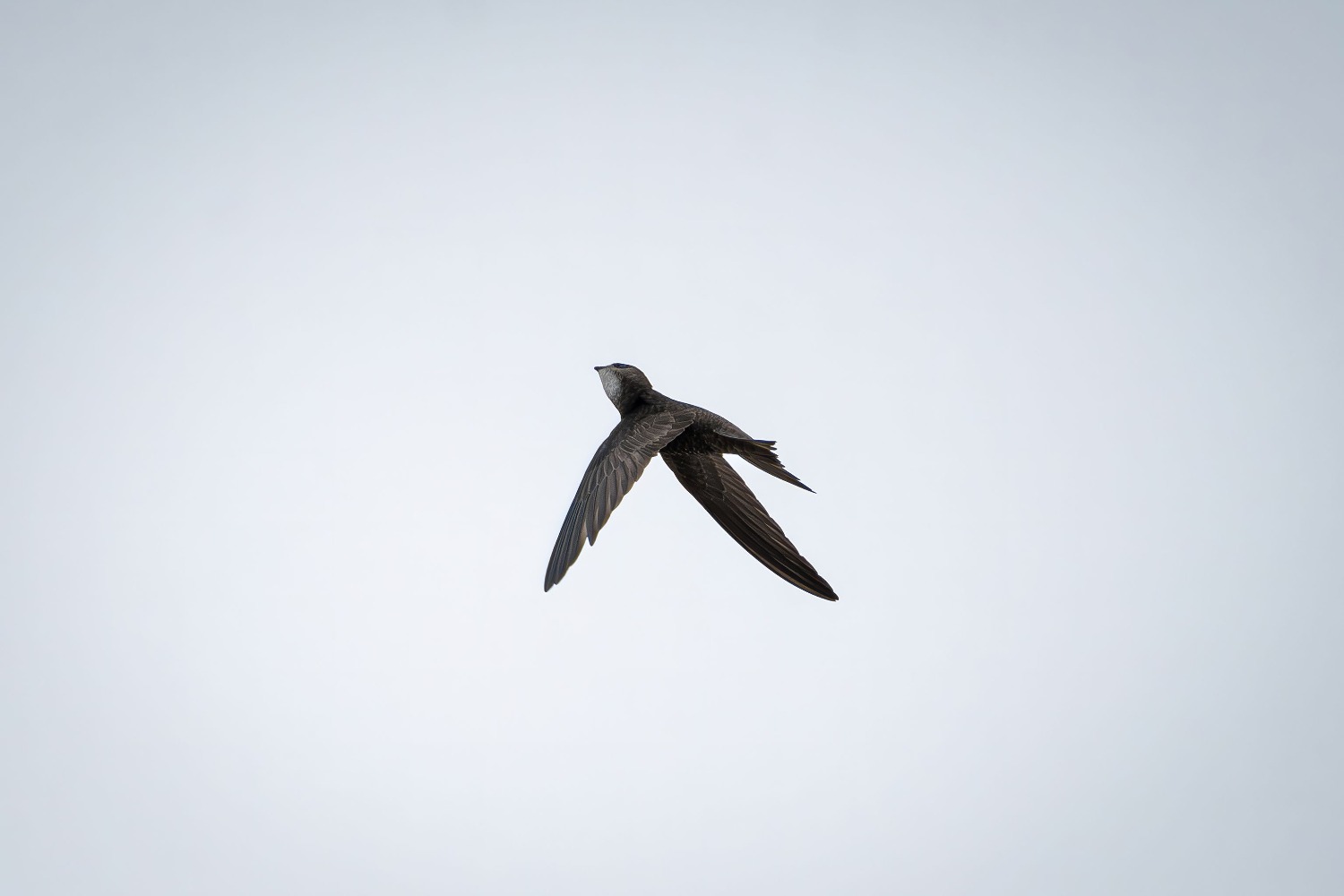
A small migratory bird weighing less than 50 grams has redefined the boundaries of animal resistance, accomplishing an aerial feat previously thought to be science fiction. A team of ornithologists from BlueGreen Labs and the Swiss Ornithological Institute documented the uninterrupted journey of a common swift (Apus apus) that remained in flight for 19 consecutive months.
The study, published in the prestigious specialist journal Ringing & Migrationdemonstrated how this tireless flyer remained suspended in the celestial vault for an entire year and seven months, completing the transcontinental migratory route between Europe and Africa twice without his paws ever touching the ground, a branch or any vertical surface.
The technology that traced the feat of CC894
Real-time monitoring was possible thanks to the capture, which took place in July 2021 in the city of Ghent, Belgium, of a subadult individual identified with the scientific acronym CC894. The researchers managed to intercept the animal during the so-called banginga typical behavior of young swifts who inspect the cavities of potential nests by gently banging against the entrance for practice.
A multisensor micro-recorder weighing just half a gram was installed on the back of the specimen, attached via a soft harness. This tiny data logger scanned environmental and biological parameters such as temperature, light intensity, atmospheric pressure and motor activity every thirty minutes, allowing the exact altitude and geographical position to be calculated. The device was removed in June 2023, when the subject returned to the same Belgian colony to mate, revealing herself to be a female at the time of egg-laying.
Transcontinental routes and the secret of gliding sleep at altitude
Analysis of the data revealed that the tenacious flyer followed the species’ traditional route: leaving Belgium in August, transiting over West Africa, passing the Congo basin and wintering between the coasts of Malawi and eastern Mozambique, before reversing course in the spring.
Swifts belong to the order Apodiformes, a Greek term meaning footless, due to lower limbs so small as to make autonomous take-off from the ground almost impossible. Evolution has compensated for this structural limit by transforming them into perfect aerodynamic machines with sickle-shaped wings: swifts mate, drink by skimming the water and hunt insects in flight.
Even rest takes place at altitude through sleep soaring, a gliding sleep in a state of half-asleep taking advantage of the nocturnal ascending currents at hundreds of meters above sea level. Although past records for adult individuals stopped at the 10 months documented in 2016 on Current Biologyexperts hypothesize that CC894’s actual flight may have lasted a total of 29 months, considering the time that elapsed from the moment it left its native nest.
You might also be interested in:
