
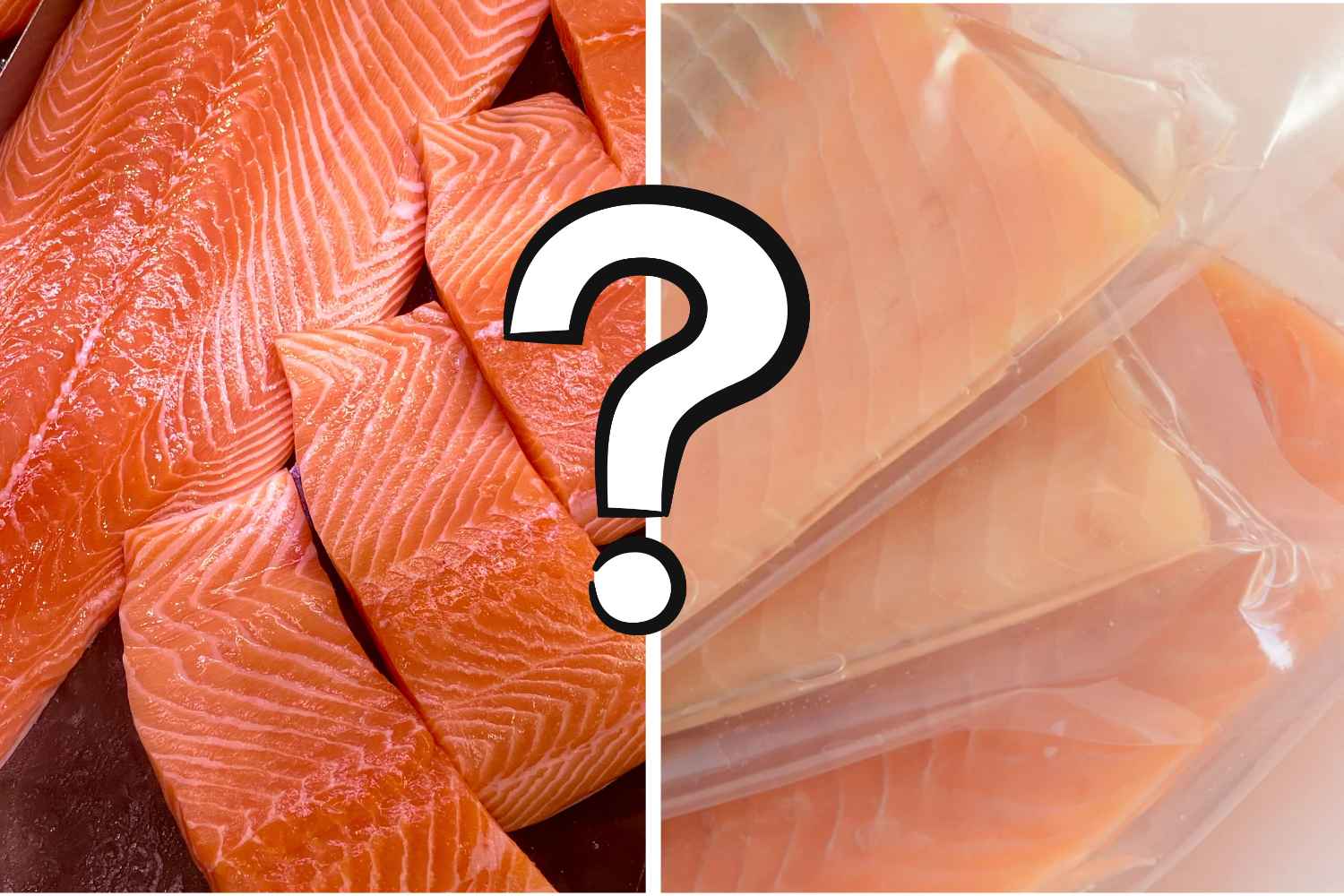
Salmon is one of the most appreciated and consumed fish, also due to its protein and omega-3 fatty acid content. We buy it fresh or frozen, often thinking that it is a particularly healthy food and, when we choose an organic product, even more attentive to the environment and quality. But what do the fillets we find at the supermarket really contain?
A new test checks for the presence of unwanted substances which subjected 15 fresh and frozen salmon fillets from Northern Europe to analysis. Conventional products and four organic references were present in the sample.
The results are interesting because if on the one hand no pesticide residues above the limits of quantification were detected, on the other hand almost all the salmon contained mercury and inorganic arsenic. PCBs and dioxins were also found to be widely distributed, with concentrations generally higher in organic products.
A picture that recalls that which emerged from another recent French survey, conducted by Que Choisir on 22 smoked salmon and trout, in which contaminants were found in all samples, with particularly critical results for some biological references.
Let’s start with the good news: in the analyzes of the 15 products, no pesticide residues above the limits of quantification were detected, regardless of whether they were conventional or organic. A better result than that of a previous test by the same magazine, dating back to December 2016, which had also identified pesticides in several organic salmon.
The situation changes when heavy metals are taken into consideration. Inorganic arsenic was detected in almost all products, with two exceptions: Findus salmon and Pêche Océan salmon, under the Repère brand by E.Leclerc. However, the concentrations remained below the legal limit of 0.1 mg/kg of fresh fish. The highest value was measured in Intermarché salmon, with 0.023 mg/kg: approximately a quarter of the maximum allowed limit.
Arsenic deserves special attention because its inorganic form is classified as a human carcinogen.
Mercury was also detected in almost all salmon, with important differences between samples. The least contaminated product is Carrefour Filière Qualité, while the one with the highest value is Monoprix Gourmet: 0.043 mg/kg, a concentration 8.5 times higher than that of the Carrefour product. Even in this case, however, all values remain below the regulatory limit of 0.3 mg/kg.
Mercury and arsenic can be naturally present in aquatic environments, but can also arise from human activities such as industry, mining and agriculture. According to the experts cited by the magazine, one of the main routes of entry of these contaminants into farmed salmon is represented by the marine raw materials used to produce the feed: fish which, in turn, may have accumulated these substances.
PCBs and dioxins: organic salmon are the most contaminated
The picture becomes particularly interesting when we turn to PCBs and dioxins, two categories of persistent organic pollutants that can accumulate in the fatty tissues of living organisms and along the food chain. Both are classified as human carcinogens and may have effects on the endocrine system. These are substances which, despite having been banned for some time, continue to persist in the environment, also due to their difficult degradation.
The analyses they identified these substances in the salmon examined, but with very different concentrations. Even in this case, however, all the samples were found to be below the limits set by the legislation.
What is especially striking is the comparison between conventional and organic products. In fact, the latter appear to have higher levels of contamination. In particular, Intermarché organic salmon contains a quantity of PCBs 5.5 times higher than the less contaminated farmed salmon purchased at fishmongers.
At the other extreme stands the wild Findus salmon, which according to the magazine is little contaminated by these pollutants, probably also because it does not come from a farm.
But how can we explain the greater presence of PCBs and dioxins in some organic products? The magazine puts forward a hypothesis regarding the feeding of fish. In feed intended for organic salmon, the share of ingredients of animal origin would be higher than that of conventional feed, reaching approximately 40%. Fish flours and oils may in fact contain contaminants accumulated by wild fish used as raw material.
Another element to consider is the origin of these ingredients: not all fishing areas are equally exposed to pollution and this can affect the quality of the raw materials used in feed.
Interestingly, similar results also emerged in Que Choisir’s recent test on 22 smoked salmon and trout. In that investigation, PCBs and dioxins were detected in all samples and some of the organic products, including U Bio trout and organic Mowi salmon, were among those with the highest levels of contaminants. Also in that case a possible explanation was put forward linked to the greater presence of fish meal in organic feed.
Two different investigations, therefore, which bring to light an interesting question: organic certification does not necessarily guarantee a lower presence of environmental contaminants in fish products.
Omega-3
The test not only focused on contaminants, but also evaluated the nutritional quality of the fillets, analyzing different types of fatty acids: omega-3, omega-6, saturated fats and trans fats. Even on this front the results are quite variable. None of the 15 products received a “very good” rating for their fatty acid profile.
Wild Findus salmon, for example, has a good omega-3/omega-6 ratio, but also a high percentage of saturated fat, equal to 32.86%. For comparison, the Odyssée reference product, the one with the lowest value according to this criterion, stops at 13.14%.
A critical issue also concerns Lidl salmon, in which a trans fat content significantly higher than that of several other products was found. Six fillets, however, had no traces of these fats.
As regards the omega-3/omega-6 ratio, Intermarché salmon, last in the overall ranking, records a value of 2.75. The magazine compares it with the value of 4 indicated by the French recommendations.
Overall, the scores obtained by the products range from 17.8 to 12.6 out of 20. The nutritional evaluation is generally acceptable, but no fillet stands out with a particularly positive fatty acid profile.
which includes 15 fresh and frozen products, the highest score was obtained by Pêche Océan (Repère, E.Leclerc), with 17.8/20. Subito dopo troviamo Findus, con 17,7/20. Among the most well-known brands in Italy too we find Lidl, with 14.7/20, while at the bottom of the ranking are Monoprix Gourmet and Intermarché organic salmon, both with 12.6/20.
It is especially striking that three of the four organic products analyzed are found in the lower part of the ranking. However, we will not focus on individual brands, because these are largely references marketed in France and it is not certain that the products with the same brand sold in Italy are identical in terms of origin, supply chain and characteristics. The ranking should therefore be read above all as an indication of the differences that emerged between the samples examined, not as a guide for choosing salmon in our supermarkets.
analyzed 15 fresh and frozen salmon fillets from Northern Europe, four of which were organic.
The laboratories looked for heavy metals (mercury, lead, arsenic and cadmium), dioxins, PCBs and pesticide residues, using mass spectrometry and chromatography techniques.
The fatty acid profile was also examined to evaluate the nutritional quality of the products, with particular attention to omega-3, omega-6, saturated fats and trans fats.
