
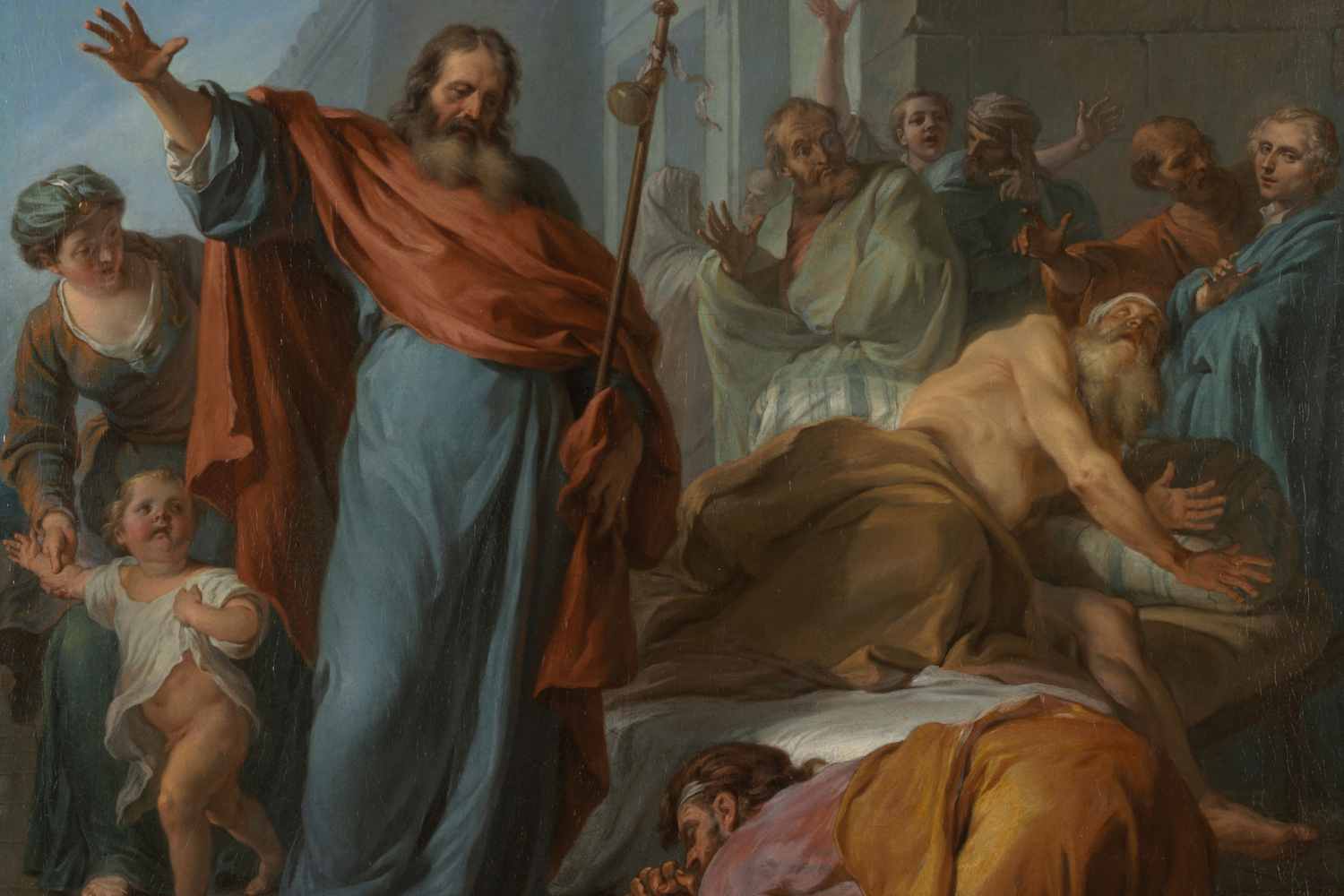
It is not just one of the many names of the Christian tradition. San Giacomo the eldest is a figure who, for two thousand years, continues to mark the history of faith, To move the feet of the pilgrims and to make space in the collective memory of different peoples. He was one of the disciples closest to Jesus, one of those present in the decisive moments, and also the first of the twelve apostles to die martyr, so as not to deny the word he had welcomed and announced strongly.
The origins of San Giacomo
Born in Betsaida, in Galilee, to a family of fishermen, Giacomo was the son of Zebedeo and Salome and the older brother of John, also the apostle. Before following Jesus, the two brothers had already had a strong spiritual experience: the disciples of Giovanni Battista, the prophet of the desert had been disciples. It was the Baptist, with that decisive gesture, to indicate the Messiah in Jesus, and everything started from there. Giacomo and Giovanni immediately left his father’s goals and boat to follow the rabba of Nazareth. They were the first, even before Pietro and Andrea.
Jesus nicknamed them “Boanerghes”, that is “children of thunder”, and it was not just a joke: they had an impetuous, fiery character, sometimes even too direct.
Giacomo was a direct witness of some of the most intense moments of the earthly journey of Jesus: he was with him on the mountain of the transfiguration, he was present when the teacher brought the daughter of Giairo back to life, and also accompanied him to the garden of olive trees, the night before the crucifixion. It was not any apostle, but one of those who Jesus brought with him when the stakes made himself high, perhaps precisely because of that inner fire that made him capable of managing pain and disbelief.
The martyrdom and the legend of the journey to the West
After the resurrection of Christ, Giacomo continued the path of announcement of the Gospel. The oldest tradition tells that he pushed to the western end of the Roman Empire, reaching the Iberian peninsula, where he began his work of evangelization in the midst of enormous difficulties and to reception that is anything but warm. His mission did not last much: returned to Jerusalem, he was arrested and then sentenced to death by Herod Agrippa I, the same who was looking for the favor of the Jewish religious leaders.
So it was that Giacomo became the first apostle to suffer martyrdomaccording to what was told in the Acts of the Apostles. But it is in the popular story that its story becomes epic: it is said that After the beheading, His body was entrusted to a small boat which, led by an angel or by a divine force, crossed the Mediterranean until reach the coast of Galiciain the north-west of Spain. There, in an unknown place, he would have been buried in secret by his disciples, waiting for the world to discover that sepulcher.
From the tomb hidden to miraculous discovery
Centuries passed, and that sepulcher was hidden. Until, in the eighth century, a hermit named Pelagio saw mysterious lights shine in heaven, over a hill. He called them “Fallen stars”, and he was convinced that they indicated something important. Digging at the exact point, a necropolis and a tomb that brought a clear inscription came to light:
“Here lies Jacobus, son of Zebedeo and Salome”.
It was the confirmation that the faithful awaited. That place, later, was called Campus Stellaefrom which “composse it”.
It was the beginning of one of the most famous pilgrimages in history.
The origins of the path of Santiago
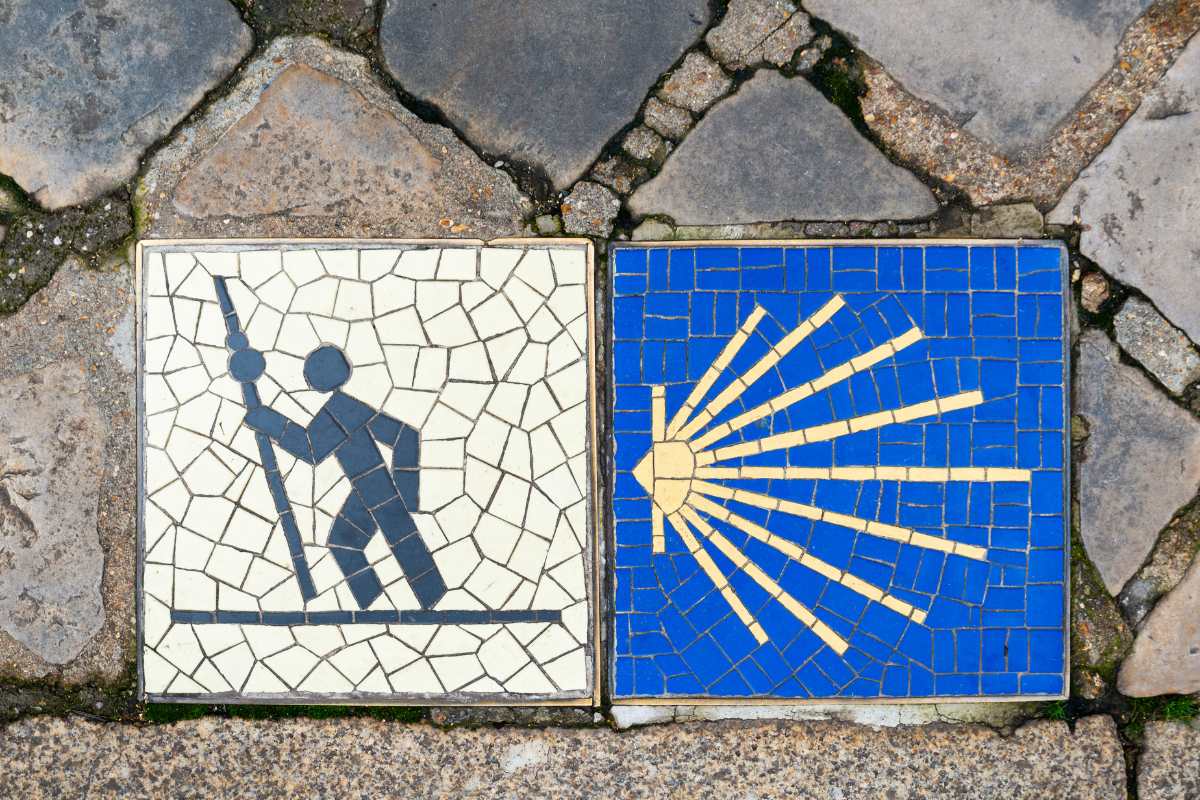
From that moment, the Way of Santiago di Compostela It became a spiritual itinerary of immense scope. Already in the ninth century, King Alfonso II of the Asturies began to march towards the Tomb of the Apostle, and soon millions of pilgrims would follow him. On foot, on horseback, often barefoot, they crossed entire regions to get to kneel in front of that grave. For some it was a vote, for others an atonement, for others still only the need to find something – or someone.
In the Middle Ages, the Conchiglia of San Giacomosymbol of the pilgrim, was collected on the beaches of Finisterre, the end of western Europe, so called by the Romans: Finis Terrae. And those who brought her around her neck could show that she had really taken the entire path.
But the path is not just memory. It is still alive today. People from all over the world leaves every year to travel it: who by faith, some for a pain to leave behind, who to find themselves, who to breathe something different from daily chaos. Each step is a small act of trust, every kilometer a meeting – with others, with oneself, with God, perhaps.
The path of San Giacomo in Sicily
And also in Sicily, far from Santiago but not from the heart of this cult, there is a Way of San Giacomo. Few know him, yet he is an itinerary full of history, faith and suggestion, which develops between Caltagirone and Capizzitwo locations that for centuries have kept a profound devotion to the saint.
In 1090, after freeing Caltagirone from the Saracens, the great count Ruggero said he had had a vision in a dream: San Giacomo in arms, who helped him fight. From there the church dedicated to the saint was born, and from there, centuries later, a path has been traced about 130 kilometerswhich crosses the Sicilian hinterland, with its landscapes that seem silent but tell a lot.
Ancient churches, relics, Hospitalia Medieval – shelters for pilgrims – mark the stages of the route. Along the way you lose between forgotten villages, perfumes of bread, intense silences and nature that changes face to every season. The Sicilian journey is not a copy, it is not religious tourism from the catalog: it is an authentic, strong experience that brings the walker back to the center of something essential.
A saint who continues to walk with us
San Giacomo is not just a catechism book name. He is a man who walked with Jesus, he shouted, made a mistake, he believed. He died for the one in which he believed, and he started another type of journey as dead, which still continues on the legs and hearts of those looking for. In the paths of Spain, between Compostela and Finisterre, or along the dirt roads of Sicily, between Caltagirone and Capizzi, there is always someone who brings with him that shell, like a sign. Of faith, resistance, research.
And even if you don’t know where you started from, nor exactly where you are going, if you listen to your steps well, at some point you understand that you have never really been alone.
