
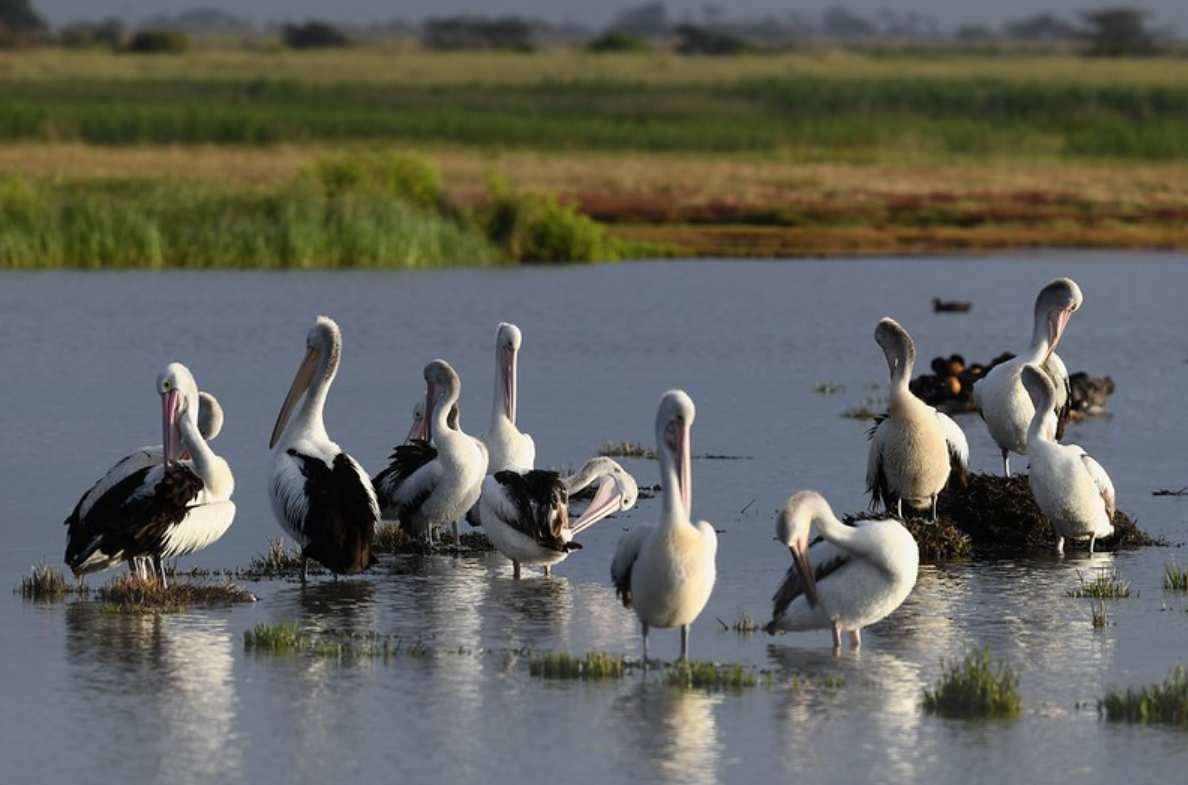
Every time you pull the jacking to Melbourne, the water embarks on a journey to the western Treatment Plant, one of the largest treatment plants of the wastewater of Australia. At first glance an industrial place has actually become one of the most popular destinations for the Birdwatcher.
Thanks to a particular management system, in fact, the system retains sufficient nutrients to encourage the growth of insects and microorganisms, thus creating a perfect food chain for hundreds of bird species.
View this post on Instagram
A refuge for over 300 species
In the land surrounding the purifier lagoons, more than 300 species of birds were recorded, including the panciarancio parrot, in serious danger of extinction. Here you can also observe the brolga, common cranes in Queensland but rare in the state of Victoria.
The flocks of marine birds and birds of prey arrive from the banks, while on artificial arguments the waders sift the mud full of insects and small crustaceans. It is a surprising biodiversity, which has transformed a technical structure into a true natural ecosystem.
View this post on Instagram
The lagoons and their balance
The Western Treatment Plant manages about 50 billion gallons of waste water through 32 lagoons. Some are anaerobic, that is, oxygen -free, where bacteria decompose organic matter. Others are aerobic, rich in oxygen, which reduce the excess of nitrogen present in the waste.
This process prevented that in Port Phillip Bay, where purified water flows, harmful algal blooms develop. At the same time, part of the nutrients remains in the area to support animal and vegetable life.
View this post on Instagram
A paradise for the birdwatcher
Access to the area is regulated, but some Melbourne Birdwatcher may require a key to observing this spectacular habitat up close. On platforms such as Flickr the photos taken on site show the wealth and variety of species that populate the lagoons. What was once seen only as a sewage system is today an example of how careful management of the environment can create oases of biodiversity perfect for nature and for those who observe it.
View this post on Instagram
 (@Julesv8s)
You may also be interested in:
