
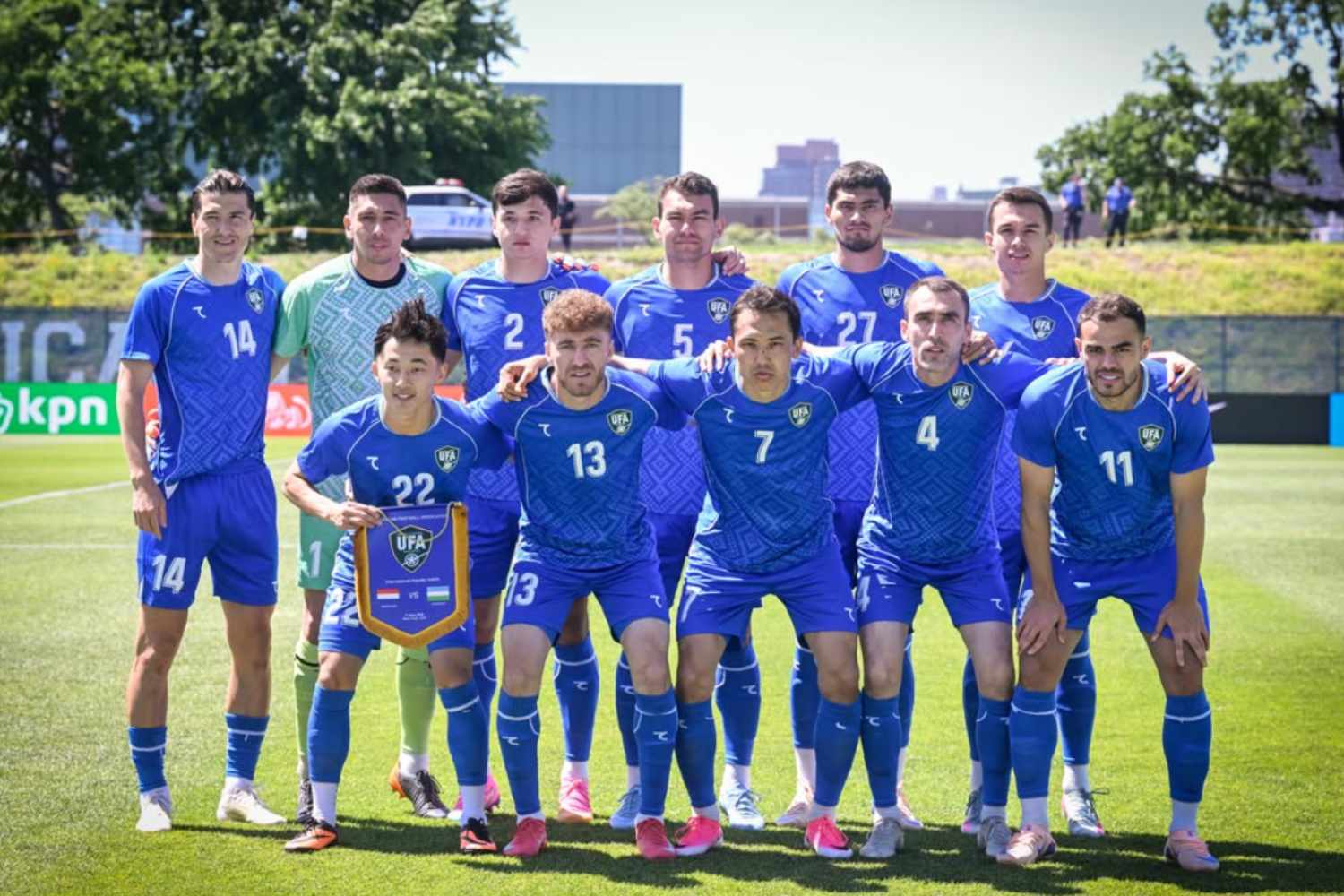
There is an invisible thread that unites the dead silence of a Ukrainian sky torn apart at an altitude of 8,400 meters to the explosion of joy that will envelop an entire country this evening. For Uzbekistan, the absolute debut at the final phase of the 2026 World Cup at 4 am tomorrow, Thursday 18 June, represents not only an unprecedented sporting achievement, but a profound and necessary collective catharsis.
In front of the giant screens set up in 208 schools, in the squares of the twelve districts of Tashkent and inside the Bunyodkor stadium, millions of fans will hold their breath. The emotional boost that will accompany the eleven white lions on the pitch has its roots in a wound opened 47 years ago, when fate decided to eliminate the brightest generation of Uzbek football.
View this post on Instagram
The air tragedy that broke Pakhtakor’s dream
On 11 August 1979, Aeroflot flight CCCP-65735, a Tupolev 134AK which took off from Tashkent and headed for Minsk, entered a collision course with another sister aircraft in the skies of Dneprodzerzhins’k due to a fatal error by the flight controllers. In the impact at 700 kilometers per hour, 178 people lost their lives, including 14 players and 3 staff members of Pakhtakor Tashkent, the only club from the Uzbek republic to play in the Soviet top flight.
The team, which in the sixties and seventies had distinguished itself as a formidable tactical laboratory based on offensive play and spectacular Passovočkawas entirely cancelled. Among the victims were top stars such as the talented koryo-saram midfielder Michail An, the striker Vladimir Fëdorov and the very young Sirodžiddin Bazarov, only eighteen years old.
Omens and miraculous twists of fate
The Pakhtakor disaster was accompanied by chilling premonitions. A few days before the crash, striker Vladimir Makarov had dreamed of losing all his hair in front of a mirror, while manager Mansur Talibdžanov had been struck by a sudden anxiety that pushed him to tell his wife his whole life the night before takeoff.
On the other hand, pure chance saved a very few lucky people. The Ukrainian coach Oleg Bazilevič obtained special permission to join his family in Sochi, while the national hero Tusjagan Isakov and the goalkeeper Alexander Janovsky escaped death only because they were prevented by serious injuries. Also miraculously saved were the masseur Anatoly Dvornikov and the journalist Oleg Jakubov, who missed their plane after waking up late after a party.
The Central Asian Tactical Laboratory and Rebirth
Pakhtakor was not just any team; it was a football avant-garde shaped by legendary coaches such as Aleksandr Keller, Boris Arkad’ev and Mikhail Yakušin, pioneers capable of introducing the Brazilian 4-2-4 system and the so-called organized chaos on the pitch, anticipating the key concepts of total football.
After the disaster, the Soviet authorities tried to silence the incident, but the solidarity of the other clubs allowed the immediate reconstruction of the squad through the loan of eleven athletes. That tradition of resilience, already demonstrated when the city overcame a devastating earthquake in 1966 by playing on the same day in front of 50 thousand spectators, has survived in the DNA of Uzbek football until becoming today’s historic qualification.
The first world night under the guidance of Cannavaro
This evening the wait is finally over and the country is ready to challenge Colombia in the opening match of Group K, a tough grouping that also includes the fearsome selections of Portugal and the Democratic Republic of Congo. The technical creator of this sporting miracle has been sitting on the Uzbek bench since October 2025 and is an old (and much loved) acquaintance of ours: the former Italian captain and Ballon d’Or winner Fabio Cannavaro.
Under the guidance of the 2006 world champion, the Central Asian national team found an extraordinary defensive balance and competitive audacity that united the entire region. The official mascot, the white wolf Bek, now stands out on the shirts of thousands of fans ready to support the team in an event broadcast even within companies before working hours. Getting past the group stage would be a legendary feat, but for the Uzbek people the honor of seeing their flag wave on the most important planetary stage already represents the definitive redemption with history.
You might also be interested in:
