
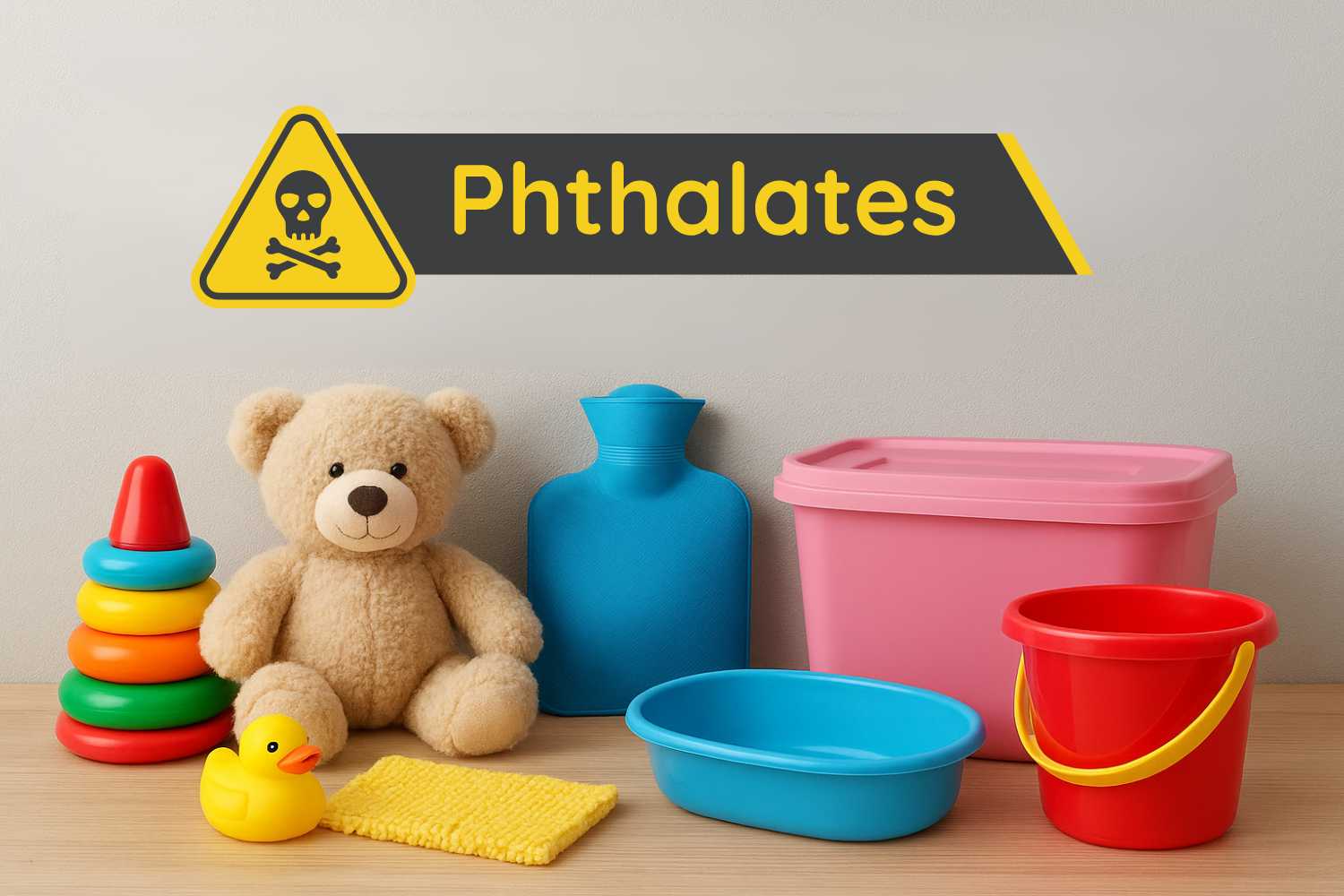
Swiss cantonal laboratories have conducted an extensive control operation on everyday plastic products, with alarming results for consumer safety. The investigation targeted toys, containers and other common items, looking for chemicals that were banned but still on the market.
We are specifically talking about phthalates, plasticizers that make plastic more flexible and resistant. Some of these compounds have been banned for their health effects, they can in fact alter the endocrine and reproductive systems, with particularly high risks for children and pregnant women.
Using advanced screening technologies and targeted laboratory analyses, Swiss chemists wanted to verify whether the products on the shelves really comply with safety regulations. The results of the operation, which involved over 1000 items, offer a worrying insight into the quality and safety of many imported products.
The operation was reported to RSI, the Italian-speaking Swiss Radio and Television, by Yves Parrat, cantonal chemist of Basel City, who coordinated the checks.
Controls on plastic products in Switzerland
The cantonal laboratories conducted checks on around 1,400 plastic products available in shops. To identify potentially dangerous ones, they used a portable infrared spectrometer, which allows them to detect the presence of phthalates but does not distinguish between permitted and prohibited ones.
Only the products found suspicious by the screening—about 180 items—were sent to the laboratory for detailed chemical analysis. So far, 80 samples have been analyzed, as analyzes require time, specific instruments and qualified personnel. Among these, 51 samples exceeded the permitted limits, confirming the presence of banned phthalates.
In October alone, 8 products were recalled, and it is estimated that over 100 items could be withdrawn from the market by the end of the campaign.
Which products were most at risk? Among the offending objects we find:
Most of the non-compliant products are imported from Asia. This is what Yves Parrat declared to RSI:
We note that imported products, especially from Asia, continue to not comply with current regulations. Further checks are therefore necessary. Companies are also called upon to better verify their imported products. Unfortunately, this autonomous control is a recurring problem. We have been reporting these products for years, without significant improvements.
Although the checks were carried out in Switzerland, it is likely that similar products are also circulating in EU shops, including Italy. We remind you that banned phthalates can interfere with the endocrine and reproductive systems, representing a risk especially for the most vulnerable categories, such as children and pregnant women.
Finally, the expert underlines that the recalls and awareness campaigns aim to push companies to better control their products, reducing consumers’ exposure to these harmful chemical substances.
With a recall, the seller must inform their customers that the product may pose a health risk and that it can be returned. It’s a considerable commitment. And this is precisely why we hope for an improvement in the future, because importers will want to avoid this type of complication.
