
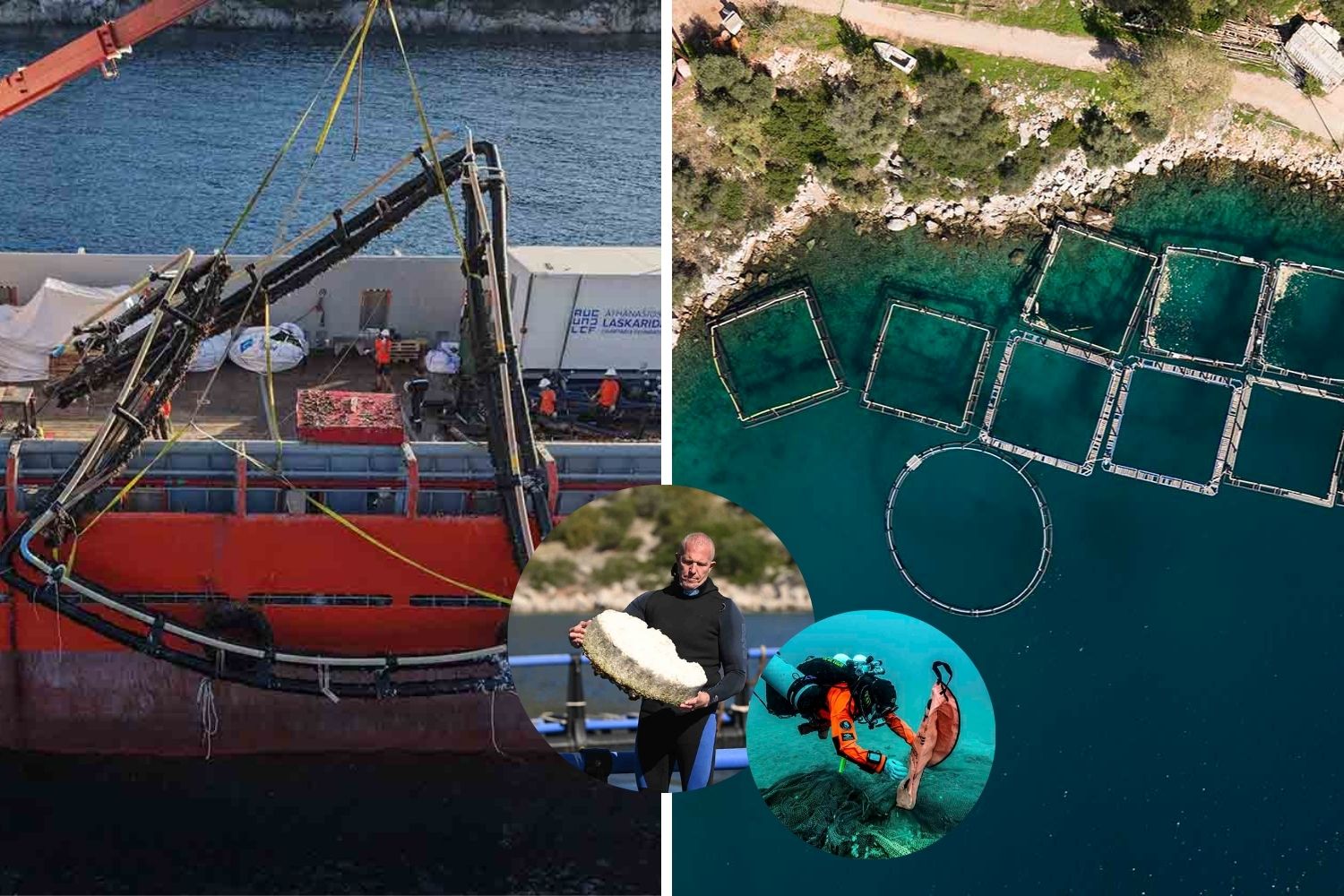
The crystal clear waters of Greece would suggest anything but a pollution problem. Yet, even in this enchanting sea, “ghosts” hide: abandoned fish farms (the so-called ghost farms) that float on the surface and dispersed nets that settle on the seabed, transforming over time into silent traps for marine life and the entire ecosystem.
When the Healthy Seas Foundation, a global non-profit organization committed to protecting the oceans, contacted us to document its latest mission, we didn’t hesitate for a moment!
So, at the end of October, we flew to Greece to closely follow the removal of an abandoned ghost farm in the Saronic Gulf, in Methana, as part of the “Operation Ghost Farms” project, launched in 2021 with the support of Hyundai Motor Europe. Methana’s it was the fifth stage, a concrete and necessary step towards cleaner seas free from waste.
And then, let the mission begin!
What are ghost farms
The ghost farms they are fish farming facilities left to deteriorate in the sea, disused or abandoned, which over time transform into dangerous sources of pollution: their worn structures release waste, fragments of plastic and harmful substances which contaminate the surrounding environment.
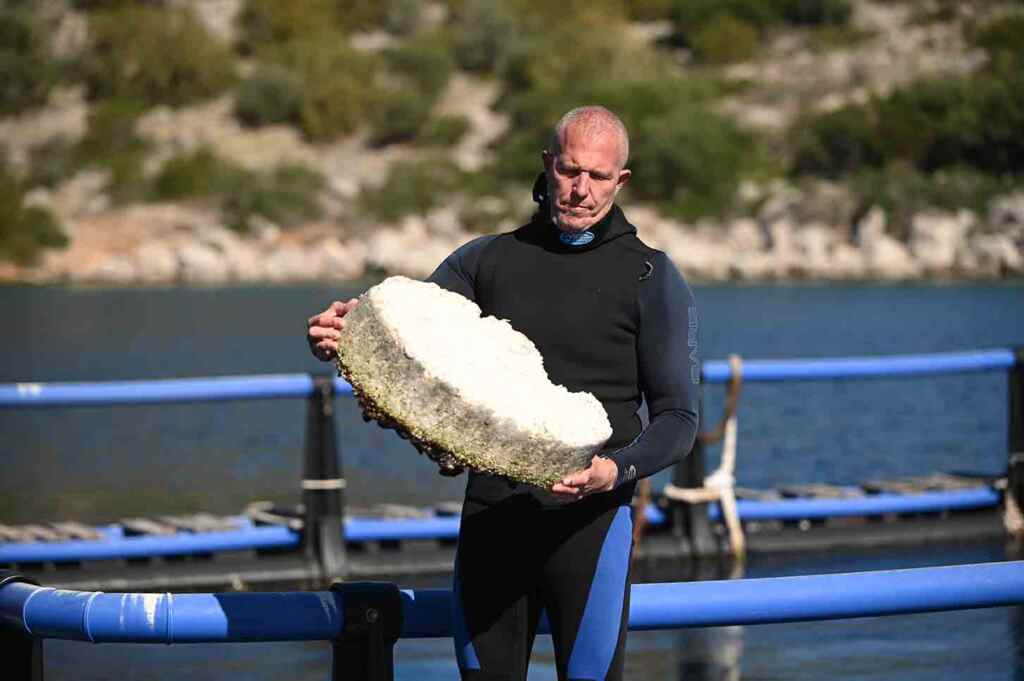
– They represent a recently discovered phenomenon, but with very serious consequences – explained marine biologist Isadora Abuter, who has been collaborating with Healthy Seas for some years. – Plastic and other materials they are made of degrade, releasing micro and nanoplastics that can enter the food chain and eventually reach humans. –
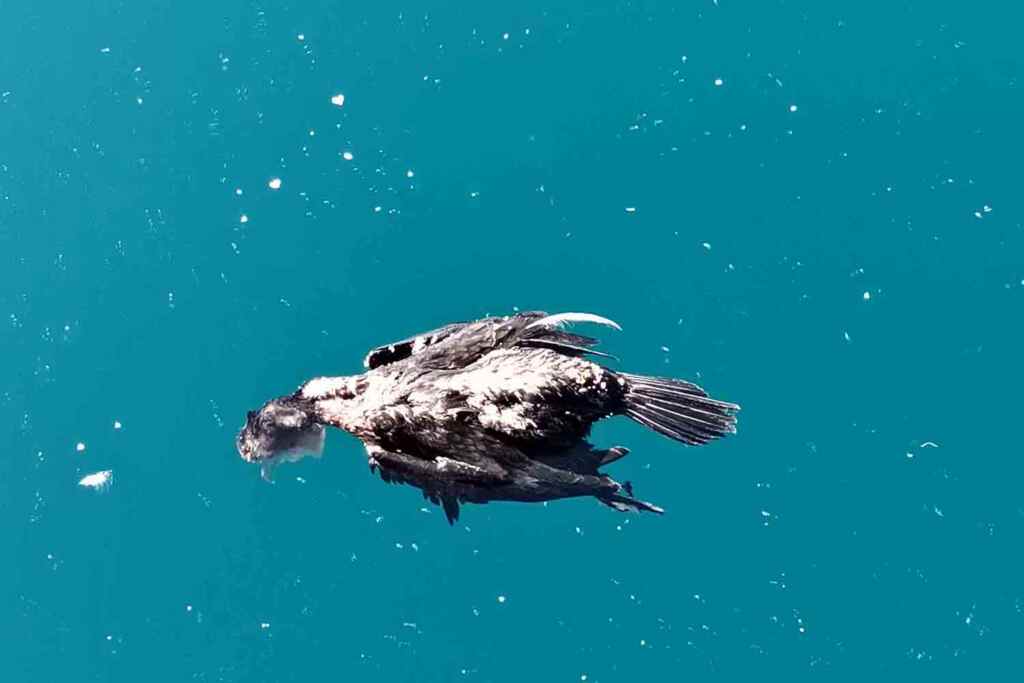
And that’s not all: abandoned structures attract fish and seabirds, which often end up trapped, with devastating effects on biodiversity. The widespread presence of abandoned plants also alters the coastal landscape, reducing its tourist attraction, with repercussions on economic activities linked to the sea.
Methana: a sea haunted by the ‘ghosts’ of aquaculture
It’s October 29th, our first day of mission in Methana, a wild and fascinating volcanic peninsula, famous for its thermal springs and the uncontaminated beauty of its landscapes. Yet, a few meters from the coast, the sea holds an uncomfortable secret: a ghost farm made up of numerous circular structures now adrift, one of many that threaten the local ecosystem.
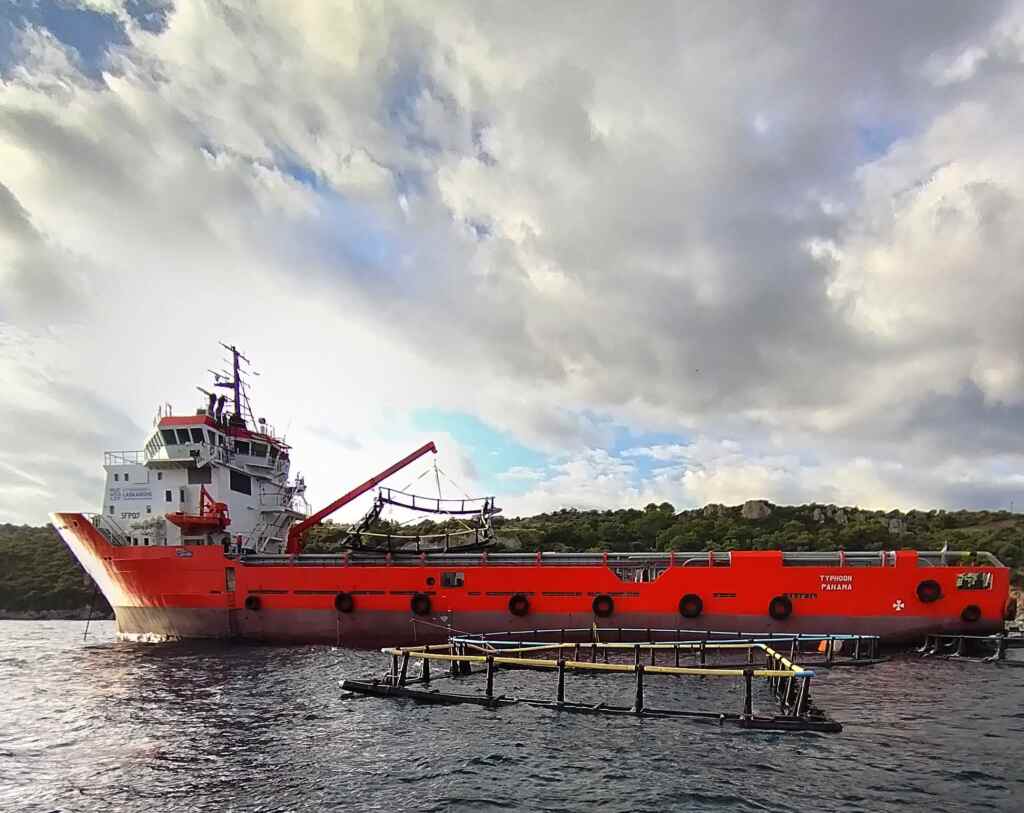
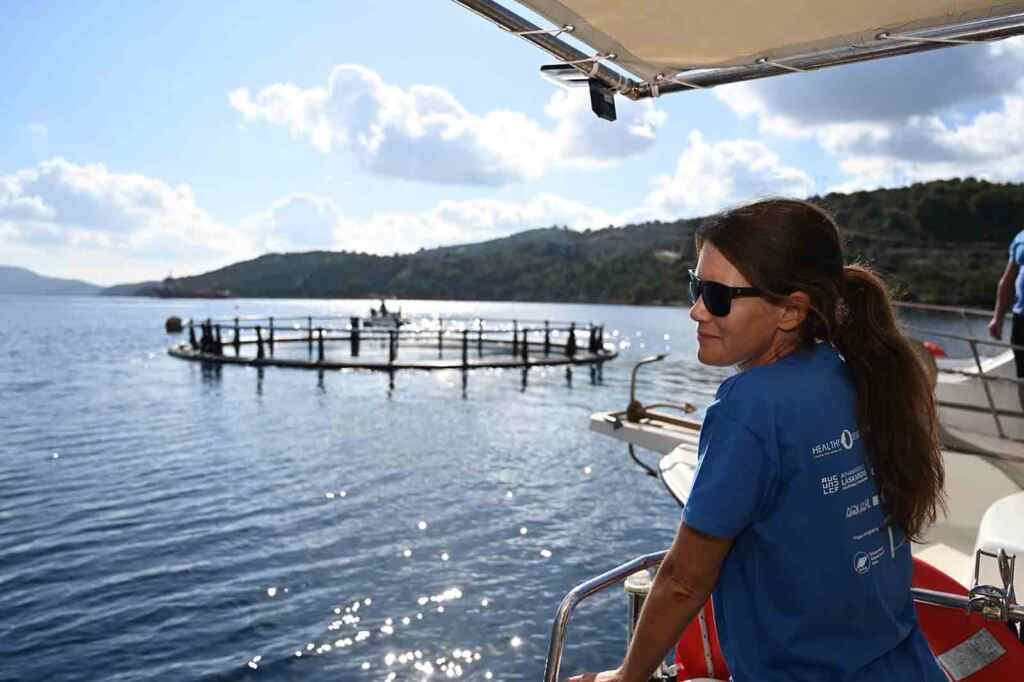
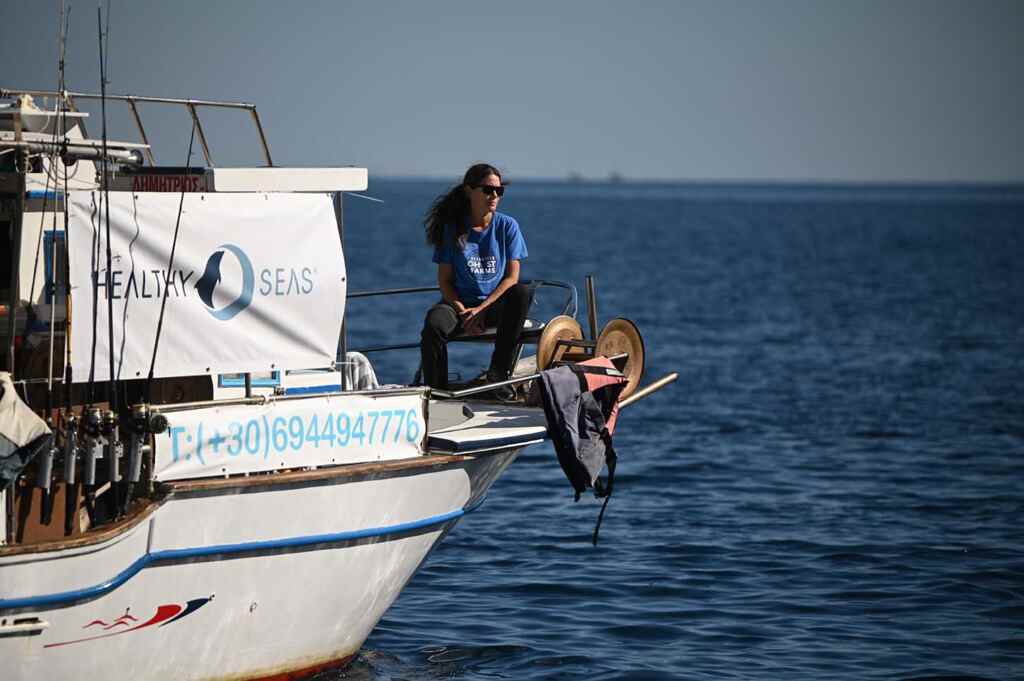
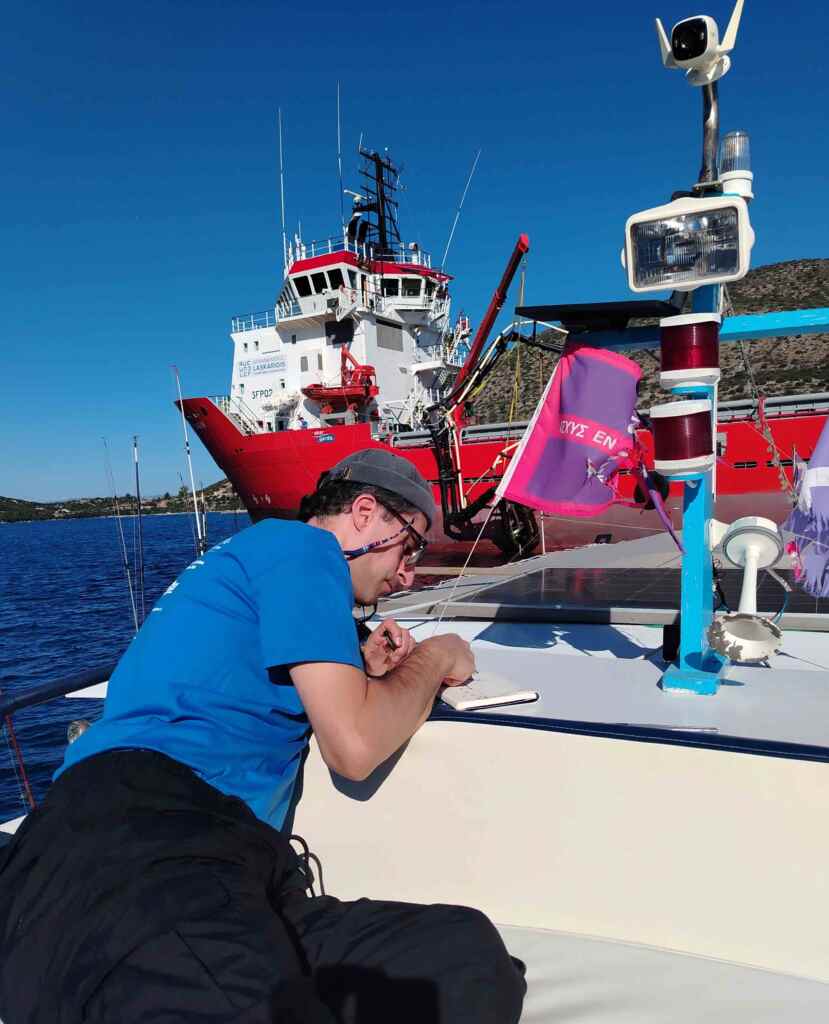
This is the first time the Healthy Seas Foundation partners with the Athanasios C. Laskaridis Charitable Foundation, known for its large-scale coastal restoration projects and marine conservation activities in Greece. On board our boat we position ourselves in front of the Typhoon, the operational ship, to closely follow the different phases of the mission. The numerous rings of the abandoned farm stand out in front of us: a landscape suspended between beauty and decay, a sort of “floating landfill”.
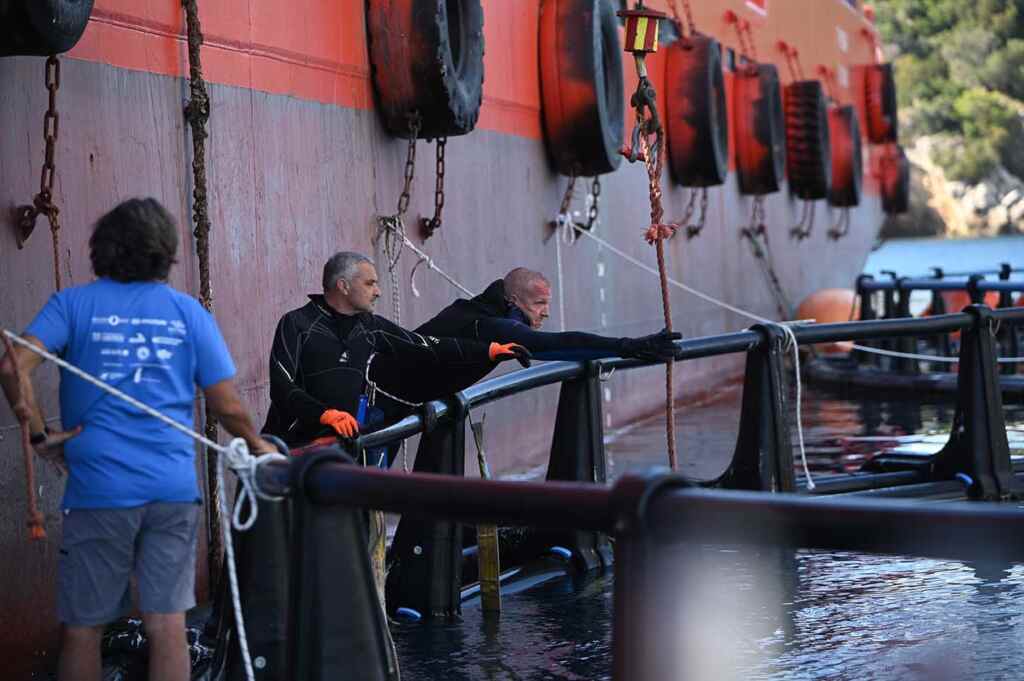
We then move aboard the Typhoon, where the perspective changes completely. While we observe the divers intent on fixing the cables and securing the most fragile parts of the structures, to avoid the dispersion of polystyrene and other debris, the crew slowly lifts the aquaculture rings. Once on board, Typhoon staff clean them scrupulously, removing debris and cutting them into pieces, so as to allow them to be recovered and recycled correctly. Everything happens with impeccable coordination, a perfect example of teamwork!
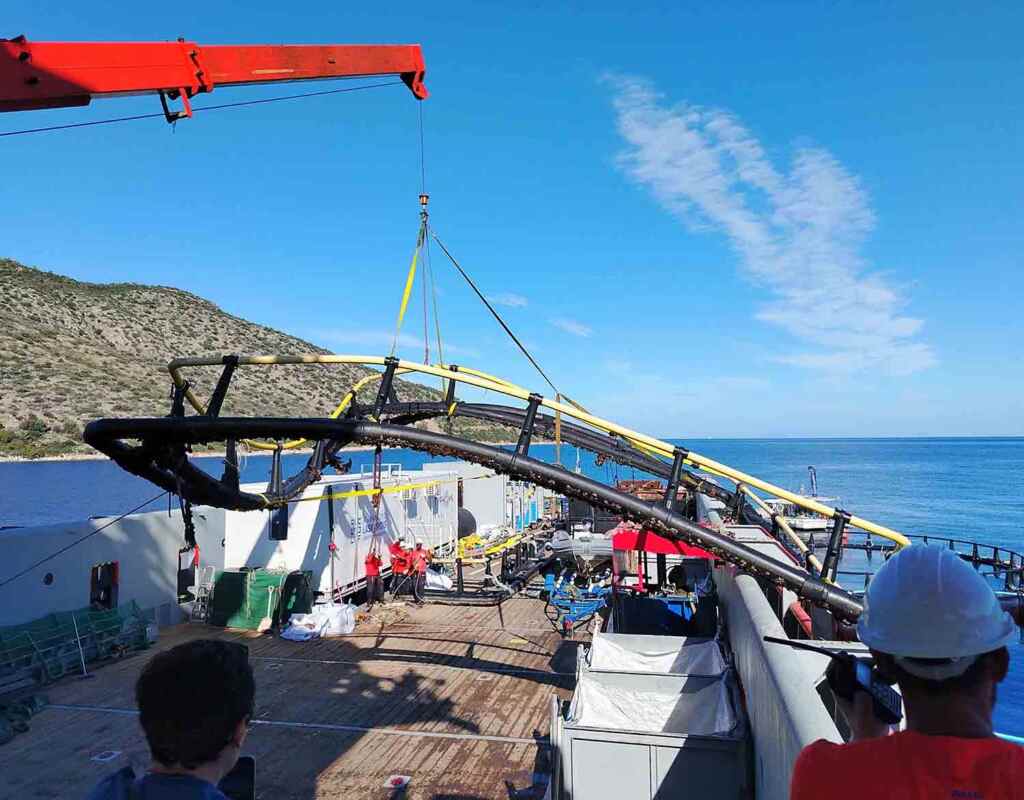
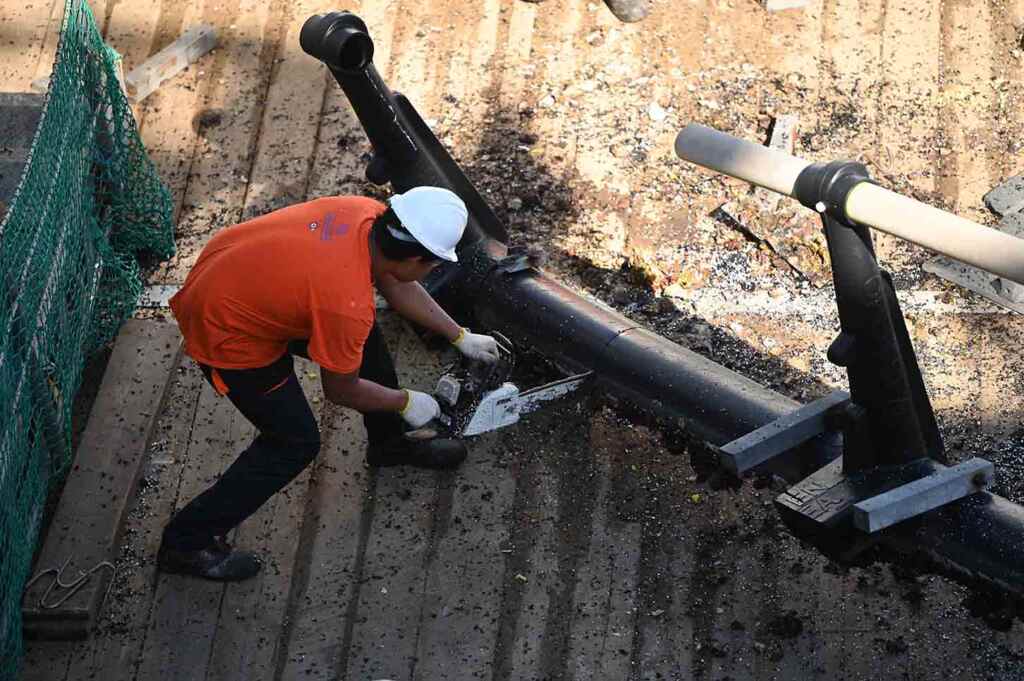
At 12pm on Tuesday, after a morning of effort, the most difficult “ring” was removed: old, fragile, almost disintegrated. Then the team accelerates. In a few hours he surpasses the initial goal — five rings — and lifts six. The next day another seven structures are recovered, and so on, until the mission is completed. We are amazed at what happens: every piece of the puzzle seems to fall into place, and we understand how authentic collaboration can transform a seemingly impossible challenge into shared success.
The satisfaction is palpable: each ring recovered is one more step towards a freer sea. Veronika Mikos, director of Healthy Seas, also looks at the result with pride. An episode from some time ago comes to mind: – Last year, during a mission in Greece, immediately after the removal of the last aquaculture ring, a group of dolphins passed by the boat. It seemed like they wanted to greet us and thank us for our work – he says with a smile.
But surprises are not always pleasant: during some operations in Italy, Veronika remembers coming across an entire kitchen, cups of ice cream and even a children’s stroller. Absurd objects, which demonstrate how the marine environment is still forced to take care of our waste.
Yet, when at nightfall you observe him breathing again, clear and free from debris, just like after this long day, you have the sensation that every effort finally finds its meaning.
When the responsibility for pollution falls on those who shouldn’t
Satisfaction with the result leaves room for an inevitable reflection: why is it up to a non-profit foundation to take care of what should be the responsibility of the institutions?
We ask Veronika Mikos, who explains to us how in Greece there are no government plans for the removal of abandoned fish farms. Thus, while European laws against marine pollution often remain unenforced, the actual responsibility ends up falling on independent organizations like theirs.
– It is not just an economic problem, but a question of mentality – he adds. This is why missions like this require months of preparation including permits, complex logistics, international alliances and seeking funding. A silent but essential work, which transforms an environmental challenge into a concrete action of care and rebirth.
Art that tells the story of the sea: “Ariadne’s thread” and educational programs
During the mission we met Pastoraccia, an Italian illustrator from Bologna, who came to document the precious work carried out in Methana with the universal language of art. We peeked through some of the sketches created during the expedition, a direct and immediate way of capturing the action in the field.
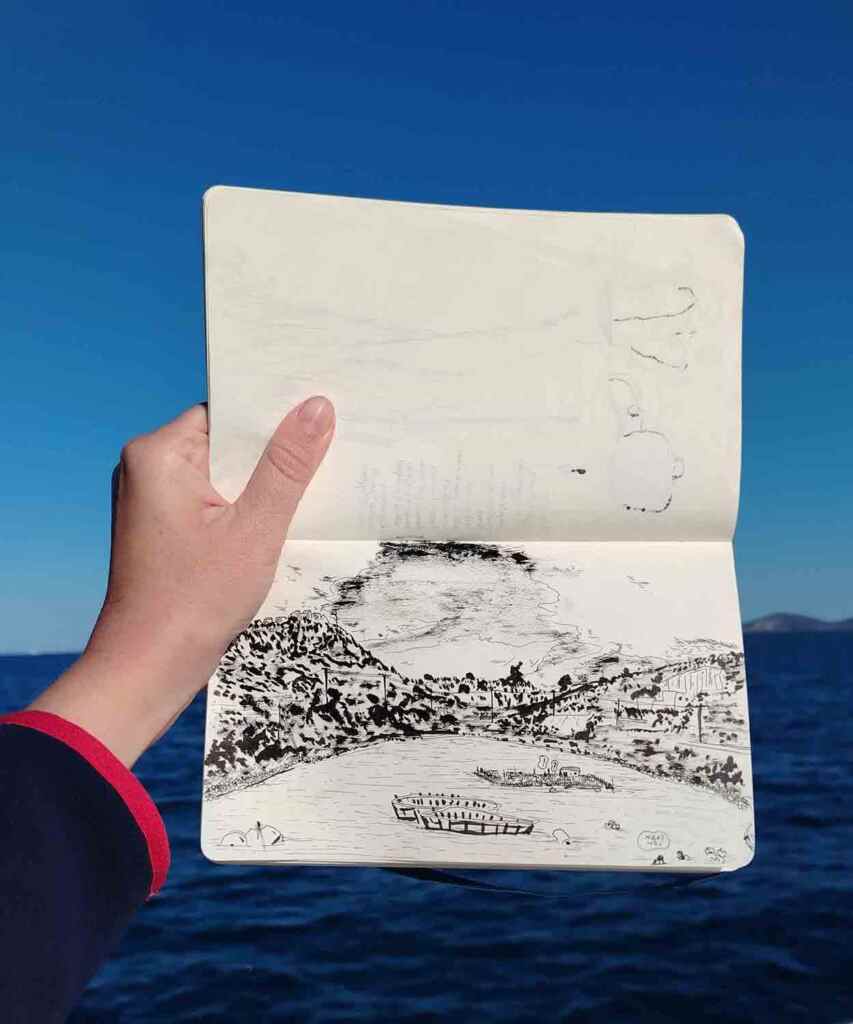
Pastoraccia’s project also comes to life in a comic story entitled “Ariadne’s Thread – Trame dal Profondo”which intertwines myth and reality, ecology and memory.
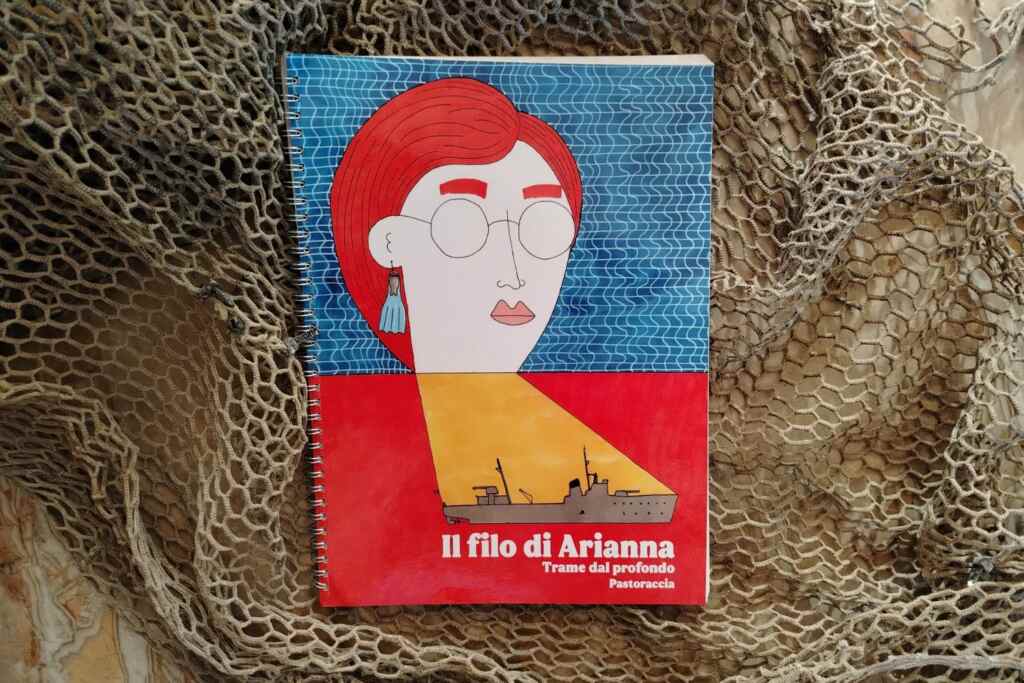
– My stories – Pastoraccia tells us – are built like a patchwork of various elements. I developed a narrative track, adding mystery and focusing on the ecological, but also familial legacy. The underlying theme of my comic is linked to the environmental, parental and historical-archaeological legacy, enriched by references to the myth of Ariadne, scattered here and there throughout the story.-
Comics, which combine storytelling and environmental awareness, are also used in schools to address ecological issues in an engaging way. Healthy Seas is in fact actively engaged in educational programs in primary schools, secondary schools and universities, as the director Veronika Mikos explains:
We collaborate with numerous schools, who sometimes contact us directly to propose activities on these topics. The educational programs are aimed at children and young people of different ages, from toddlers to teenagers, up to university students. We offer upcycling workshops, interactive games and virtual reality experiences, all aimed at raising awareness of marine pollution among young people.
In Methana itself, during the October mission, the Foundation organized an educational activity with 48 local children, to raise their awareness of the problem of marine waste and the importance of ocean conservation.
The results of the Methana mission
From Methana we bring home an important message: every step forward is a victory for the sea, every ring lifted, every net recovered, is a sign that change is possible. Just like Ariadne’s thread guiding our path out of the labyrinth of pollution, this mission showed us how strong the link between action and hope is.
The waste collected speaks for itself:
The total amounts to 40.1 tonnes, of which 2.5 are fishing nets.
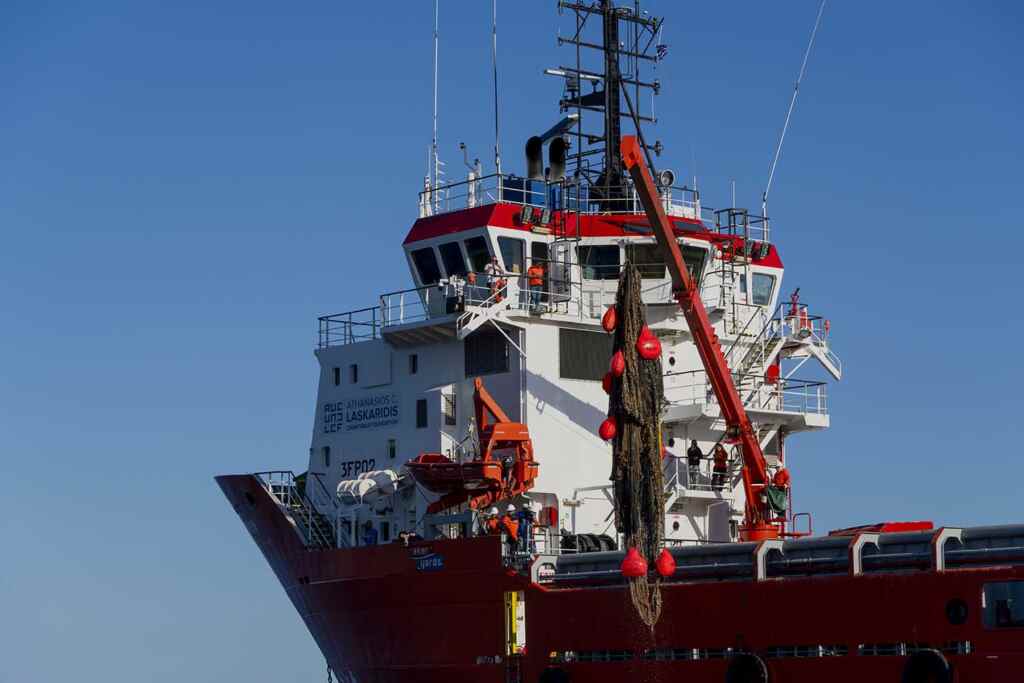
All the material was cut and collected, filling 12 industrial containers. Suitable fishing nets will be sent to Aquafil, where they can be regenerated into ECONYL® yarn, while other elements, such as HDPE pipes and plastic components, will be destined for local recycling centers.
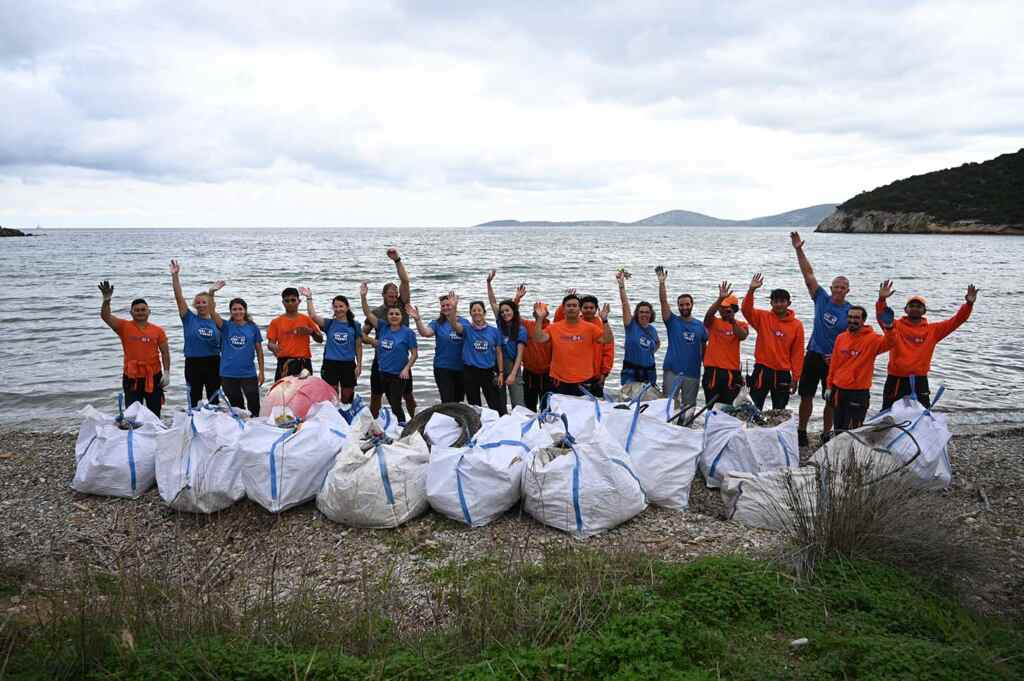
As if that wasn’t enough, at the end of the operations at sea, the crew members of the Typhoon and the team Healthy Seas have joined forces for one last concrete action: the cleaning of a nearby, heavily polluted beach. In just three hours they collected 16 bags of waste, also returning that small stretch of coast to its original beauty.
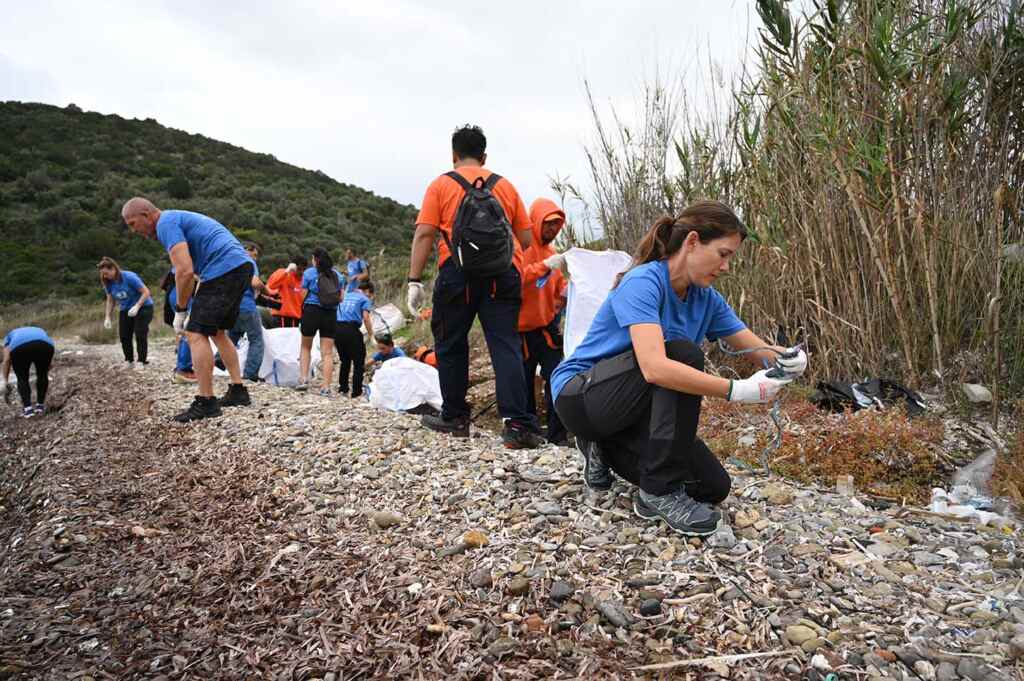
Every recovered item and every small contribution has the potential to make a big difference. This is how together, thanks to the passion of many, we can give back to the sea what it deserves: beauty, life and future!
I participated in a marine cleaning mission in Croatia: here’s how from abandoned nets you get to eco-friendly nylon
