

The coffee It is one of the most loved and consumed drinks in the world but what we do not think, sipping our cup, is that during production and processing, some contaminants can end up in the beans. Among these, acrylamide, a potentially carcinogenic compound that is formed during toasting, and pesticides such as glyphosate, the most common herbicide in the world. Also heavy metals such as cadmium and nickel can accumulate in the beans, coming from the ground where they are grown.
A recent Test conducted by the Swiss magazine Balance analyzed 12 packs coffee In grains, 6 for Espresso and 6 for Coffee Caffè, purchased in the main Swiss retailers. The Crema Caffè, popular in Switzerland and Germany, is prepared with the espresso machine but using a more coarse grinding coffee and a greater amount of water (120-150 ml), so as to make a creamy cream on the surface.
The objective of the investigation was to verify the presence of harmful substances, including acrylamide, glyphosate and heavy metals but also ococratoxin A and polycyclic aromatic hydrocarbons.
Let’s see what Swiss experts have discovered.
Glyphosate in the coffee of Ardi and Lidl
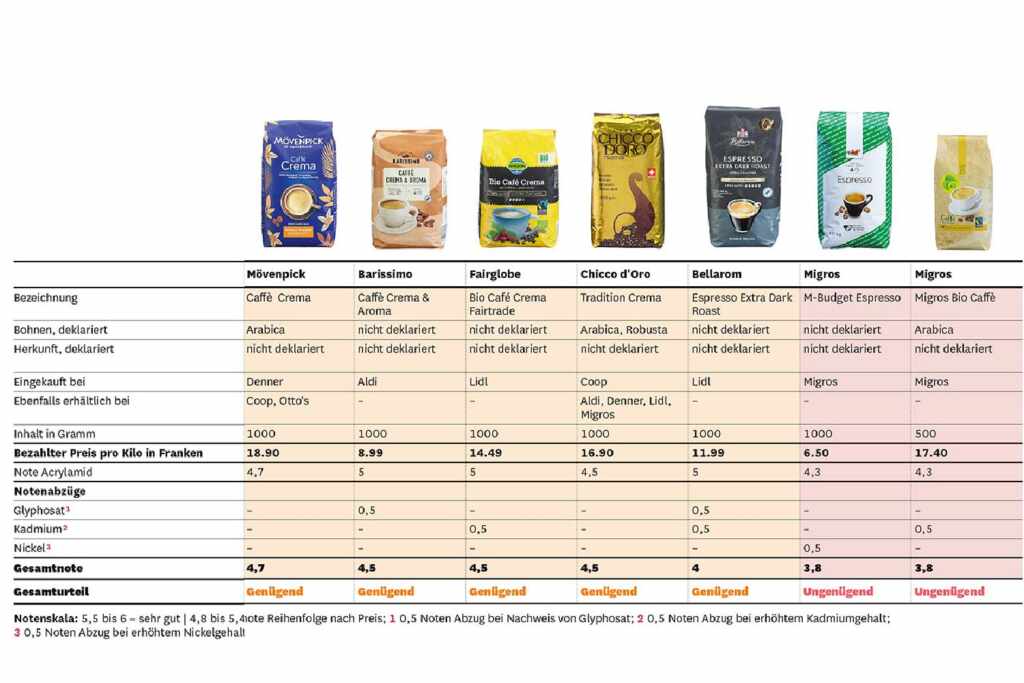
The test detected the presence of Glifosato in 2 products: the Caffe Crema & Aroma di Aldi and the Espresso Bellarom Extra Dark by Lidl (which considering all the parameters, however they tear enough).
The quantity were lower than the legal limitsbut the presence of the herbicide remains a controversial question. The World Health Organization (WHO) has in fact classified it as “possibly carcinogenic”, while the European Chemical Agency has declared that “There is currently no scientific or legal justification“To ban it.
However, not all the cafes tested contained pesticides. Four references received a positive evaluation, also thanks to reduced levels of acrylamide and absence of other problematic substances.
The presence of heavy metals in coffee
The test highlighted the presence of Cadmio in Migros’ bio coffee “and in the two Lidl products. The cadmium, a toxic heavy metal, can accumulate in the body and represent a health risk. Also in this case, however, the concentrations detected were lower than the legal limit of 0.2 µg/kg.
As for the nickel, this was found in higher quantities than average in the “Espresso” coffee of M-Budget.
Acrylamide
In Switzerland and the EU, the maximum limit of acrylamide in toasted coffee beans is 400 µg/kg. In the test, the highest values were found in the Mövepick Crema coffee, in the traditional Crema di Chicco d’oro, in the Bio Caffè di Migros and in the Espresso M-Budget.
In particular, Migros products have distinguished themselves negatively, with about 340 µg/kg, a level very close to the allowed limit.
The “dark express bartender” of Tchibo, on the contrary, was the one with the lowest content of acrylamide (114 µg/kg), well below the European limit of 400 µg/kg. The “cream” of Coop Prix Guarantie and the “Espresso Roast” of Starbucks also showed content levels of this substance.
In the case of this test, we are not interested in the ranking of products, as they are mainly Swiss references; Following, however, the infographics with all the brands of cafes tested.
Little transparency on the origin
Another controversial aspect of coffee concerns transparency on the origin of raw materials. Several brands, including Aldi, Lidl, Migros, Starbucks and Mövepick, do not bring the countries of origin of their beans back to the label. However, a balance survey revealed that the tested products come from at least ten different countries.
So we read in the Swiss magazine:
An investigation conducted at retailers revealed that the beans of tested products come from at least ten countries. ALDI’s biological espresso is made with Arabica and robust beekeeping beans from India, Tanzania, Honduras and Peru. Arabic coffee beans for the Espresso Lidl are grown in China, Brazil and Honduras. Only a few packs contain beans from a single country. An exception is the M-Budget product with robust beans from Vietnam.
How the test was conducted
Kiel’s Planton Laboratory (Germany) analyzed the 12 coffee in toasted grains hunting for:
