
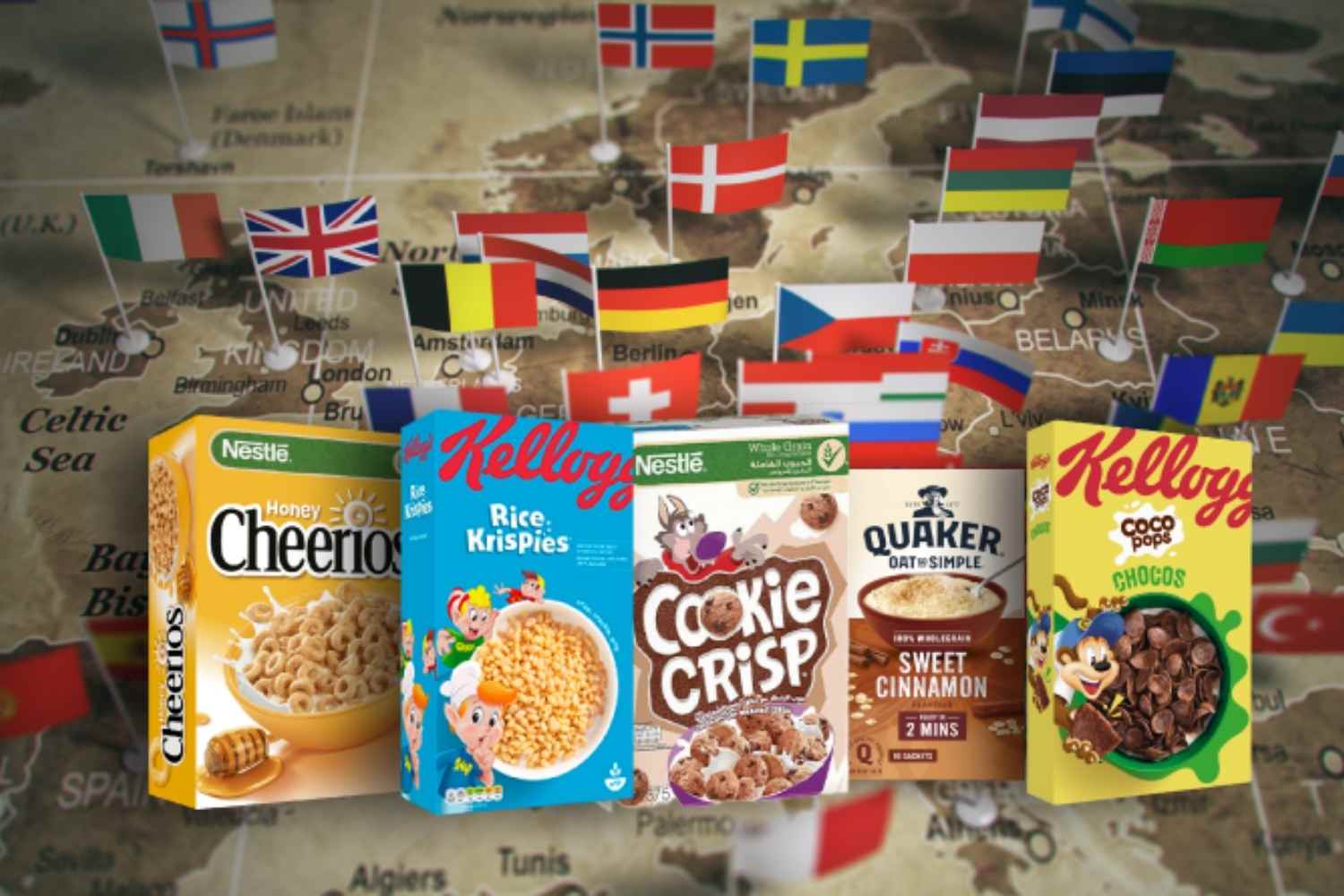
When it comes to breakfast cereals intended for children, the most frequent criticisms concern the high sugar content. However, there is a less discussed aspect that is potentially even more worrying: the presence of pesticides, in particular of the glyphosate.
From a new investigation conducted by Moms Across America (Maa), a well -known group of US activists mothers, data emerge that question the security of some of the most popular brands not only in the United States, but also in Europe.
The results of the investigation
Maa tested 7 types of cereals for very popular children in the United States, the United Kingdom, France and Germany (Italy has not been included in the tests), relying on an independent laboratory that has gone hunting for traces of pesticides in the various products.
The expectation was clear: Europe, traditionally more restrictive on additives and chemicals, should have showed lower contamination levels. And instead, with surprise of the researchers themselves, European champions have highlighted higher values than American ones.
Zen HoneyCutt, director of Moms Across America, said:
We were shocked in finding higher levels of glyphosate, especially in the cereals of the United Kingdom and France, and absolutely in German cereals. We expected the opposite: now we ask for an international dialogue to stop the use of glyphosate.
But exactly how glyphosate was found? Too much, at least in some cases.
These are the most shocking results, country by country:
A particularly alarming fact is that even some American biological cereals contained high levels of glyphosate, even suggesting a potentially fraudulent labeling.
The paradox that emerges from the investigation is however that Europe, despite having forbidden numerous additives and artificial dyes, has not managed to protect citizens – and in particular children – from the most used herbicide in the world. Experts also call into question agricultural practices such as the use of glyphosate as a drying agent before the harvest, which increases residues in cereals.
In addition to the glyphosate, among other things, the tests also detected the presence of Clormquat, a pesticide prohibited in the United States for its reproductive toxicity, present in 11 of the 14 most popular cereals in the USA, which shows us how the exposure of children to chemical residues does not limit itself to a single herbicide.
How cereals have been tested
Cereal samples from the United Kingdom, France and Germany were sent to a laboratory accredited in the United States (ISO/IEC 17025: 2017, Clia High Complexity). The analysis was commissioned by Moms Across America to compare glyphosate residues in products sold in Europe and the USA.
According to what was declared by the Association:
These aspects do not diminish the importance of analysis, but indicate that the results must be interpreted with caution, especially with regard to the representativeness of the brands and the actual levels present on the shelves.
A underestimated risk for children
Scientists who commented on the study stress that children are particularly vulnerable in this scenario. Not only do they consume greater quantities of cereals than their body weight, but tend to eat more portions per day, often combined with other contaminated foods. The cumulative exposure, therefore, can easily exceed the thresholds considered “safe”.
According to several studies cited by Moms Across America, even at very low doses, glyphosate has been associated with:
What can we do
The data clearly shows that glyphosate contamination is not a confined problem to the United States, but an international emergency. Since 1974, when Monsanto introduced this herbicide, the use has spread all over the world. Today, according to several researchers, glyphosate contributes to a growing oncological crisis: almost one European out of two will receive a diagnosis of cancer in life, a rate comparable to the American one.
Moms Across America’s activists ask for a global glyphosate ban, supporting regenerative and biological agricultural practices that could reduce children’s exposure up to 80% in one season.
In the meantime, consumers can reduce the risk by choosing as much as possible local, biological and unresolved foods. A safer breakfast, according to recommendations, could be made up of organic eggs, natural leavening bread, fresh fruit and kefir.
