
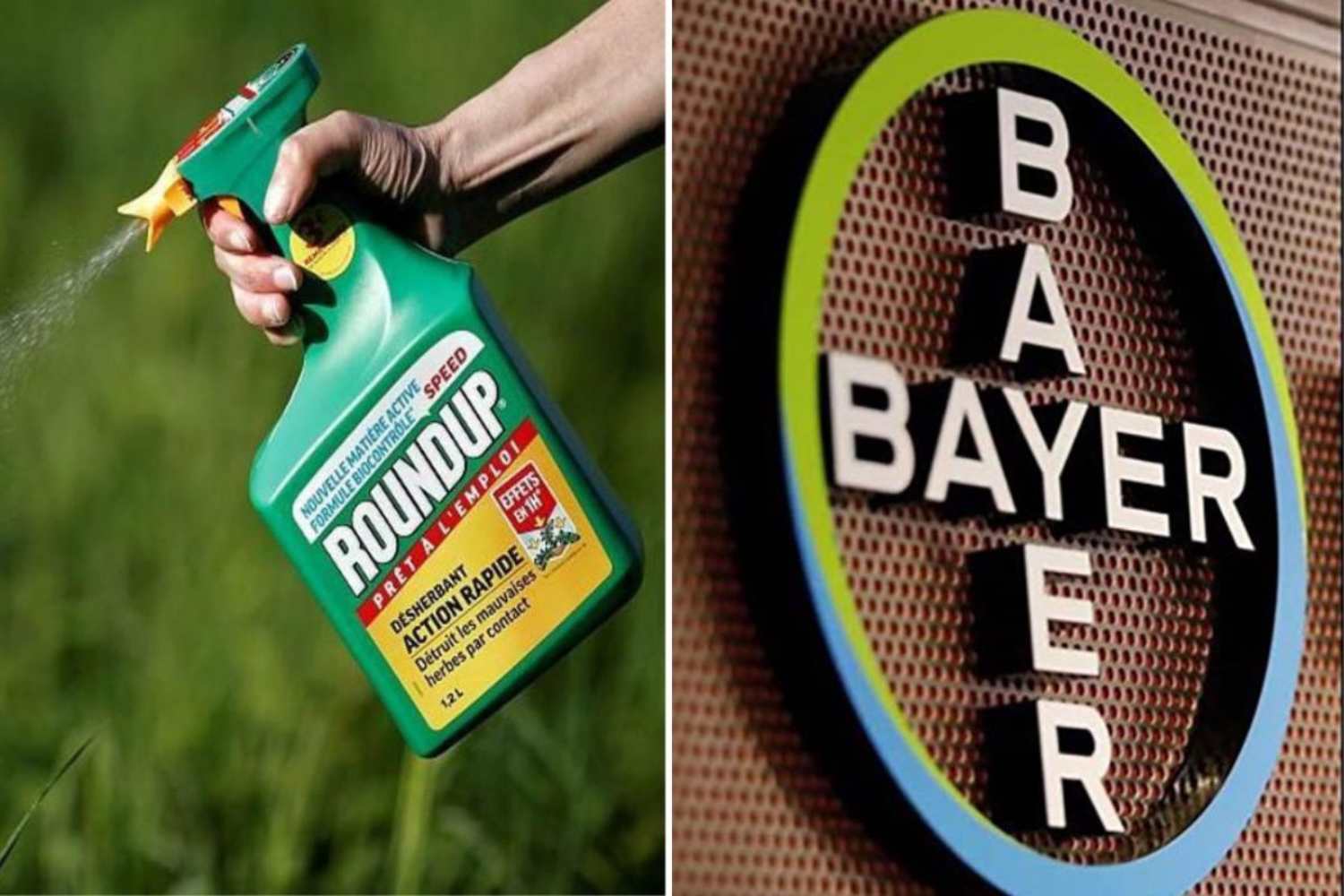
The US Supreme Court has handed Bayer one of the most important legal victories in recent years in the long-running court battle over Roundup, the glyphosate-based herbicide acquired in its 2018 purchase of Monsanto.
By a majority of 7 justices to 2, the Court ruled that US federal law prevails over state law suits challenging the absence of a cancer risk warning on product labels.
The decision concerns Monsanto Co. v. Durnell, born out of the lawsuit brought by John Durnell, a former Missouri lawn care worker who developed non-Hodgkin’s lymphoma after years of using Roundup. In 2023, a Missouri jury awarded him $1.25 million in damages, which were upheld on appeal in 2025. That award was based on the theory that Monsanto should have included a cancer risk warning on the label, which was considered insufficient under state law. Monsanto, controlled by Bayer, then turned to the Supreme Court challenging the validity of that approach in light of federal law.
And President Donald Trump’s administration supported Bayer in the lawsuit.
What the Supreme Court decided
The question before the judges did not concern the dangers of glyphosate, but a strictly legal issue: whether a state law can impose, through a civil lawsuit, a cancer risk warning that the United States Environmental Protection Agency (EPA) never required.
The Court answered no. In the decision, written by Judge Brett Kavanaugh, we read:
The Federal Insecticide, Fungicide, and Rodenticide Act, 7 USC §136v(b), expressly bars Durnell’s state law claim for failure to warn, because such a claim would require Monsanto to add a cancer risk warning to the labels of its Roundup products.
According to the majority, therefore, the Federal Insecticide, Fungicide, and Rodenticide Act (FIFRA) prevents individual states from imposing, even indirectly through civil litigation, labeling obligations other than those provided for by federal law.
The Court noted that the EPA repeatedly approved Roundup labels without requiring a cancer risk warning, and that Monsanto could not have changed the label on its own without the agency’s authorization.
Because Bayer had asked the Supreme Court to intervene
Bayer’s request arose from the strong contrast between American court decisions. Some federal courts, such as the Third Circuit Court of Appeals, had already held that FIFRA prevented these types of lawsuits. Others, including the Missouri Court of Appeals which ruled in favor of Durnell, had instead reached the opposite conclusion.
The Supreme Court therefore accepted the appeal precisely to resolve this interpretive conflict and establish whether federal law prevails over state regulations regarding pesticide labeling.
For Bayer the decision represents a turning point. Since Monsanto’s acquisition in 2018, the company has been overwhelmed by more than 100,000 lawsuits filed by people claiming they developed cancers, particularly non-Hodgkin’s lymphoma, after exposure to Roundup. Over the years, the litigation has cost the company more than $10 billion in compensation and settlements.
In March 2026, Bayer also announced a $7.25 billion settlement plan intended to close most of the outstanding disputes and also handle any future claims. After the Supreme Court decision, Bayer shares recorded a strong rise on the stock market.
Consequences of the ruling on ongoing cases
The Supreme Court ruling in Monsanto Co. v. Durnell does not settle all Roundup litigation, but significantly strengthens Bayer’s position in ongoing proceedings. The judges have in fact ruled that the Federal Insecticide, Fungicide, and Rodenticide Act (FIFRA) prevails over individual state law in the case of labels and, consequently, lawsuits based on the “failure to warn” theory become much more difficult to sustain. This orientation could lead to the rejection of numerous actions still pending.
Activists and environmentalists obviously criticized the court’s ruling:
Once again, the Supreme Court has sided with big business at the expense of people and the environment. Today’s ruling is a public health disaster,” said Tarah Heinzen, legal director of the environmental organization Food and Water Watch.
The ruling does not establish that glyphosate is safe
It is important to note that the Supreme Court has not ruled on the carcinogenicity of glyphosate. The decision concerns only the possibility of bringing certain legal actions in light of the relationship between federal law and state law.
The scientific debate remains open. In 2015, the International Agency for Research on Cancer (IARC), a body of the World Health Organization, classified glyphosate as “probably carcinogenic to humans” (Group 2A). To the contrary, the EPA continues to believe that, when used according to label directions, glyphosate does not pose a cancer risk to humans.
The Supreme Court ruling therefore intervenes on a legal level, not on a scientific one: it establishes who has the power to decide what should appear on pesticide labels, without resolving the debate on the safety of glyphosate.
