
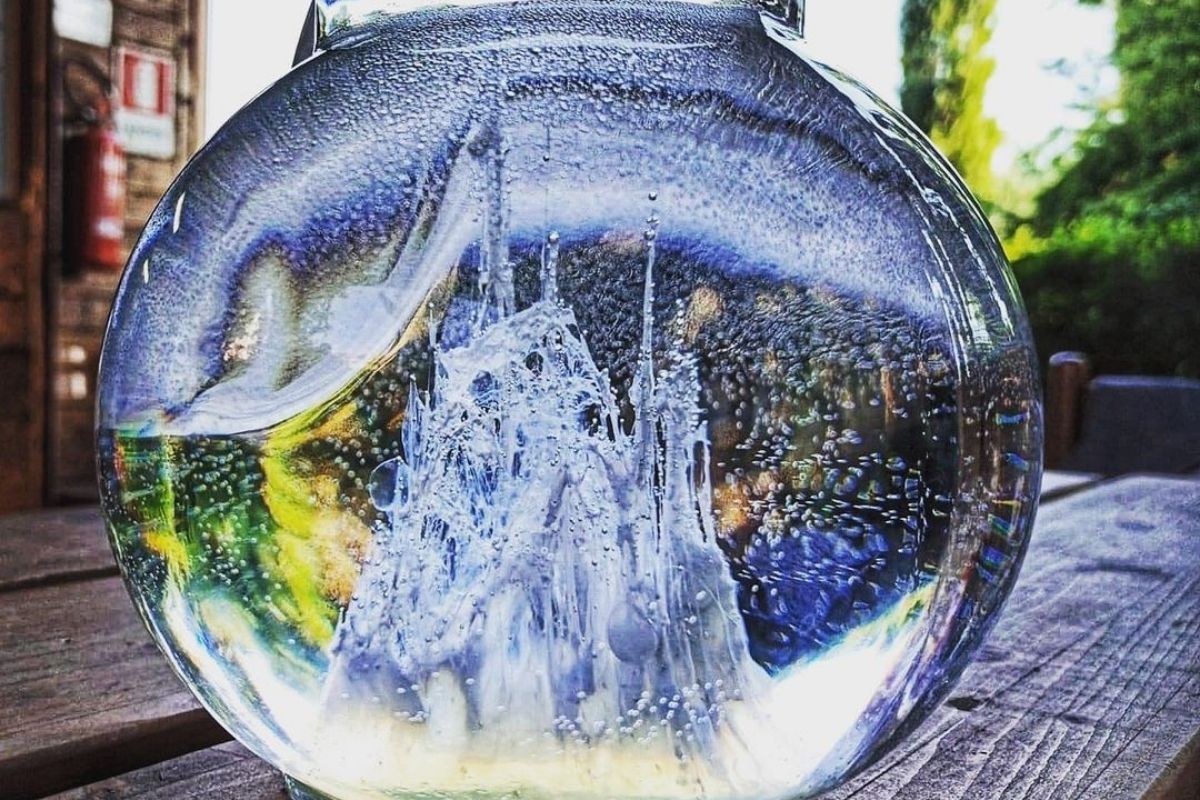
After a night of waiting and a morning spent interpreting sails, masts and mysterious shapes, the moment arrives when the magic is now complete: the barque of Saint Peter has been read, the omen has been given. But what do you do, at this point, with the water and egg white left in the container? It’s a question that many people ask themselves, especially those who experience this custom for the first time.
No conservation: the ritual ends with observation
Unlike other traditions linked to these same nights at the end of June – such as the famous water of San Giovanni, which is instead preserved and used in the following days – the boat of San Pietro does not involve any conservation phase. Its “power”, so to speak, is exhausted at the moment of observation: once the form has been read and the omen interpreted, the ritual is concluded. Water and egg white therefore have no subsequent use foreseen by popular tradition.
You can simply throw it away (but it’s not real fertilizer)
Once the boat has been observed and perhaps photographed, the water with albumen can be easily emptied. Many families choose to do so by pouring it into the garden or among the plants, almost as if they want to give back to the earth what, in some way, contributed to “creating” the boat during the night.
However, be careful of a widespread but imprecise idea: egg white alone is not a real fertilizer. Those involved in gardening are quite unanimous on this point: what is really good for plants is the egg shell, rich in calcium and excellent for tomatoes, roses and acidophilic plants, not the egg white. The latter, diluted in a lot of water as happens in St. Peter’s boat, does not cause any damage, but one should not expect any particular benefit for the land: it is more a symbolic gesture than a true “green” gesture.
If, however, you really want to give the plants something useful by recycling egg waste, the solution is to save the shell (washed and chopped) for compost or garden soil: that, unlike egg white, is a recognized natural fertilizer.
A little practical advice
If you have used a fine or particularly expensive glass container (perhaps passed down in the family, as often happens for this ritual), it is best to rinse it carefully immediately after emptying the water: the egg white, once in contact with the air for several hours, can be more difficult to remove if left to dry on the glass.
The true value remains in the shared moment
Ultimately, the meaning of St. Peter’s boat is not in the water or the egg itself, but in the moment of waiting, observation and story that surrounds it: the silence of the night, the curiosity of the morning, the stories told by the grandparents in front of the container. Once this moment has been experienced and shared, the water has already done its job — and can easily make room, next year, for a new boat to be discovered.
