
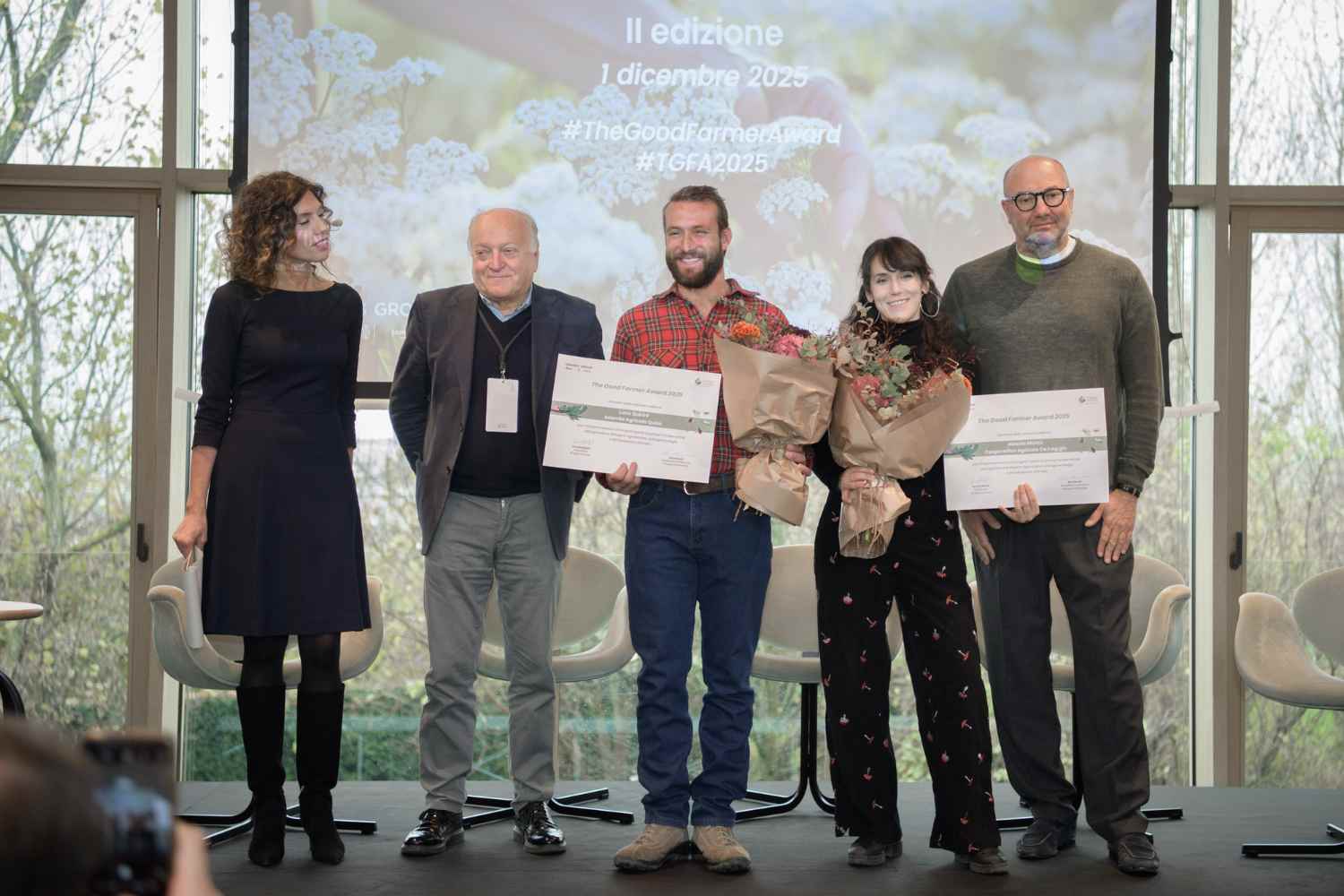
The Davines Group Village in Parma today hosted the awards ceremony for the second edition of “The Good Farmer Award”, promoted by the Davines Group in collaboration with the Foundation for Sustainable Development. The award celebrates young farmers under 35 who have already implemented practices inspired by agroecology and regenerative organic agriculture. The objective is to support those who demonstrate with facts that a new agricultural model is not only possible, but necessary.
The winners and awarded projects
The prizes, worth 10,000 euros each, went to Alessia Mazzù, who leads the Cooperativa Agricola Co.r.ag.gio, and Luca Quirini, founder of the Azienda Agricola Quira. These funds will help strengthen practices already underway, promoting agriculture capable of regenerating soils, increasing biodiversity and adapting to climate change.
Alessia Mazzù and the Cooperativa Co.r.ag.gio
Alessia Mazzù, a thirty-four-year-old from Turin with a background in environmental sustainability, leads the Cooperativa Agricola Co.r.ag.gio in Rome, born from a 2011 dispute over young people’s access to abandoned public lands. In 2015 the cooperative won the tender for 22 hectares in Borghetto San Carlo, in the Veio Park, transforming what was a landfill into a regenerative organic farm.
Today they grow rare cereals, vegetables, legumes and a “biodiversity orchard” with ancient varieties at risk of extinction. They practice complex rotations, mulching with natural materials and have developed a rainwater collection system, essential in the absence of an aquifer.
The prize will be invested to expand this water system, installing modular tanks for 30,000 liters and a fog net to capture atmospheric humidity. The cooperative is also a social space: it hosts free courses for young NEETs, workshops for schools and inclusion paths for people in fragile conditions.
Luca Quirini and the Quira Company
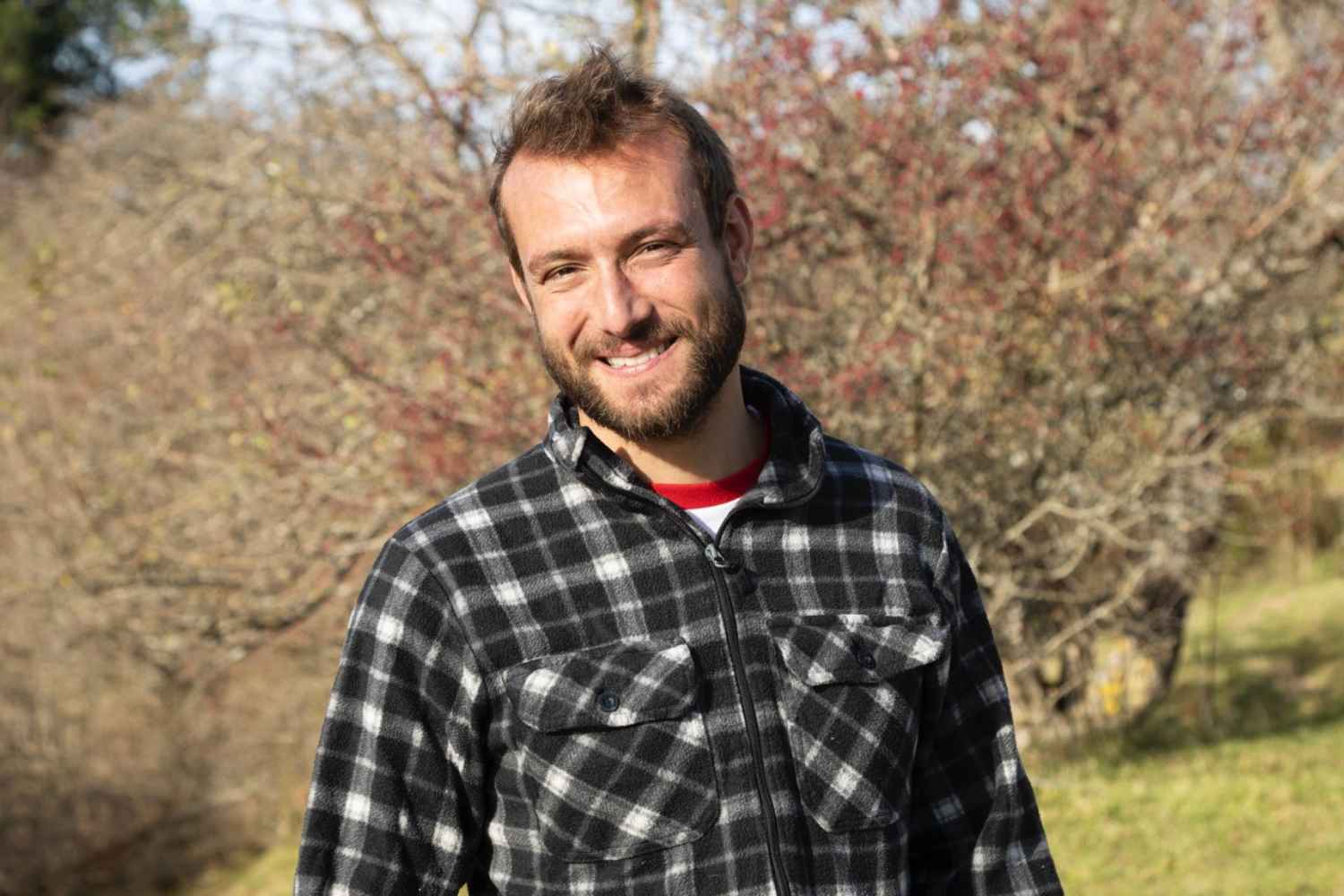
Luca Quirini, thirty-one years old, a former aspiring writer from Sestri Levante, raises 60 Cabannina cattle in the Ligurian Apennines between Borzonasca and Rezzoaglio. The Cabannina is a native breed at risk of extinction, perfectly adapted to mountain territories. The company follows the cow-calf system with natural breeding, spontaneous weaning and careers that can exceed eighteen years. From March to December the herd practices transhumance between 700 and 1,400 metres, grazing freely according to the Voisin method, which favors soil regeneration.
The food is only local organic grass and hay, without industrial feed. Luca founded the APARC association to create a local Cabannina supply chain and network with other young farmers. With the prize he will create a “stable in the woods”, a protected enclosure surrounded by conifers to house the animals in the winter, and will purchase a mobile laboratory to transform the company’s products. The future objective is to take over a farm to close the cycle: from the calf that is born to the dish served to guests.
Organic is no longer a niche
During the ceremony, shortly before the awards ceremony, Edo Ronchi, president of the Foundation for Sustainable Development, spoke and outlined a precise picture of the state of sustainable agriculture in Italy. Organic is no longer a marginal phenomenon:
We have reached almost 20% of the national agricultural surface: we are no longer talking about a niche technique, it is now established and widespread.
Ronchi explained that organic agriculture is based on natural substances and processes, excluding synthetic chemistry, pesticides and chemical fertilizers.
But today we need to take a step further, because the climate crisis is an event of epochal significance: agriculture cannot pretend nothing has happened.
Regenerative agriculture as a necessary evolution
This is where regenerative agriculture comes into play, which Ronchi considers the natural evolution of organic. This practice aims to
maintain and restore the biodiversity of soil and agricultural ecosystems,
also improving the soil’s ability to absorb carbon and resist drought, erosion and desertification. A real urgency, if you consider that more than 60% of the soil in the European Union is affected by degradation processes. The vision of the award therefore looks to an agriculture that not only produces food, but regenerates natural capital, rural landscape and ecosystem services.
Continuity, not opposition
It is not a question of choosing between organic and regenerative, but of recognizing their continuity:
The two aspects are linked to the point that it is often difficult to distinguish them, observed Ronchi, specifying that it is not an ideological choice, but one of agricultural coherence and experience.
For this reason he made a wish:
It would be good to create a community between technicians and young farmers, to give continuity to this evolution.”
The award confirms that the agricultural transition also involves those who have already started putting it into practice in the field.
Farmers of the future: 20,000 euros to young people who are reviving the land with the 2025 “Good Farmer Award”
