
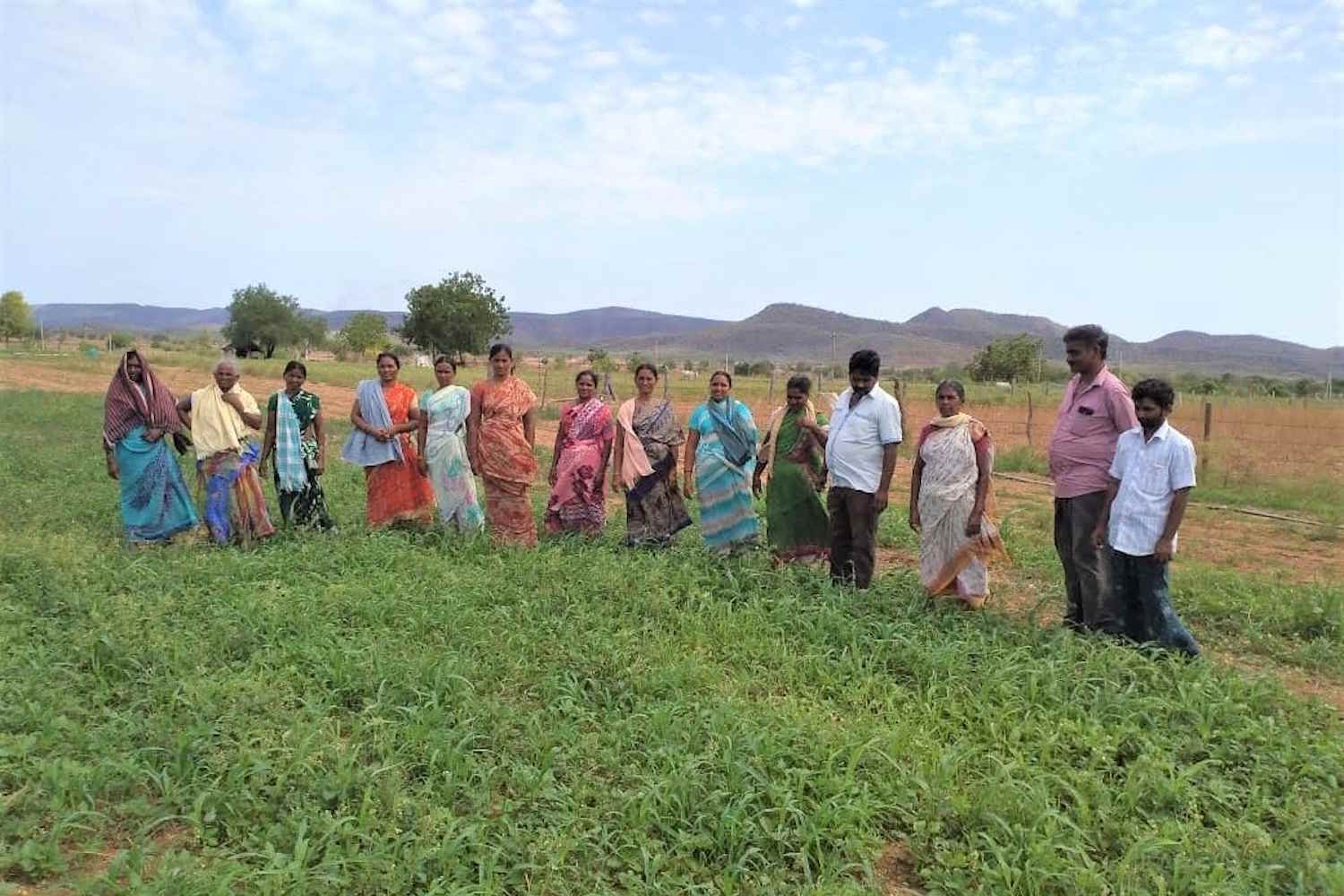
As much of the world’s agriculture continues to grapple with the effects of the climate crisis, loss of biodiversity and dependence on chemical fertilizers and pesticides, a story comes from India that could change the way we imagine the future of food.
The Andhra Pradesh Community Managed Natural Farming (APCNF) program, one of the largest agroecological initiatives in the world led directly by farmers, has won the Food Planet Prize 2026, considered the most important international prize dedicated to the sustainability of food systems.
View this post on Instagram
The recognition, awarded in Sweden and accompanied by funding of 1.5 million dollars, rewards an experience that over the last ten years has involved approximately 1.8 million farmers in the Indian state of Andhra Pradesh, accompanying them towards natural agricultural practices with low environmental impact.
View this post on Instagram
The project was born from an idea as simple as it is revolutionary: progressively reduce dependence on chemical inputs and recover agricultural practices that respect the natural balance of ecosystems.
Farmers, in fact, adopt techniques such as permanent soil cover, the valorization of biodiversity, the reduction of synthetic fertilizers and pesticides and sowing systems that allow them to better conserve water and improve soil fertility.
One of the most interesting aspects is precisely the meeting between traditional knowledge and modern scientific research. Practices are monitored, studied and continuously improved through a network of agricultural facilitators and local communities. And today this model is widespread in over 8,000 villages.
The role of women
What makes the project even more interesting is the central role of women. In fact, the entire initiative relies on a vast network of women’s self-help groups that contribute to training, the dissemination of knowledge and the organization of rural communities.
According to those responsible for the program, there are over 340 thousand groups of women involved in the agricultural transition process. A concrete example of how environmental sustainability, social inclusion and female empowerment can proceed together.
The “farmer scientists”
One of the most innovative features of the Indian model is the concept of “farmer scientists“, i.e. farmer-scientists. The farmers themselves participate in field experiments, collect data, document the results and contribute to the production of new agricultural knowledge.
Part of the prize will serve to strengthen this bottom-up innovation network, as well as finance demonstration companies, international training programs and new scientific studies on the effects of natural agriculture on biodiversity, soil fertility and climate resilience.
At a historical moment in which global food security is threatened by extreme climate events, water scarcity and land degradation, Andhra Pradesh’s experience is proof that large-scale transformation is possible.
