
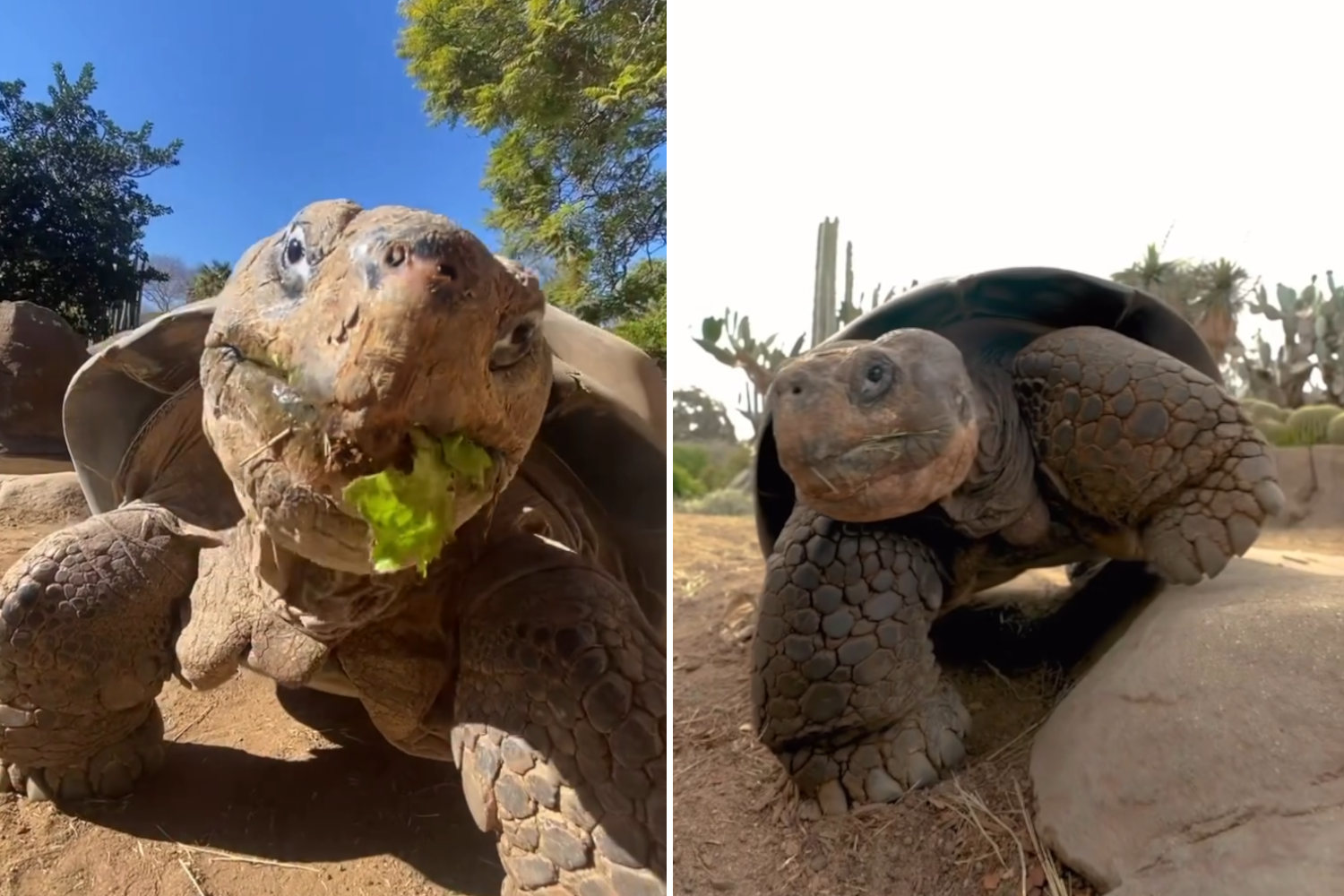
The Galápagos tortoise Gramma passed away at the extraordinary age of 141, leaving a deep void in the San Diego Zoo where she was considered a true icon. Arriving at the facility between 1928 and 1931, she was part of the first group of tortoises introduced to the zoo and, according to tradition, she would have been personally welcomed by its founder, Harry Wegeforth. Since then, Gramma has become a familiar presence for generations of visitors and operators.
A century of history observed from a fence
The Turtle has lived through world-changing events: over twenty U.S. presidents, two world wars, and numerous social and technological transformations. While the world outside evolved, Gramma spent her days among the sun, herbivorous food and small pools of water, unfortunately far from the life in freedom that every animal deserves to spend. Her docile and reserved character made her a symbol of calm and continuity in a century of dizzying changes.
The announcement of the disappearance
The zoo announced the animal’s death on November 21, explaining that experts had been monitoring its condition for some time, made fragile by its advanced age. As the bone problems worsened, the team made the definitive decision “compassionate but difficult” to say goodbye to her.
Over time, Gramma had gone from being portrayed in a few black and white photos to becoming a social media star, affectionately nicknamed the “Queen of the Zoo”. A fascinating story for sure, but let’s not forget that these animals should not become tourist attractions.
Despite being surrounded by the attentive care and affection of the staff, the turtle has spent almost all of its very long existence in captivity, far from the natural habitat of the Galápagos.
Even when zoos declare educational or conservation purposes, the question remains: can an artificial environment compensate for the loss of freedom? Gramma touched millions of people, but it did so from behind a barrier. His story reminds us that every animal in a zoo pays an invisible price: that of its autonomy and its natural world.
View this post on Instagram
You might also be interested in:
