
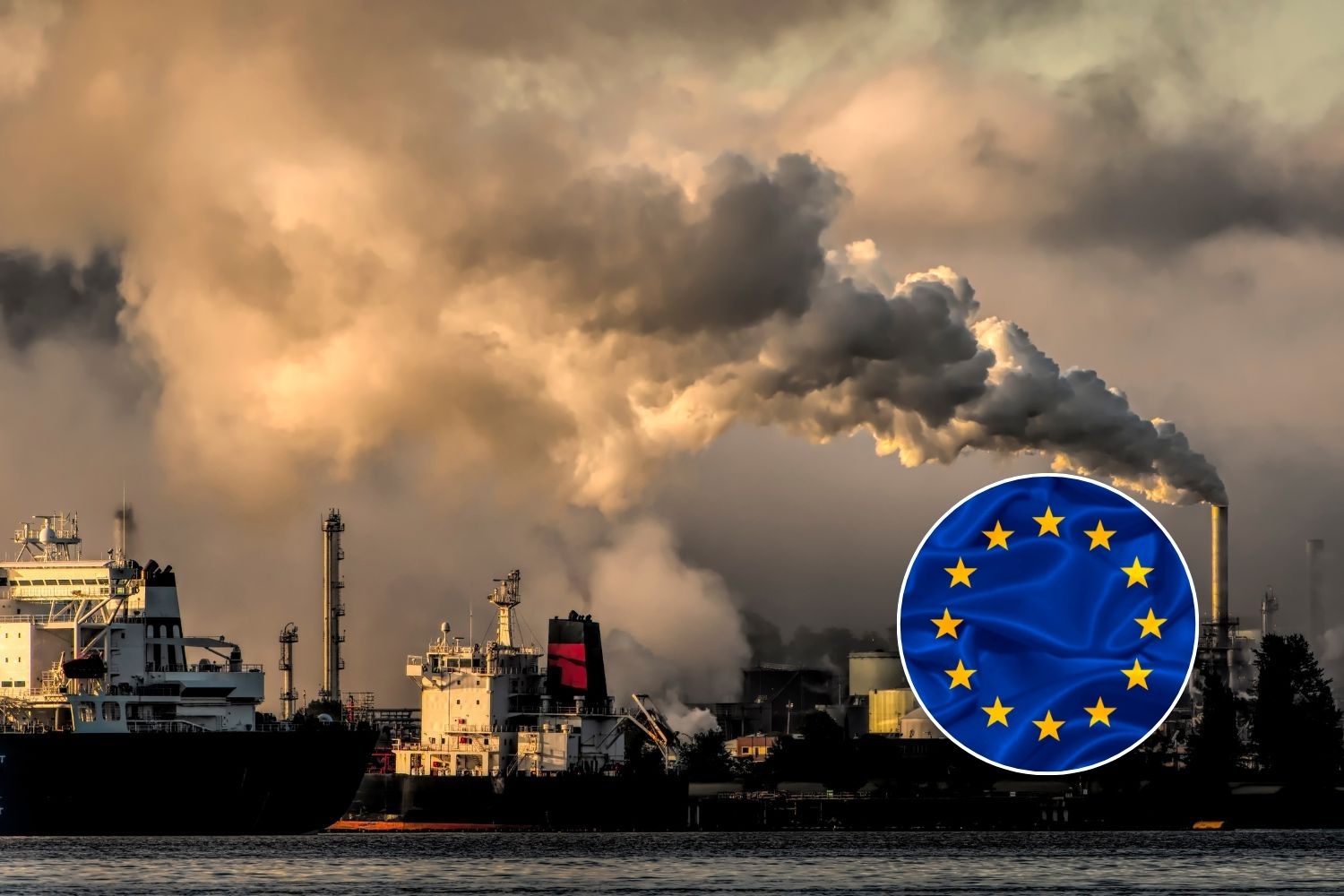
After 24 hours of intense negotiations in Brussels, European Union environment ministers have reached an agreement on the new climate target: to reduce emissions by 90% by 2040 compared to 1990 levels.
A goal which, at least on paper, marks an important step towards climate neutrality. But the reality is more nuanced: the agreement only came at the price of a compromise that weakens its scope.
Member countries will in fact be able to purchase foreign carbon credits to cover up to 5% of the target, effectively reducing the actual objective to 85%. It is the so-called “relief valve” that several states – Italy in the lead – were asking for to make the climate trajectory more flexible.
Italy gets compromise on carbon credits
As requested by the Minister of the Environment Gilberto Pichetto Fratinthe final text also allows an additional margin of 5% of foreign credits, which can be used to cover national efforts (an additional 5% of foreign credits can be purchased by countries, to cover national efforts).
A compromise which, while allowing for greater economic manoeuvre, risks slowing down the real reduction of emissions on European territory.
The agreement also confirms:
A fragile balance, built between the desire to maintain climate ambition and the pressures of those who fear the economic costs of the transition.
Target 2035: just a declaration of intent?
In addition to the 2040 package, the 27 EU countries also reached an agreement on the nationally determined contribution (NDC), which represents the European share of the global climate commitments for 2035 in view of the Cop30 in Belém, Brazil.
The agreed range foresees a reduction in emissions of between 66.25% and 72.5% by 2035 compared to 1990 — values in line with those already presented by the EU to the UN Climate Convention (UNFCCC) last September.
A political signal, rather than a concrete constraint. The agreement on 2035, in fact, does not provide for immediate operational obligations, but outlines a horizon that will have to be defined in the coming years through new laws and national plans.
The European Parliament will vote on its position on 13 November, and it is expected that it will be largely aligned with that of governments.
The feeling remains that, to reach an agreement, Europe has once again chosen the path of compromise, renouncing to push forcefully on the ecological transition. A step forward, sure. But not yet that leap that would be needed to truly live up to the promise of a zero-emission continent by mid-century.
