
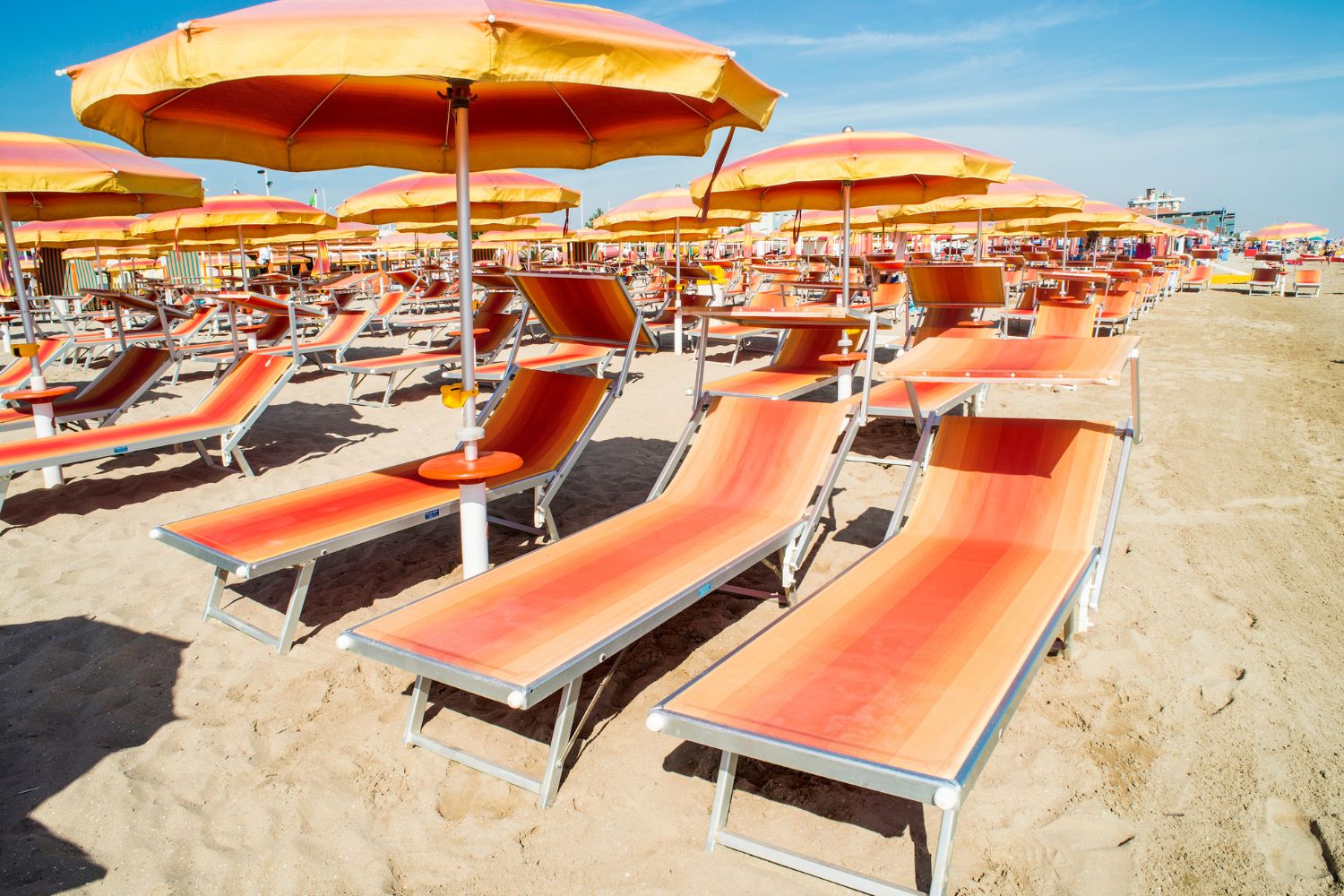
Those who want a front row this summer will have to dig into their wallets more than usual. According to a survey by Altroconsumo, the prices of Italian beach establishments have grown on average by 6% compared to 2025, bringing the overall price increase in the last five years to a substantial 24%. Alassio is confirmed as the most expensive resort on the peninsula, Lignano Sabbiadoro the cheapest. In the background, a petition for free beaches and transparent concessions has already collected over 91,000 signatures.
The methodology
The survey was conducted between 20 April and 20 May 2026, with anonymous telephone contacts to 222 establishments distributed in ten coastal locations. For each destination, at least 20% of the beaches present were monitored, with a minimum of ten structures per area.
The ranking of the most expensive places
The parameter used is the weekly average of the rates in the first four rows. Here is the complete ranking, from most expensive to cheapest:
- Alassio (Liguria) — €340
- Gallipoli (Puglia) — €324
- Alghero (Sardinia) — €274
- Taormina and Giardini Naxos (Sicily) — €237
- Viareggio (Tuscany) — €232
- Palinuro (Campania) — €188
- Anzio (Lazio) — €179
- Senigallia (Marche) — €159
- Rimini (Emilia-Romagna) — €158
- Lignano Sabbiadoro (Friuli-Venezia Giulia) — €157
In terms of rates per row, the first row costs on average 238 euros per week, the second 229, the third 219, from the fourth onwards 210.
Free beaches: few, but some change direction
For many families, the equipped beach is now out of reach, but the free beach is not always a viable solution: the free beaches are progressively reduced in favor of concession areas. The Ligurian municipality of Spotorno is an exception, which has increased the quota of free beaches by guaranteeing cleaning, lifesaving, showers and toilets without additional costs for bathers.
What Italians want
A survey conducted between 27 and 30 April 2026 on a sample of 1,058 people photographed a divided audience: 37% prefer equipped establishments, 35% free beaches, over a quarter say they are open to both solutions. Those who choose the private beach do so mainly for comfort, in 80% of cases. Those who opt for the free beach do so for economic reasons in 79% of cases, and for the freedom to move every day in 63%.
The political match on concessions
The central issue remains the management of the coasts. Among those familiar with the debate on beach concessions, 63% believe that a reform should result in a reduction in tariffs, and one in two consumers considers the introduction of periodic turnover in the management of the establishments to be no longer postponable.
Altroconsumo reports a structural imbalance: the fees paid to the State by concessionaires are often low, while the rates passed on to tourists continue to rise. The organization has promoted a national petition – already over 91,000 signatures – which calls for transparent and periodic tenders, a cap on the concessions that can be issued and an increase in free access beaches.
