
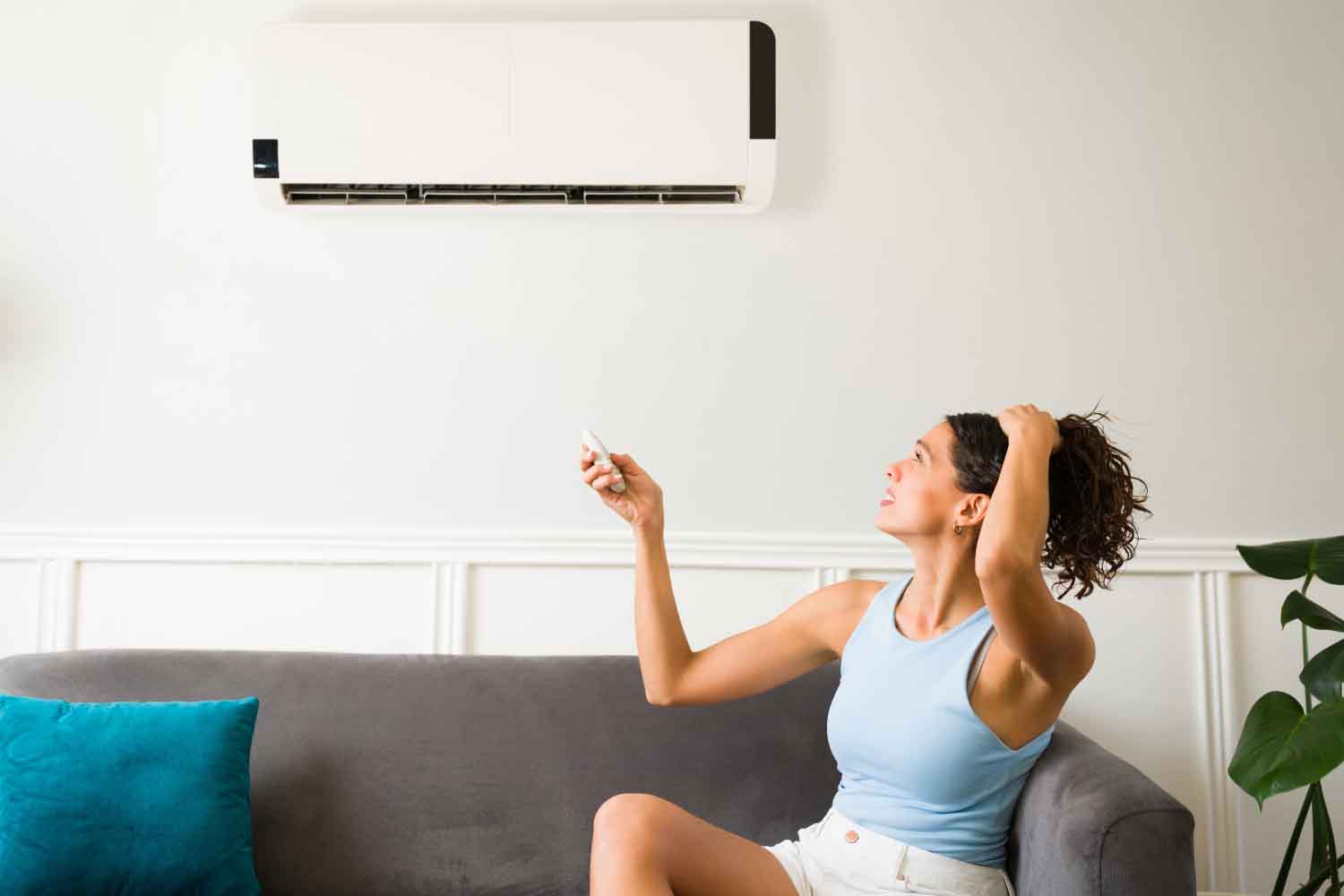
Remote control anxiety always comes along with serious heat. First you lower the shutters, then you try to open a window with the somewhat comical hope that air will come in, then someone says the phrase that in summer weighs more than the weather report: “Turn off the air conditioner, then the bill will arrive”. The domestic court starts from there. The fan, the air conditioner, the dehumidification mode, the poor split in the living room and that figure that no one really knows, but everyone fears as a registered letter from the Revenue Agency, end up in the dock.
The bill, taken with a minimum of calm, tells a less hysterical story. From 1 July 2026, according to the ARERA press release, the reference price of electricity for the typical vulnerable customer in Greater Protection is 31.63 euro cents per kWh, taxes included. It is the number to use to make a prudent calculation, knowing one very simple thing: in the free market every contract has its price, so the true figure is always in your bill. The data remains useful because it brings the discussion back to earth. You pay for one kWh consumed. An air conditioner on consumes energy. The tragedy, however, often begins more in family conversations than at the meter.
At 26 degrees everything changes
The detail that makes the difference lies in the temperature set. An air conditioner turned on at 26 degrees, especially if modern and with inverter technology, works differently than an old appliance left to chase temperatures of a frozen food department. At first it pushes harder, cools the environment, then slows down. The compressor adapts the power required to the temperature already reached and consumption stabilizes. That’s where the remote control stops being a public enemy and goes back to being a plastic object with buttons.
Let’s take a realistic case: ten days of heat, eight hours a day, a room closed well, shutters lowered during the worst hours, recent air conditioning. With an overall consumption of 40-50 kWh, spending moves around 12.65-15.82 euros, using the ARERA reference of July 2026. With a lower tariff, around 0.26 euros/kWh, the same period would drop to around 10.40-13 euros. The difference seems small, then you find it in the monthly total and you understand why using an old rate or one quickly picked up from the internet ruins the accounts almost as much as leaving a window open with the splitter on.
ENEA also insists on this point: during the summer season the internal temperature should not drop below 26 degrees, and comfort is often already two or three degrees lower than outside. On humid days, then, the dehumidification function can be more useful than running in dry cold. The sultriness attaches itself to the skin, to the head, to the desire to do anything. Removing humidity is sometimes worth more than lowering the temperature even further.
Fan and air conditioner do two different jobs
The fan remains the champion of minimum expenditure, with a clarification that ruins the magic a bit: it doesn’t cool the room. It moves air and helps sweat evaporate, so it feels cool on the skin. ENEA reminds you that it can make you perceive up to 3 degrees less, with very low electricity consumption. A 50 watt fan turned on for six hours consumes 0.3 kWh, which is about 9-10 cents with the ARERA price in July. Left on for twenty-four hours it reaches 1.2 kWh, about 38 cents a day. In an entire month, day and night, we are around 11.40 euros.
The air conditioner, on the other hand, really lowers the temperature and humidity. This is why he consumes more. An appliance that absorbs between 700 and 1,000 watts, used for six hours, requires between 4.2 and 6 kWh: approximately 1.33-1.90 euros per day. Over thirty days they become 40-57 euros, with all the relevant variables: energy class, insulation of the house, exposure to the sun, maintenance, chosen temperature, open doors, dirty filters, empty rooms cooled out of habit and that corridor that no one lives in, but receives fresh air like a distinguished guest.
The most sensible combination often remains the least spectacular: air conditioner during the worst hours, fan when you just need to circulate air. The International Energy Agency cites a study on thermal comfort in Singapore that found that an air conditioner set at 26°C, in a well-insulated building and used in conjunction with a fan, uses about 30% less energy than the same appliance set at 24°C. The fan, in that case, adds very little to the overall consumption. In practice: moving air costs less than demanding two degrees more coolness from the compressor.
First the heat stops, then the split turns on
The air conditioner makes it worse when you ask it to save an already red-hot house. The first move comes before switching on: lower the shutters, close the shutters and screen the windows exposed to the sun. ENEA estimates that this gesture can reduce the input of solar energy by up to 80%. It seems like a banality from grandma’s house, but instead it is one of the most effective ways to make the system work less. A room left under the direct sun for hours becomes an oven with the sofa, and then we expect the split to put everything back in order in ten minutes.
The external drive also counts. If it remains in full sun, squeezed between plants, improvised covers, dirty grills or objects placed in front of the fan, it works worse. ENEA recommends leaving at least 30-50 centimeters free around the appliance to ensure correct air circulation. It’s one of those technical details that seem negligible until the early afternoon of July, when the engine struggles and the meter takes notes.
Maintenance has the same unromantic and very concrete effect. Clean filters, free grilles, fans in order, pipes checked. A dirty air conditioner works under strain, consumes more and can worsen the air quality in your home. There is something morally wrong with fresh air that tastes like dust, let’s face it.
When the fan is not enough
The physical account must also be included in the income statement, especially during heat waves. The Ministry of Health recalls that a temperature between 25 and 27°C, with low humidity, is sufficient to guarantee well-being and avoids too sudden temperature changes compared to the outside. Mechanical fans should be used with caution because they accelerate the movement of air without lowering the temperature of the environment; when the internal temperature exceeds 32°C, their use is not recommended because it can promote dehydration and offer deceptive relief.
Civil Protection indicates that among those most at risk are elderly people, newborns, children, pregnant women, people with chronic diseases, reduced mobility, mental disorders or fragile socio-economic conditions. Here the bill remains important, of course, but fresh air also becomes protection. Saving makes sense when it doesn’t turn into heroic resistance inside a 34 degree room, with the bottle of lukewarm water on the bedside table and the fan pointed in your face like a poorly kept promise.
Savings lie in boring habits
The house must be treated like a body: it is protected before it goes into crisis. Windows open in the cooler hours, closed when the air outside seems to come from a hairdryer. Shutters down in exposed rooms, doors closed in air-conditioned rooms, splits turned on only where needed. Avoiding the oven, long hobs, computers and unnecessary lights at the worst times helps more than it seems, because every appliance turned on adds heat inside the house. Then there are the night programs, the sleep function, the smart thermostats and the apps that show daily consumption: useful tools, as long as you really look at them and don’t leave them there as digital furniture.
For those who have space, budget and suitable conditions, photovoltaics can lend a hand because maximum production often coincides with the central hours, those in which the demand for fresh air increases. Here too, however, no flyer miracles: what counts is exposure, accumulation, real consumption and habits. The most reliable saving remains the least seductive: using what you already have well.
Having the air conditioner running all day can weigh on your bill. At 26 degrees, with an efficient appliance and a sensibly managed house, it weighs much less than the fear we build around it. The problem begins when the remote control becomes a club and every degree less seems like a personal revenge against the summer. The heat has little to do with it there. We need sentimental education on the “minus” button.
You might also be interested in:
