
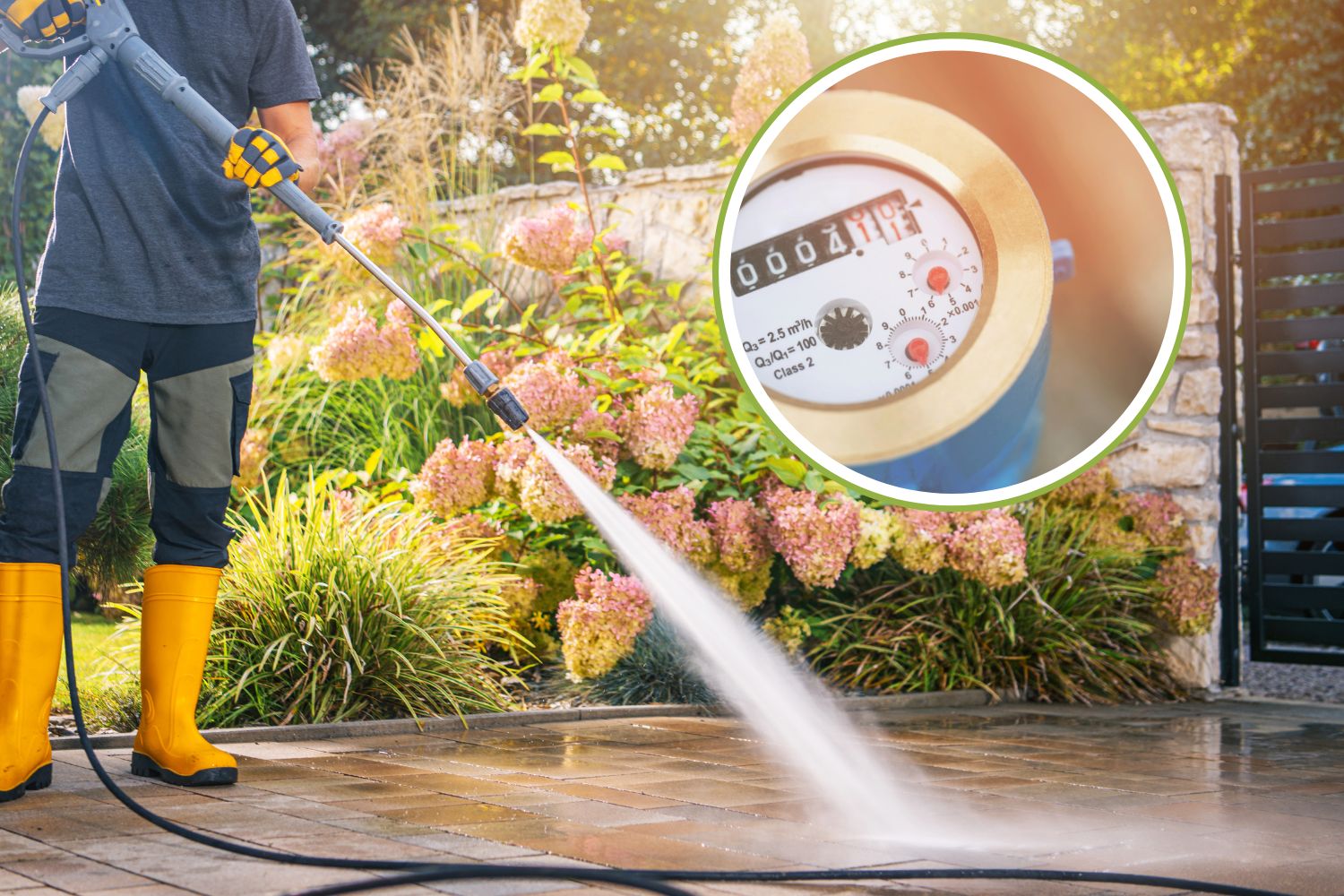
If you own a pressure washer you will have wondered countless times how much it can affect your water bill.
The dilemma is always the same: on the one hand there is the indisputable effectiveness of the high pressure jet, on the other the concern for consumption. A discussion that animates many Italian families, especially when the time comes to clean terraces and driveways. Luckily the numbers tell a different story than we would expect.
The numbers that really matter
To understand real consumption, two fundamental parameters are needed: the pressure, measured in bars, which indicates the force of the jet, and the flow rate, which tells us how many liters of water pass through the machine every hour.
A standard domestic pressure washer consumes between 300 and 500 liters per hour. Does it seem like a lot? Let’s make a comparison. The classic garden hose easily reaches 1,000 liters per hour, with some models capable of even exceeding 1,200 litres. The difference is substantial: the pressure washer uses less than half the water. But there’s more: the high pressure makes every drop of water incredibly effective. A 120 bar jet cleans where the normal hose cannot reach even after half an hour of scrubbing. The result? Halved times and reduced consumption.
Efficiency that makes the difference
Let’s take a practical example. Washing the car with the hose requires around 200 liters of water and at least 20 minutes, while with the pressure washer around 80 liters and 10 minutes of work will be enough, with a clear saving.
The same goes for terraces and external flooring. The pressure removes stubborn dirt without pushing, which means no more hours spent scrubbing with brushes and detergents, because the jet will do all the work.
In support of what has just been said we find the feedback from ADEME, the French agency for ecological transition, which has confirmed these data in various studies. Modern pressure washers are sustainable cleaning tools when used correctly.
Aspects to consider
There are not only advantages, of course. The noise can be annoying, especially on Sunday mornings, with neighbors who may not like it. Then there is the electricity consumption: a 1,500 watt machine turned on for an hour consumes as much as a hairdryer or a vacuum cleaner, the figure is not negligible but not that excessive either.
Some practical measures are also needed. A nearby water point, a protected electrical socket, space to move around, all details that in some contexts can create difficulties.
Professional models represent a special case. They can consume up to 1,200 liters per hour, but we are talking about machines designed for intensive work, which are unlikely to find a place in home garages.
Tips for intelligent use
The secret lies in conscious use. There is no need to keep the trigger pressed continuously, it is better to work in areas, with regular and precise movements. Here are some tips that will make the difference:
The most recent models ensure flow regulation: water consumption can be reduced without losing effectiveness.
Is it worth investing?
The data speaks clearly: a pressure washer consumes less water than you think, and indeed, it often allows you to save compared to traditional methods. The time gained has value. Terrace, cars, garden furniture, bicycles: everything cleaned in record time. Your water bill says thank you and so does your back.
The next time you see someone with a pressure washer, remember these numbers and the fact that that person is probably saving water, not wasting it. A small domestic revolution that deserves more credit than we give it.
