
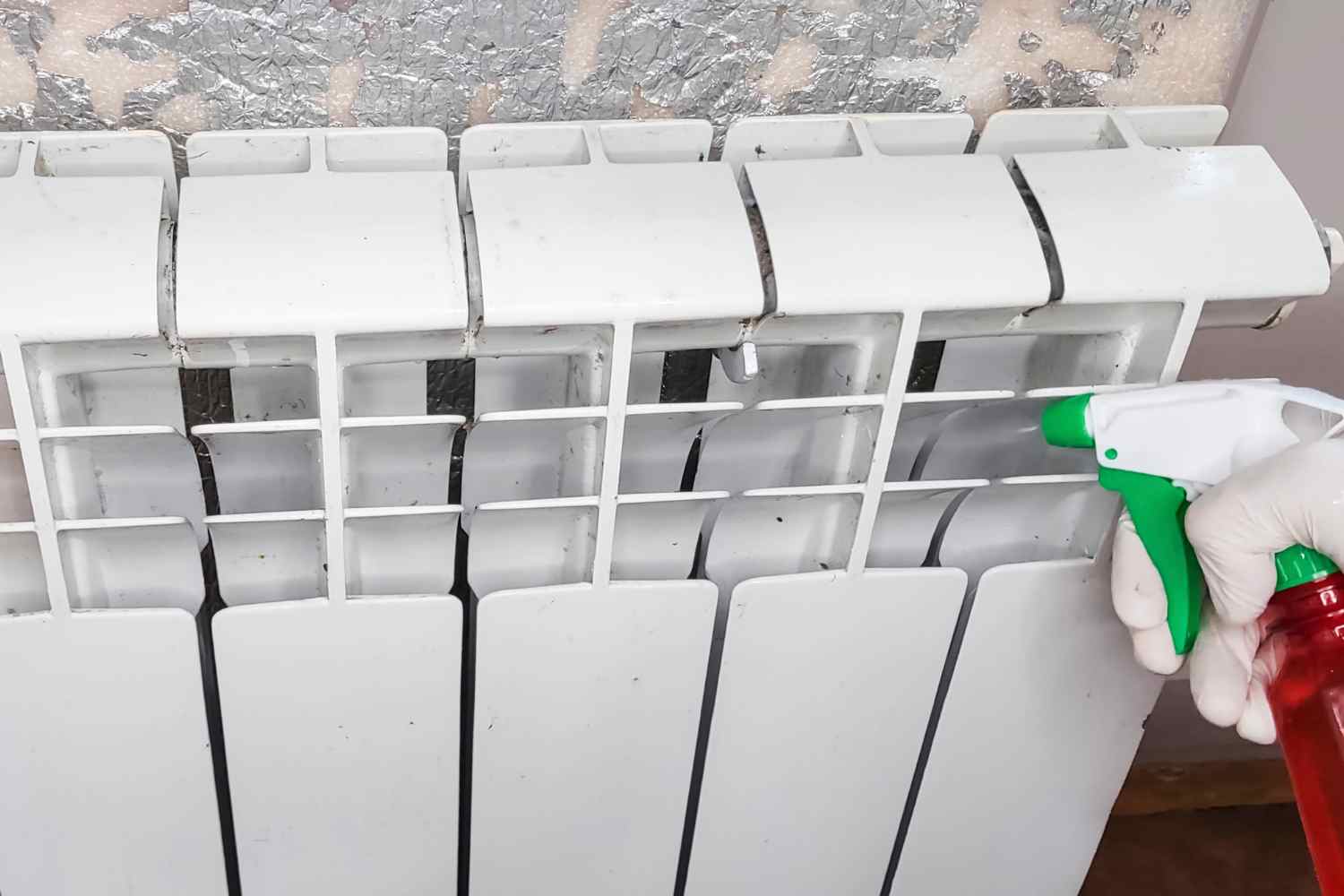
The best way to make our radiators work best is to always keep them clean and in good condition. Unfortunately, however, radiators are made up of different elements and it can often be difficult to clean them accurately and completely – however the presence of dust and dirt can greatly compromise their functionality, as well as representing a danger to the health of those who live in the house. Here is a detailed guide to best deal with cleaning radiators. In any case, remember that cleaning radiators should always be done when they are turned off and cold, possibly also turning off the boiler.
How to remove dust
First of all, it is important to clean the wall in front of the radiator, where dust hides most. For this operation we can use a specific brush with a narrow and long shape (similar to a bottle brush) which will allow us to reach even the most difficult corners. We use this “dry” brush to remove dust – to prevent this, in combination with water, from creating a pasty mixture that is difficult to eliminate. As an alternative to the brush, we can use a long-shaped object (for example a ladle or a kitchen spatula) wrapped in a microfibre cloth.
How to clean them with soap and water
After removing the dust, we move on to cleaning the radiators with soap and water. We start by protecting the wall around the radiator with towels or newspapers, so as not to leave traces of water, then we use a soft sponge soaked in water in which we have dissolved a few drops of detergent. We continue until the entire radiator is clean and the water in which the sponge is soaked comes out transparent, then we dry each element with a soft cloth. Also in this case, we use a thin brush or a pipe cleaner to reach the spaces between the elements (alternatively, we can put the knot trick into practice to remove the dust between the elements of the radiator).
We can also use the vacuum cleaner to suck up the deposits of dust and dirt deposited behind the radiator or between its elements: all we need to do is mount a long, flat nozzle on the vacuum cleaner tube, which we will insert between the various elements to suck up the dirt. As an alternative to the vacuum cleaner, we can also use a normal hairdryer, which however works in the opposite way: in fact, instead of sucking up and removing dust and dirt, it will make it move with its jet of air. For this reason, before pointing the hairdryer inside the elements, it is advisable to place a wet rag under the radiator, on which the dust that has fallen will settle.
Finally, we can use a steam jet cleaner, which will allow us to clean and sanitize the radiator, also performing an anti-mold function. After having removed the dust “dry” with a cloth or a pipe cleaner, we aim the steam jet on the radiator and between the elements; subsequently, we dry the entire radiator with a dry cloth.
How to remove stains
As the years pass, it is not uncommon for radiators to show stains or tend to yellow, losing their original white colour, and this is due to many factors: old systems, dust, dirt, cigarette smoke, exposure to sunlight are all causes of yellowing of radiators. To eliminate stains, sodium bicarbonate can prove to be a valid ally: we can create a “paste” by dissolving a few spoonfuls of bicarbonate in a little water and massaging it with a sponge on the dirty elements of the radiator. After rubbing vigorously – until all the stains have disappeared – we remove the mixture with a damp cloth.
Marseille soap can also help whiten radiators, but it has a more delicate action than bicarbonate. In this case, we will create a solution of hot water and soap flakes, which we will use to clean the various elements of the radiator, before drying with a soft cloth. Finally, we can create a solution of water and citric acid (which you can easily buy in hardware or DIY stores) and spray it directly on the stains with the help of a vaporizer, before passing the sponge.
(Read also: How to remove stains and whiten yellowed radiators)
How to remove rust from radiators
If our cast iron radiator has rust stains, it means that there is a water leak that we must stem before proceeding with cleaning: the metal, in fact, rusts in contact with water. After stopping the leak (HERE you will find some information on how to do it independently, without the help of an expert) the action to clean it will have to be more incisive: we can use very fine grain sandpaper (you can buy it in a hardware store) or a toothbrush with metal bristles to scrape away the rust. After eliminating all traces of rust, we recommend using an anti-rust product before repainting the radiator to give it a uniform colour.
Let’s not forget the valves!
Even the metal valves combined with our radiator must be carefully cleaned, to ensure correct functioning of the heating system. Especially if we notice that the radiators heat up unevenly, we open the vent valve located next to the radiator a little and allow the air bubbles that prevent a uniform passage of air to escape.
Next, we can use a solution of water and dish soap to degrease the metal valves and make them look like new again. We do not recommend using a solution of water and vinegar: vinegar, in fact, in combination with water, releases highly polluting substances into the environment.
When to clean
We have seen different methods for cleaning the radiator in all its parts, but when is the best time to clean it? Let’s say that winter is the least suitable time to clean radiators, as it coincides with the period of their maximum use. We should take advantage of spring or summer to do this service, but also of autumn: in those periods in which the system is not turned on and we can zealously dedicate ourselves to cleaning the radiators, in order to prepare them for the cold season and have them ready for use for the winter.
Cleaning frequency
Cleaning of radiators should be carried out with a certain regularity to keep the system always efficient. A deep and complete cleaning is recommended at least once or twice a year, preferably in the spring after the heating season and in the autumn before turning the system back on. Light dusting of the external surface should be done more frequently, approximately every two or three months, especially if there are people with allergies or respiratory problems in the house. During the winter months, when the radiators are in operation, it is useful to wipe the accessible surfaces with a dry cloth at least once a month to prevent dust from accumulating excessively and being circulated by the heat.
Common mistakes to avoid
When we clean radiators, it is easy to make some mistakes that can compromise both the effectiveness of the cleaning and the life of the radiator itself. One of the most common mistakes is using products that are too aggressive or abrasive on painted surfaces: these can scratch the protective paint and encourage the formation of rust over time.
Another frequent mistake is to clean radiators when they are still hot or even turned on: in addition to the risk of burns, the water in contact with the hot metal can create thermal shocks and damage the paintwork.
Furthermore, many people focus only on the front and visible sides of the radiator, completely neglecting the back wall and the space between the radiator and the wall, where most of the dust accumulates.
Finally, it is important to never force the valves when cleaning or bleeding: if they are blocked or difficult to move, it is always better to consult a technician rather than risk damaging them.
How much can you save?
Cleaning radiators is not just a question of aesthetics: it can directly impact your bill. A layer of dust and dirt reduces heating efficiency by up to 10-15%, forcing the system to work harder to reach the same temperature. In practice, with well-cleaned radiators you can save on average between 5% and 10% on gas consumption, a figure that can reach tens of euros per year depending on the size of the home and the use of heating.
If you choose to clean them yourself, the cost is practically nothing, apart from a few rags, a brush or a vacuum cleaner. The situation is different if you rely on a professional: a complete cleaning and inspection operation can cost from 40 to 70 euros for an average apartment, but it guarantees a more accurate result and can include checking for any leaks or inefficiencies in the system. In any case, regular cleaning of radiators is a small investment that easily pays for itself over time.
We also recommend:
