
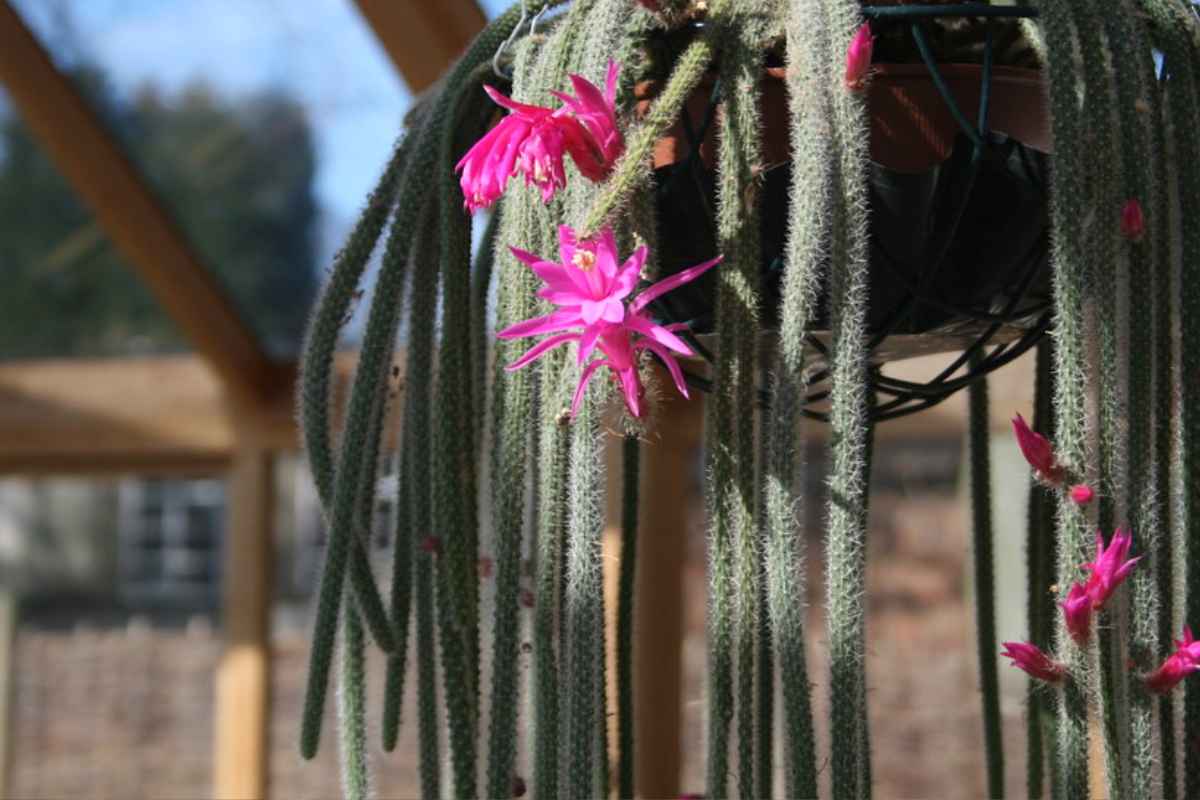
The APorocactus Flagelliformis, commonly known as the “mouse tail”, is one of the most fascinating and characteristic succulent plants, belonging to the family of Cactaceae.
Originally from Mexico, the species stands out for the pending stems, which recall a mouse tail, from which it takes the common name.
In the world of fatty plants, the APorocactus Flagelliformis stands out for the beauty and ease of cultivation: if you are looking for a plant that adds an exotic and elegant touch to your outdoor spaces, you have found a decidedly indicated option.
Botanical features of the Sorococactus Flagelliformis
The scientific name of the Sorceocactus Flagelliformis derives from the Latin “flagellum“, Which means” whip “, with reference to the elongated and flexible shape of its stems. Also known as cactus snake, the plant belongs to the cactaceae family and the genre Aportocactus. Its pendulum and long stems can reach up to 120 cm in length, for a very particular final effect.
It is not particularly fragrant and rarely produces fruits in cultivation, which makes it an ideal plant for those who want a decorative element without the size of falling fruits or intense smells.
The APorocactus Flagelliformis maintains its foliage throughout the year, given the status of perennial and evergreen plan.
Where to place the plant tail plant
The APorocactus Flagelliformis prefers sunny or semi-umbrented positions.
The guarantee of good exposure to light, since the plant thrives with intense brightness, but avoid direct exposure to the sun in the hottest hours of the day, especially during the summer, to prevent any scrolls on the leaves.
If grown inland, the plant must be positioned near a light window, preferably oriented to the south or west, where it can receive intense indirect light for several hours a day.
What is the ideal soil for the plant tail plant
Given the nature of a succulent plant requires well draining soil to thrive. Use a specific substrate for cactus, easily available in gardening centers. The soil should be light and porous, to allow water to flow quickly to avoid water stagnation that could cause radical rot. You could prepare a mix by mixing land for cactus with perlite or coarse sand: in this way you will further improve the drainage.
How to water the Aportocactus Flagelliformis
The APorocactus Flagelliformis fears water stagnation, therefore it is essential to adopt an adequate irrigation regime. During the growth season, ranging from spring to autumn, watered regularly but let the ground dry completely between one irrigation and another. In winter, the plant enters a state of vegetative rest and irrigation must be drastically reduced. Intense only when the soil is completely dry, in order to prevent the excessive humidity that could damage the roots.
What is the ideal temperature for the plant tail plant
APorocactus Flagelliformis is tolerant up to minimum temperatures of 10 ° C. During the winter, it is advisable to repair the plant in a cool and bright place, like a cold greenhouse or a veranda, where the temperature never goes below 10 ° C. This measurement will protect the plant with an intense cold and frosts, ensuring that it remains healthy and vital even in the most rigid months.
When the plant tail plays the plant
One of the most fascinating aspects of the Sorceocactus Flagelliformis is its spectacular flowering. During spring, it produces wonderful pink or red blooms, which add a further touch of color to its already fascinating appearance.
Flowering is typically between April and May, a truly spectacular moment capable of fascinating plants fans from all over the world.
How to repot the plant tail plant
The repotting of the Sorceocactus Flagelliformis is an operation that should be performed every 2-3 years, preferably in the spring, before the start of the growth season. Choose a slightly larger vase than the previous one and fill it with a well -draining substrate for cactus. During the repotting, check the status of the roots and remove any damaged or gear parts, and subsequently waterly water and place the plant in a bright place but sheltered from the direct sun for a few days, so that it can adapt to the new environment.

How to fertilize the plant tail plant
To support the growth and flowering of the Sorceocactus Flagelliformis, you will have to provide adequate fertilization. From March to September, use a specific fertilizer for cactus once a month: Wuesti fertilizers are formulated to provide essential nutrients without causing accumulation of salts in the ground. During the winter, suspend fertilization, since the plant is in vegetative rest and does not need additional nutrients.
How to prune the plant tail plant
Generally, the APorocactus Flagelliformis does not require frequent pruning. However, it is good practice to eliminate damaged or dry stems to keep the plant healthy and aesthetically pleasant. If you have to notice march or infested parts, you will have to read them promptly to prevent the spread of diseases.
Regular maintenance contributes to maintaining the plant in excellent condition and promoting vigorous growth.
What is the ideal humidity for the plant tail plant
APorocactus Flagelliformis has no particular humidity needs. However, if the air should be too dry, especially during the winter with the heated heating, you could place a saucer with a wet expanded clay near the plant. In doing so, you will help the plant to maintain an adequate humidity level without risking water stagnation.
What are the diseases and parasites that can attack the plant tail plant
Like many succulent plants, the APorocactus Flagelliformis can be susceptible to mealybugs and aphids, parasites that can damage the plant, therefore you will have to monitor it regularly and intervene promptly. In case of light infestations, you can use natural insecticides such as potassium soap, while in the presence of more serious infestations, it may be necessary to consult an expert to obtain advice on more effective treatments.
Use in traditional Mexican medicine
In Mexico, the mouse tail was not appreciated only for its ornamental beauty. Historically, it was used in traditional popular medicine.
According to ethnobotanical sources, the plant was used:
In oldest texts, it is also mentioned as a remedy in cases of heart disorders or convulsions linked to Eclampsia (even if these applications do not have a modern scientific confirmation).
Obviously today its therapeutic use is not recommended: these are historical curiosities related to Mexican popular culture.
Don’t you want to lose our news?
