
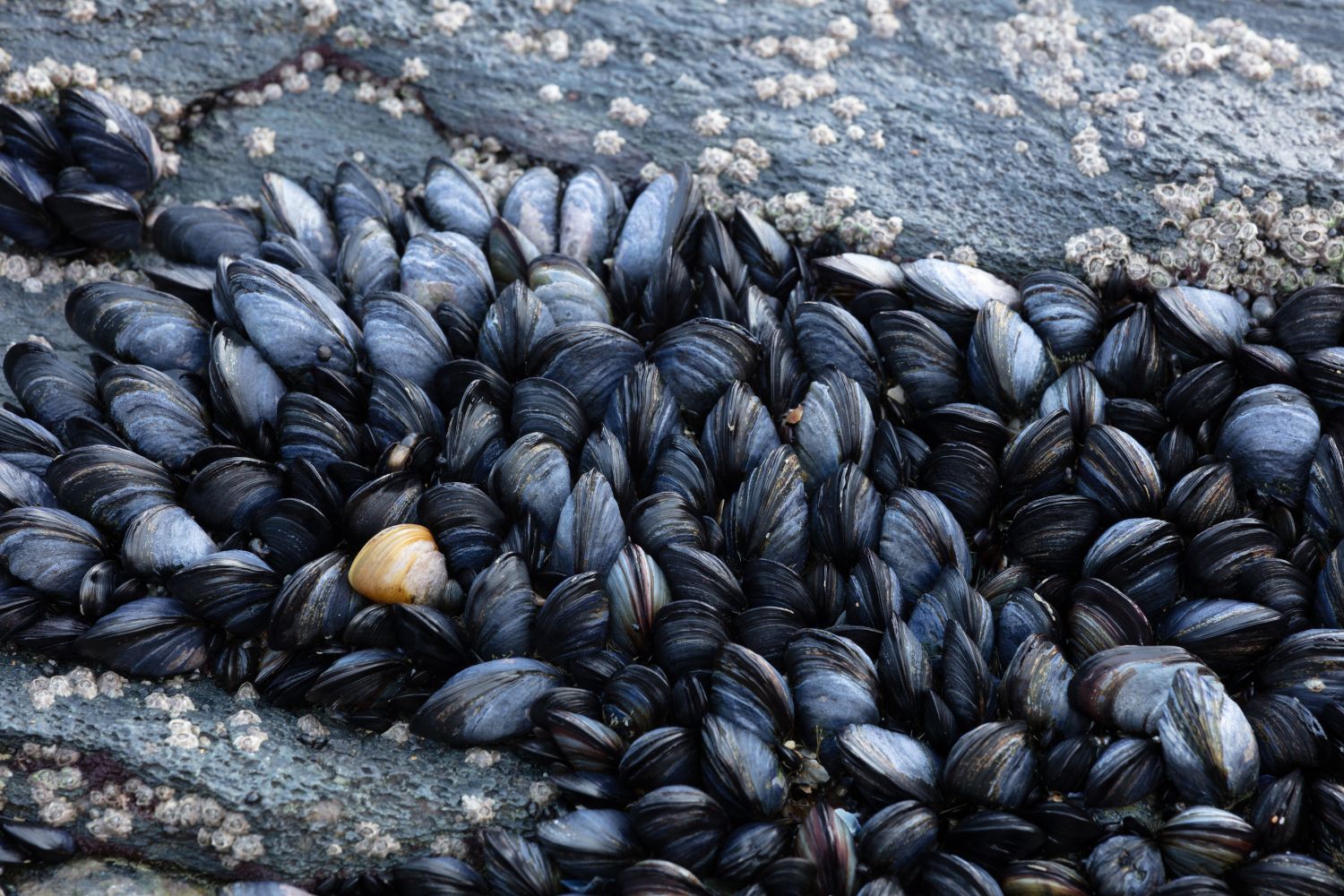
The climate crisis does not only threaten glaciers and forests: it is now clear that even what reaches our tables is increasingly in danger. According to a new study, the production of mussels in the Mediterranean could collapse as early as 2050, while oysters, although showing greater resistance, will still suffer significant consequences.
The research, published in the journal Earth’s Future, sends a clear message: without adaptation, the future of Mediterranean mussel farming is seriously compromised.
Read also: Climate change, fewer mussels and clams in Puglia: parrotfish are arriving (and it’s not a good thing)
The study was conducted by researchers fromIfremerthe French Institute for Research on the Exploitation of the Sea, and coordinated by the marine biologist Fabrice Pernet.
The study
For over a year, between 2022 and 2023, scientists observed the survival of mussels and oysters farmed in extremely realistic conditions, placed in a container fed with unfiltered water coming directly from the Thau lagoon, one of the most important areas for French shellfish farming. Salinity, oxygen, phytoplankton, viruses and bacteria were the real ones of the lagoon.
The only change introduced by the researchers was the increase in water temperature (from +1 °C to +3 °C) and the enrichment of CO₂, to simulate ocean acidification predicted for 2050, 2075 and 2100.
We are as close as possible to what the future will be, explained Pernet.
The results are alarming: at the end of the experiment, the mussel mortality was almost total in all future climate scenarios. Even a relatively small increase in temperature, equal to +1 °C – the one already predicted for 2050 – was enough to cause the complete death of livestock farms during the summer. A figure which, according to the researchers, confirms what has already been observed in the eastern Mediterranean, where increasingly frequent episodes of massive deaths in mussel farms are occurring in countries such as Italy and Greece.
Oysters, on the other hand, show greater resistance. Even in the worst case scenarios for 2100, the survival rate remains around 77%. However, animal growth is reduced by up to 40% compared to current conditions. This means longer farming times, higher costs and greater exposure to environmental risks such as toxic algae, pollutants and pathogens.
For scientists there is no more time to waste. The industry needs to start working on this now adaptation strategies, such as selecting varieties more resistant to heat and acidification, co-cultivation with algae – which can help improve water quality – or relocating farms to the open sea, where temperatures and acidity increase more slowly than in coastal lagoons.
Although there is much to say about the healthiness of mussels, the message of the research is quite clear: global warming is not a distant threat, but a reality that is already changing the Mediterranean and its resources. Without rapid adaptation, everything risks becoming the emblematic victim of an increasingly warm and acidic sea.
