
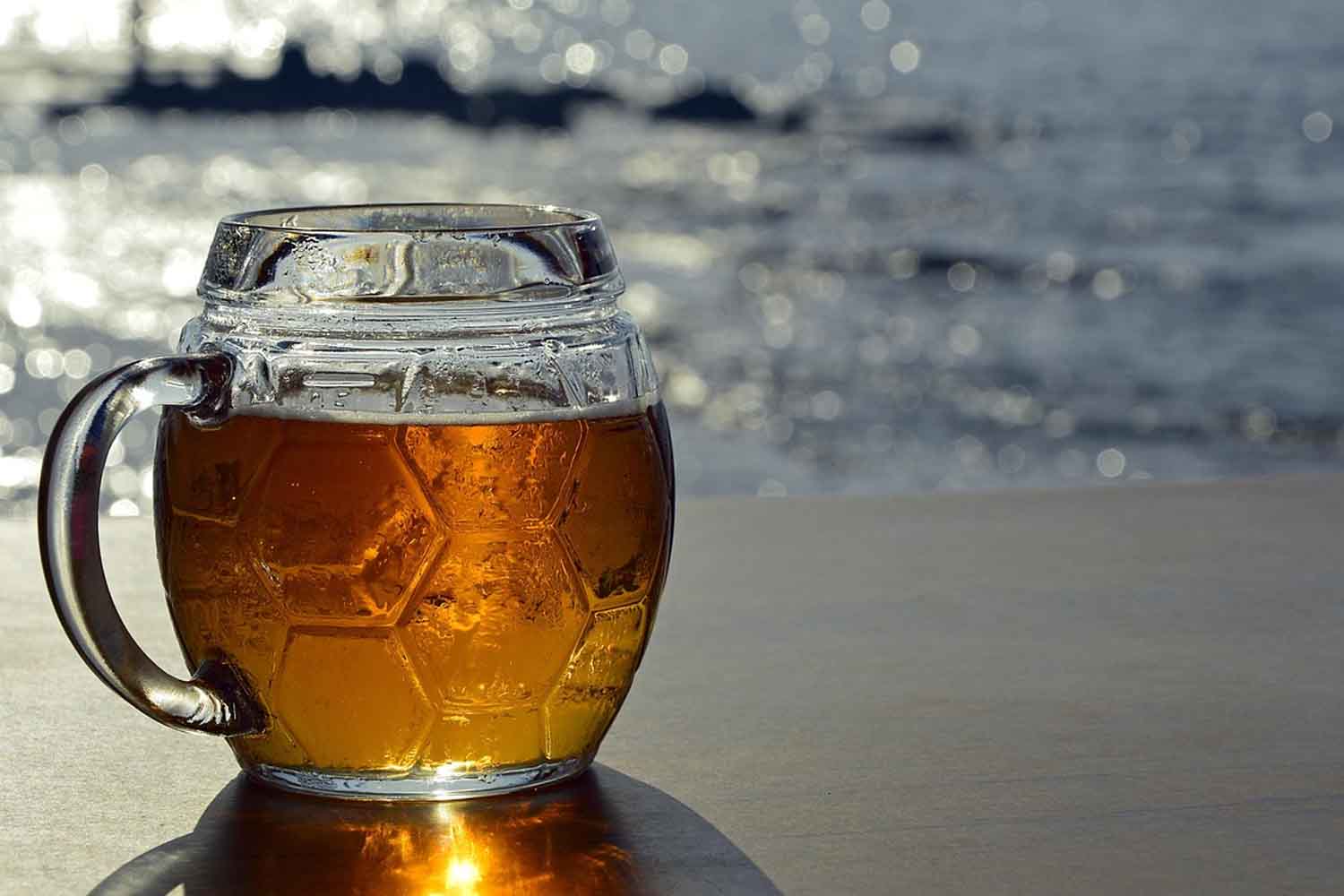
The scene is always the same, very Italian and very innocent in appearance: outdoor table, fogged glass, a cold beer that arrives when the asphalt is still throwing up heat and the t-shirt is already glued to your back. This seems like the simplest solution. Fresh, bitter, light, with that immediate promise of relief that lasts as long as a sip. The problem comes later, when the body has to deal with what that sip really brings.
During days of extreme heat, the body is already working uphill. He sweats, loses liquids, tries to keep his internal temperature stable, asks for water before even formulating a clear request. In this situation, beer plays an ambiguous game in the heat: it comes in as a cold drink, then it behaves like an alcoholic. And alcohol, especially when the sun beats down and the humidity makes everything heavier, can worsen precisely what should be protected: hydration, clarity, thermoregulation.
The Istituto Superiore di Sanità explains it very directly: alcohol in summer is often perceived as thirst-quenching, while it deprives the body of precious liquids, acts as a diuretic and hinders the antidiuretic hormone, that is, the mechanism that helps regulate the balance of fluids. The practical result is simple: you urinate more, you lose water and mineral salts, and the body becomes thirsty again at a stage in which it would have needed to recover, rather than give up more ground.
The cold is deceiving
Beer freshly taken out of the fridge gives a real sensation of freshness, there’s little to go around about this. The mouth cools, the throat thanks, the brain registers a small respite. That truce, however, is mostly about perception. The body, meanwhile, must metabolize alcohol, manage fluid loss and continue to cool itself while the temperature remains high outside.
Alcohol also promotes vasodilation: blood vessels dilate, the skin may appear hotter, sweat may increase. On a mild evening it may seem almost negligible. In the middle of a hot day, or after hours spent on the beach, at a concert, queuing under the sun or on a train without decent air, it becomes an extra load on an organism already busy staying in balance. The ISS also links this effect to increased sweating, just as the body would need to better retain available fluids.
The Civil Protection reminds us that heat waves weigh on health when they alter the body temperature regulation system. Factors that make people more vulnerable include age, health conditions, medications, physical activity, working outdoors and even the use of alcohol and drugs. On days at risk, the indications are very concrete: drink water, eat fresh fruit, choose light meals, avoid alcoholic, sugary and caffeine-containing drinks.
Aperitif, festival, beach
The risk grows when beer stops being an isolated glass and becomes a sequence. One at the bar before dinner, another during the concert, a third because “it’s so light”. In the meantime, perhaps you ate little, sweated a lot, walked in the sun or danced in a crowd. Thirst comes late, the head becomes heavy, the skin tightens, tiredness seems normal because it is hot. Instead the body is sending quite clear signals.
The World Health Organization recommends drinking water regularly during heat waves and avoiding alcohol and too much caffeine. Also remember that in the sun the perceived temperature can be much higher than that measured in the shade, and that symptoms such as dizziness, nausea, weakness, intense thirst, headache, cramps or confusion should be taken seriously. Heatstroke is listed as a medical emergency, so the line between “I’m just hot” and “need help” deserves attention.
This also applies to those who feel young, trained, used to coping well in the summer. Prolonged heat accumulates fatigue. A day at the beach, a shift working outdoors, a walk at the wrong time, a bad night’s sleep and a few drinks can add up without making any noise. The body holds, then presents the bill all together.
What to drink
The most banal answer is also the most useful: water. In small sips, regularly, without waiting until your mouth is as dry as cardboard. On very hot days, fresh fruit, simple meals, real shade, breaks in cooler environments and light clothing also help. Beer, if it enters the day, needs a more lateral place: away from the worst hours, never as a substitute for water, better together with something to eat and alternated with real glasses of water.
Non-alcoholic beer can be a less problematic choice in terms of alcohol, although it is still useful to look at sugars, quantities and context. In fact, during intense heat, very sugary drinks are among those to be avoided according to the Civil Protection instructions. The body under thermal stress asks for simple, almost boring things: water, salts recovered from food, rest, shade, less aperitif heroism.
In the heat, beer retains all its summer charm. Cold glass, low foam, table in the shade. Just remember that the body, while we toast to the coolness, is doing another job. He’s looking for water. Let’s give it to him.
You might also be interested in:
