
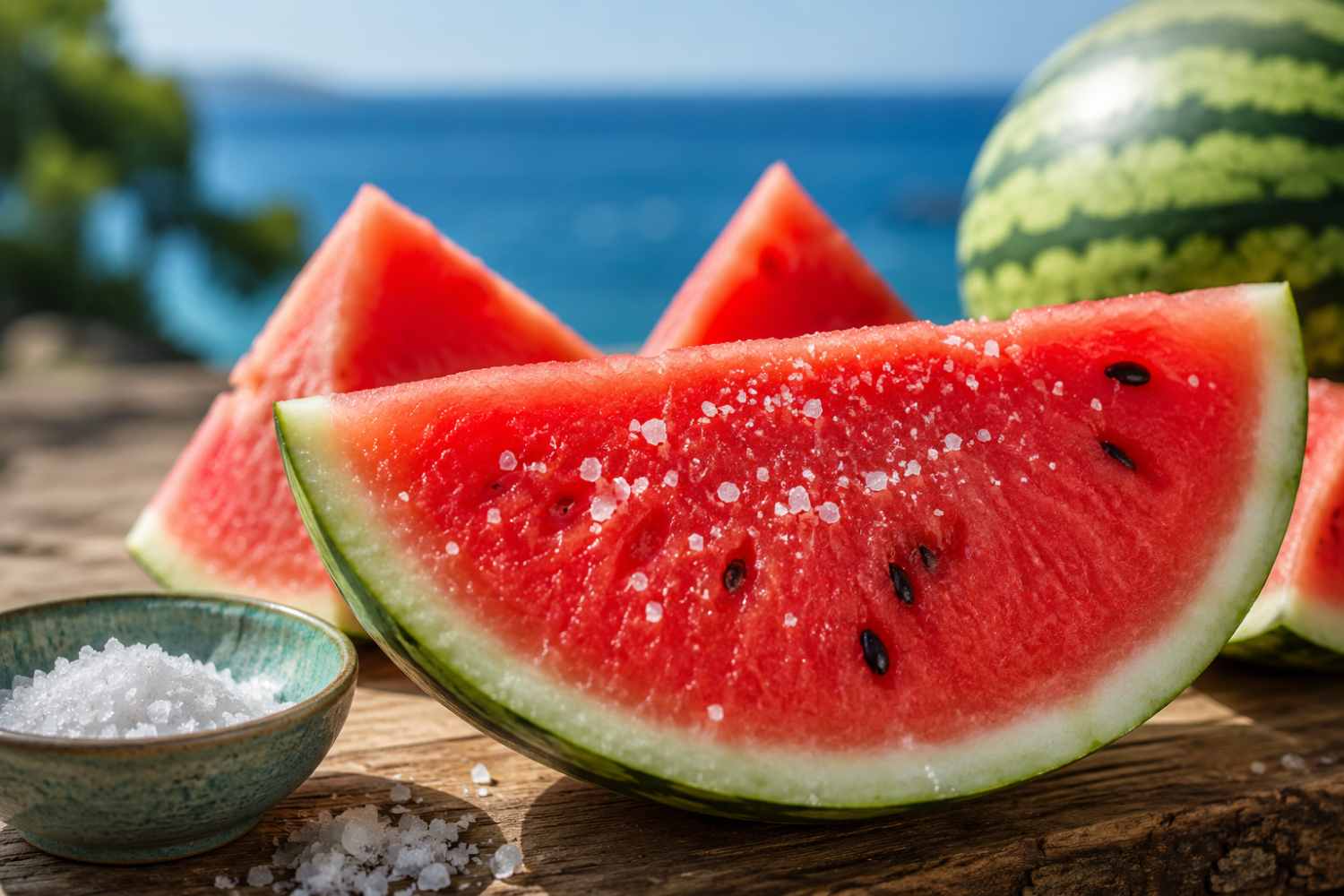
Adding a pinch of salt to watermelon could be seen as absolute gastronomic heresy, yet according to Dr. Raffaele Scarabelli, a nutritionist who regularly undermines the most deeply rooted food beliefs on social media, this is precisely the trick to transforming the symbolic fruit of summer into a true ally of hydration.
Sodium loss
The starting point is a fact that we all know from direct experience: when it’s hot we sweat, and with sweat we not only lose water, we also lose sodium, one of the minerals that regulate the balance of fluids in the body. Watermelon, made up of over 90% water, is almost completely water-free and eating it as it is, explains Scarabelli, would be equivalent to drinking a lot of water all at once, a situation which would end up further diluting the mineral salts in the blood, instead of replenishing them. The solution he proposes involves adding a pinch of salt to the slice, especially on days when you sweat a lot, whether due to the intense heat, a long walk or a training session. By doing so, we will be able to immediately replenish the lost sodium and seriously rehydrate ourselves. If you think that the flavor could be affected, don’t worry, because salt enhances the flavors (it is also put in the dough for desserts) so don’t be afraid, try it!
What science says about sodium and rehydration
Scarabelli’s intuition is confirmed in the scientific literature on hydration from physical exertion and heat. Research published in the Journal of Applied Physiology observed that adding sodium to a rehydration drink, as well as consuming a sodium-containing meal, increases fluid retention and improves plasma volume restoration, compared to water alone. In practice: drinking (or eating) something rich in water but low in sodium leads the body to dispose of those liquids more quickly through urine, instead of retaining them where they are needed. The mechanism is also confirmed by more recent reviews on sports nutrition, according to which a greater sodium intake, generally achieved by increasing the concentration of sodium in the drink, results in greater retention of a fixed volume of fluids after physical exercise which caused considerable dehydration.
We leave you with Dr. Scarabelli’s video:
View this post on Instagram
