
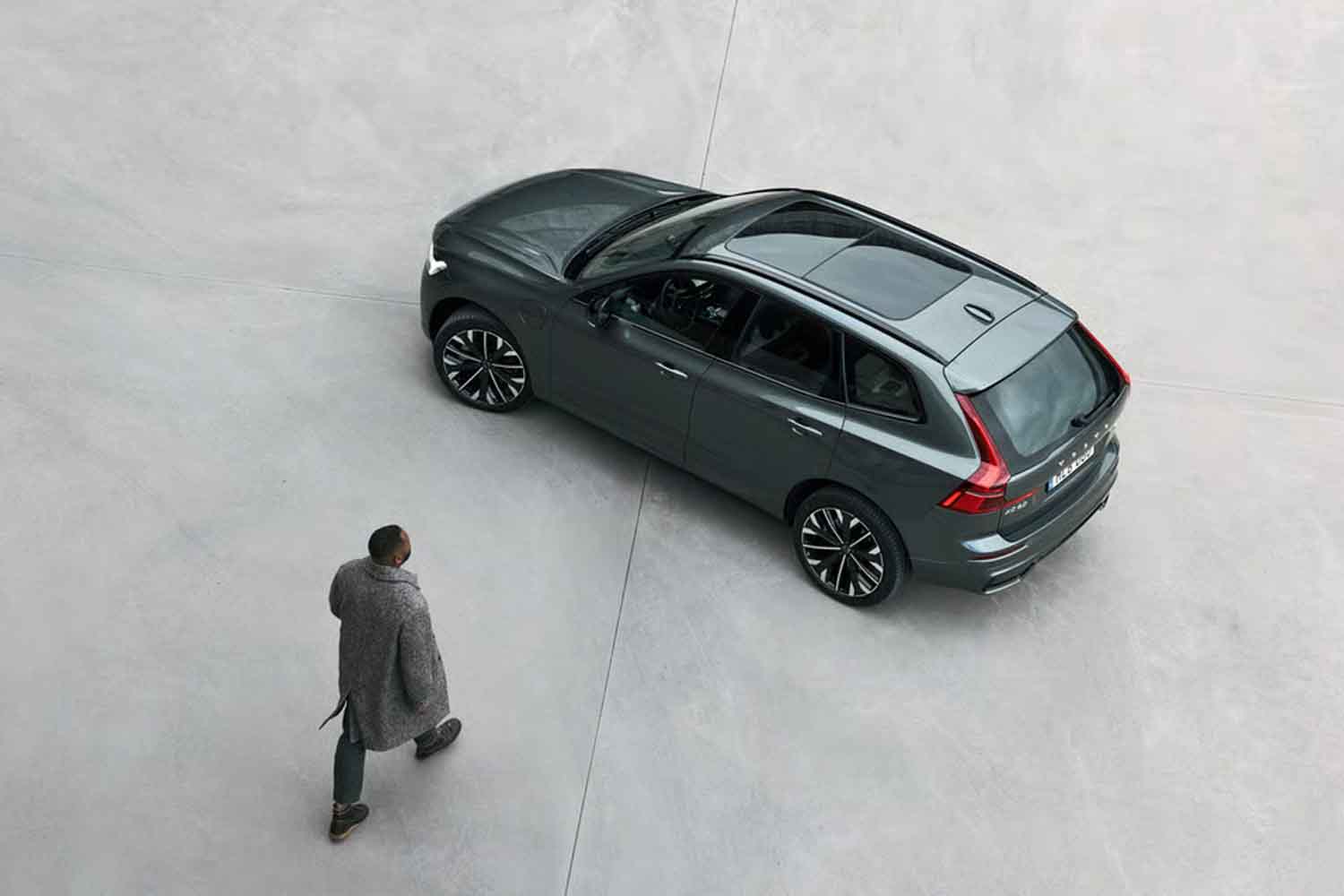
For seven months, before connecting the Volvo EX30 to the socket, thousands of British motorists have had to stop the cursor at 70%. Beyond that threshold, a hardware problem can cause some high-voltage battery cells to overheat and, in the worst cases, a fire. The SUV continues to move, however with almost a third of the charge left unused as a precaution. On an electric car bought also for its autonomy, this is noticeable.
The safety recall registered by the British authority DVSA bears the code R/2025/559, dates back to 22 January 2026 and involves 10,577 vehicles in the United Kingdom. The campaign concerns some EX30s equipped with the high-capacity batteries fitted on the Single Motor Extended Range and Twin Motor Performance versions. Not all cars of the model are affected: you need to check the chassis number.
The temporary solution takes up 30% of the battery
The instructions published by Volvo Cars UK are very precise. Owners should set the maximum charging level to 70%, avoid leaving the car unattended while it is being charged inside buildings or covered areas and ask for assistance if there are warnings on the display or app.
Volvo claims the 70% limit eliminates the risk of overheating while waiting. Permanent repair requires inspection and replacement of some internal battery components. On the British website the car manufacturer announces that the spare parts are arriving and that the dealers will contact customers to arrange the intervention. A general completion date, however, does not appear.
By April, almost three months after the recall was officially launched, fewer than ten cars had been repaired in the UK. Supplies of replacement modules proceeded much slower than the list of cars affected. At the end of July, many owners were still waiting, forced to plan trips and recharges around a battery that was only partially usable.
The limitation directly affects autonomy. The EX30 with extended battery is presented on the British market with an approved range of up to approximately 450 kilometres, which varies depending on version and driving conditions. Stopping at 70% doesn’t automatically subtract 30% of the kilometers on each trip, because temperature, speed and fuel consumption are constantly changing. Energy availability, yes, is cut at the start.
The practical consequence is quite simple: more stops are needed and, for those who cannot recharge at home, more trips to public charging stations. Some UK customers have received £200 vouchers to offset at least some of their higher charging costs. The good ends; the battery to be repaired remains.
The global recall and the fires in Thailand
The story goes beyond British borders. The global recall was initially listed at 40,323 Volvo EX30s and later reduced to 37,802 examples. The modules involved were produced by Shandong Geely Sunwoda Power Battery, a company linked to the Chinese Geely group, the majority shareholder of Volvo Cars. According to the automaker, the flaw in the manufacturing process has been corrected and the supplier is producing replacement components.
Volvo described the fires as extremely rare, with a frequency of less than 0.1% of the cars involved. Rarely, when we’re talking about a tens of kilowatt-hour battery parked under the seats, it continues to require repair.
In May, two Volvo EX30s caught fire in Thailand. The local consumer protection authority then announced civil action against the carmaker’s national subsidiary after some owners asked for full refunds of their cars in lieu of module replacement. Volvo had proposed new batteries and temporary cars for most of the customers involved, without reaching an agreement.
The company itself has acknowledged the frustration caused by the delays. The distribution of spare parts varies from country to country: while in some markets the interventions began in the spring, in others owners received indications that replacements were postponed to the second half of 2026. A global campaign dependent on cumbersome modules, specialized technicians and a logistics chain under pressure proceeds much less quickly than a software update.
What Italian owners should do
The British recall does not mean that every Volvo EX30 sold in Italy has the same faulty battery. Only certain examples are involved and the only reliable check is the chassis number.
Anyone who owns an EX30 in Italy can contact Volvo Car Italia customer service or an authorized dealer, communicating the VIN shown on the documents and on the car. Applying the UK limit on your own without knowing whether the car falls within the countryside may be prudent, but it is no substitute for official verification.
The defect concerns specific components and production batches. Turning this into a verdict on all electric cars would be as convenient as using an engine recall to archive the entire history of gasoline cars. Here the issue is more limited and very concrete: over 10 thousand British cars recalled, repairs that are proceeding slowly and owners who for months have only been able to use 70% of the battery they paid for.
