
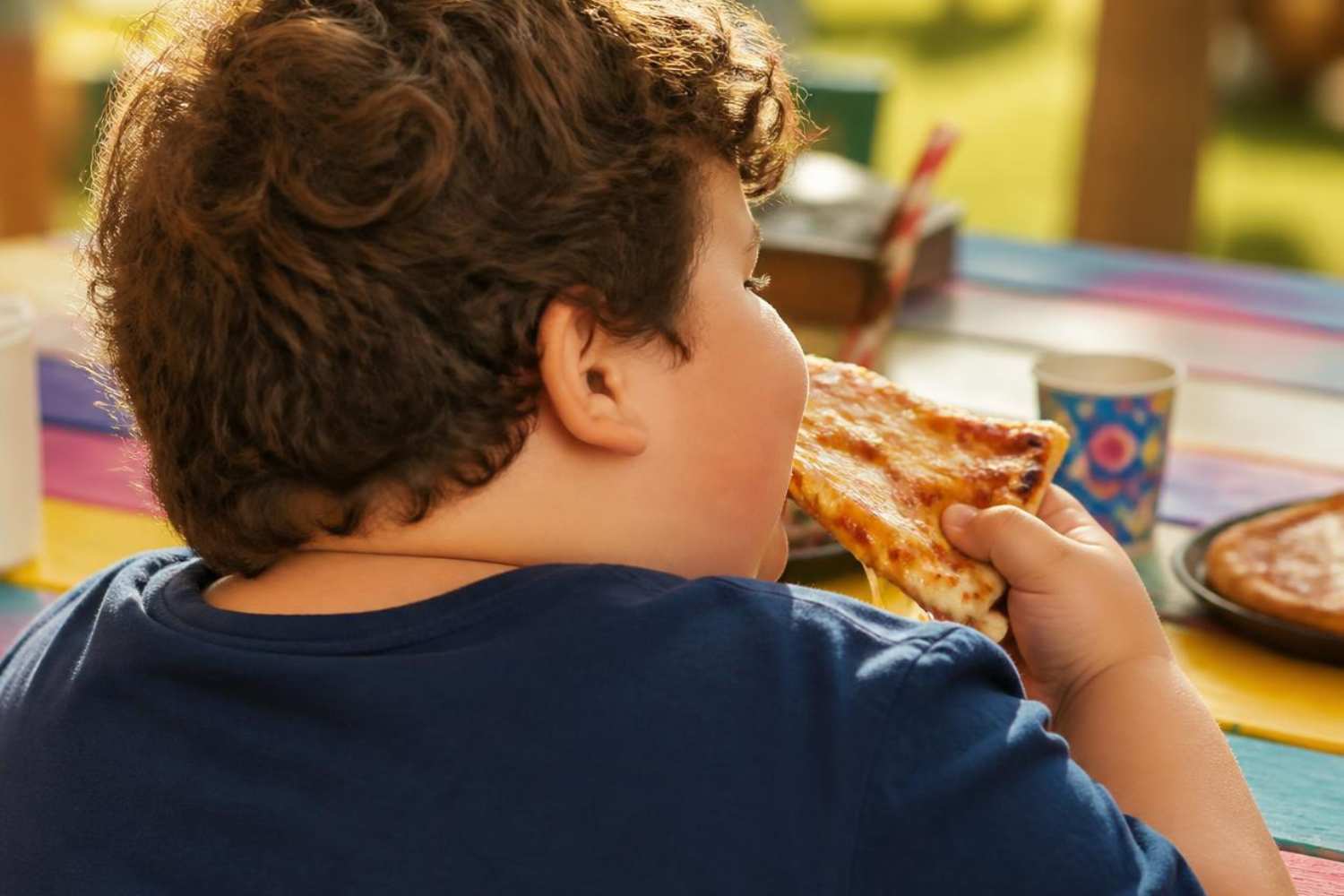
Pizza, pasta, bread, potatoes and ultra-processed food. This is the image of modern Italian nutrition that emerges from a BBC investigation into childhood obesity, which describes a country that is increasingly distant – at least in some areas and sections of the population – from the traditional Mediterranean diet, which for decades has represented the symbol of health at the table.
A heavy accusation, which comes from a country, the United Kingdom, which itself knows the problem of childhood obesity very well and which in recent years has experimented with various strategies to tackle it. The comparison, therefore, can be interesting: because childhood obesity is not an exclusively Italian problem, but a challenge common to many countries.
The investigation, carried out in Naples, tells stories of children and adolescents struggling with a burden that heavily influences their lives. Among these is Salvatore, 17 years old and 170 kilos, who struggles to even walk and who cannot undergo weight loss surgery because his weight makes the operation too risky.
And Salvatore’s case would not be isolated. According to data reported by the BBC, in some areas of Campania over 40% of eight and nine year old children are overweight, while, more generally, Italian children are now among those with the highest overweight rates in Europe.
And the Mediterranean diet?
And the Mediterranean diet? “It was lost.” It is perhaps the most provocative sentence of the entire investigation. Italy, the symbolic homeland of the Mediterranean diet, would now have lost the very food model that made it famous throughout the world.
This is supported by Valter Longo, director of the Longevity Institute of the University of Southern California, according to which only 10% of Italians actually follow the traditional Mediterranean diet today. In its place a very different version of the Italian diet would appear, summarized by Longo himself in the “five Ps”: pizza, pasta, potatoes, proteins and bread.
A provocation that finds some concrete examples in the investigation: supermarkets full of ultra-processed products, snacks consumed throughout the day and pizzas increasingly rich in caloric ingredients. No longer just the classic Margherita, but pizzas stuffed with chips, sausages and other fried foods, says a young woman interviewed by the BBC.
But saying that the Mediterranean diet “no longer exists” is perhaps a simplification. It would be more correct to say that the traditional Mediterranean dietary model is increasingly less followed, especially in some segments of the population and in some areas of the country. The real question, therefore, is not just what Italians eat today, but how much it is still possible to follow that model in a food environment where ultra-processed products, snacks and sugary drinks are easily accessible and often much more convenient.
It’s not enough to tell parents to eat better
The investigation also reveals another delicate aspect: many parents do not realize that their children are overweight. This is the case of Francesca, 10 years old, who weighs 60 kilos. Her parents describe her as an active child, who practices artistic gymnastics and Latin American dance, and had not considered her weight a problem. However, his daily diet includes bread and Nutella for breakfast, a chocolate cake as a snack and, according to his mother, very few vegetables.
Pediatrician Roberto Berni Canani underlines that the problem is not necessarily the single food or single meal, but the set of habits that accumulate over the course of the day: small, high-calorie foods, sugary drinks, little fruit and vegetables and a lack of awareness of the overall effect of these choices.
And this is probably the most important point of the whole story. We cannot make childhood obesity the fault of parents or children.
The environment in which little ones grow up matters. It matters what they find in supermarkets, what is advertised, what is sold near schools, how much time they have to do physical activity and how easy or difficult it is to access fresh, quality food.
The BBC investigation focuses attention on a situation that is certainly worrying in Italy, but which is not an isolated phenomenon. Childhood obesity in fact represents a challenge for many countries, including the United Kingdom, which in recent years has implemented various strategies to try to combat it, also intervening on the food environment and advertising aimed at younger people.
The comparison with the United Kingdom can therefore be useful to understand how to tackle the problem. In fact, the British experience demonstrates that childhood obesity cannot be traced back only to the individual choices of children or their families, but requires broader interventions involving schools, institutions, the food industry and communication.
Even in Italy, therefore, the issue should not be addressed simply by inviting parents to pay more attention to what their children eat. We need nutritional education and prevention, but also an environment that makes it easier to choose healthy foods and recover, where possible, those traditional Mediterranean habits that seem to have progressively weakened.
Italy is trying to react
Italy, however, has not remained completely firm on the issue. In 2025 it approved a national law that recognizes obesity as a chronic, progressive and relapsing disease, overcoming the idea that it is simply the result of poor individual choices. The new approach also considers the biological, environmental and social factors that contribute to the development of obesity.
Furthermore, in Campania, initiatives have been launched in schools which will involve over 17,000 students from 25 institutions, with nutrition education programs and family involvement.
It is an approach that seems to be going in the right direction: starting from children to reach families and trying to change habits before they become difficult to change.
More controversial, however, is the experimentation of a diet that mimics fasting intended for 300 overweight adolescents. The protocol provides for a highly low-calorie diet for five days every three months. The goal is to achieve a “metabolic reset”, but not all specialists are convinced that it is a path suitable for younger people. Pediatrician Berni Canani, in particular, believes that the available evidence is still insufficient and fears possible psychological consequences and an increased risk of eating disorders.
The real challenge is to recover the Mediterranean diet
In short, the BBC’s provocation touches a raw nerve. Italy continues to sell the image of the Mediterranean diet to the world, but this does not mean that all Italians, and especially all children, really follow it.
The traditional dietary model made of vegetables, legumes, fruit, whole grains, extra virgin olive oil and fish has not disappeared from Italian tables. But many families now live with a very different diet, made up of ultra-processed products, snacks, sugary drinks and foods with a high caloric density.
Perhaps, then, rather than saying that “the Mediterranean diet no longer exists”, we should ask ourselves why it has become so difficult to follow it.
And here the criticism of the BBC should become an opportunity for a broader reflection, which also involves the United Kingdom and all the countries grappling with the same emergency. We need education, prevention and greater awareness, but also public policies capable of making it easier to choose healthy foods. Because if we really want children to go back to eating according to the Mediterranean model, it is not enough to remind them that vegetables are good for us: we need to make sure that healthy food becomes the easiest, most accessible and natural choice again.
