
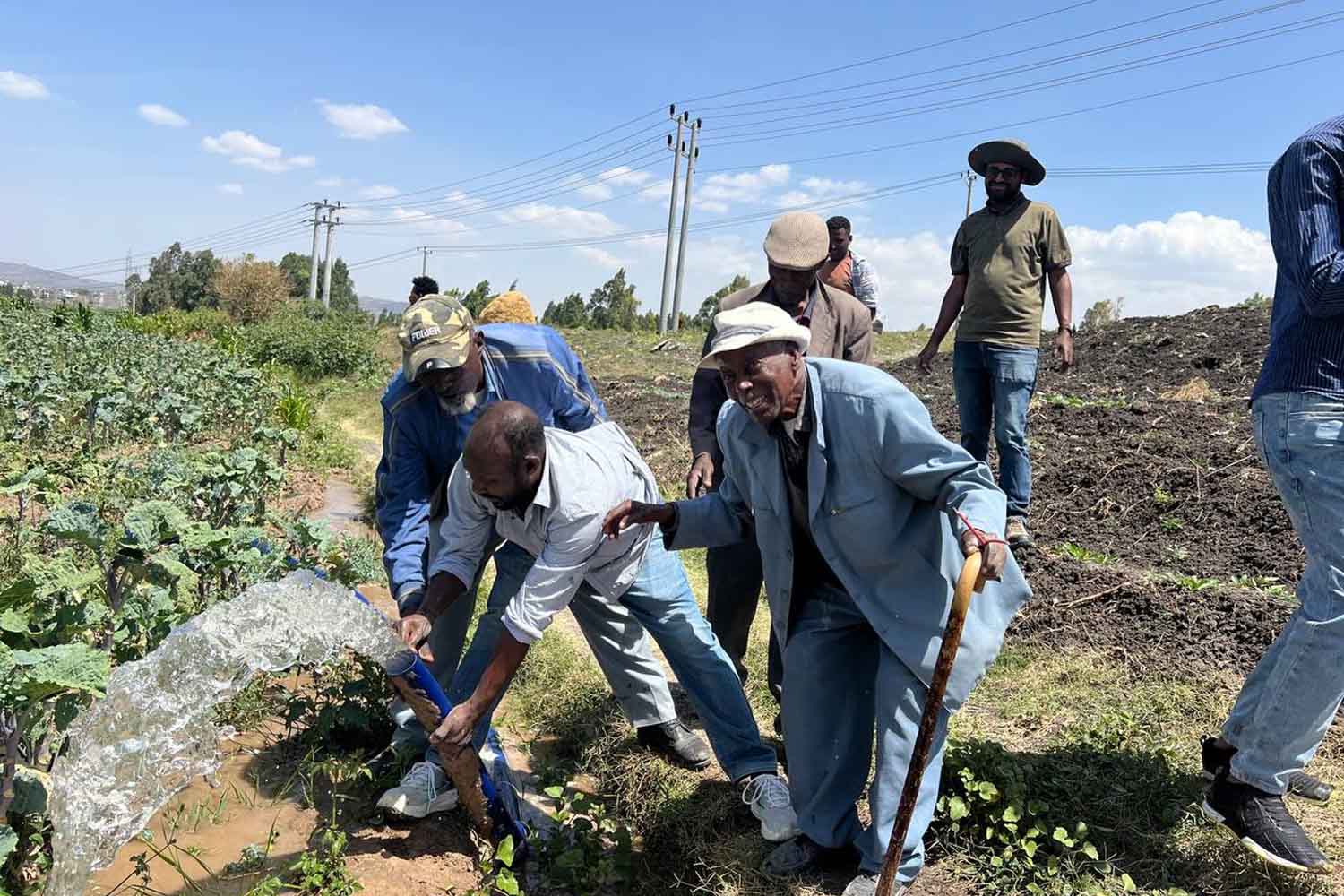
To irrigate just 1.5 hectares of vegetables, a cooperative on the outskirts of Addis Ababa consumed around 2,305 liters of diesel in three months. And that bill came back three times a year, along with the lines to find fuel and the price swings. Now water is pumped using the sun: in Akaki Kality, Ethiopia, 25 farmers have replaced diesel pumps with a solar irrigation system installed as part of a program led by Farm Africa.
The estimated savings are quite concrete. Those 2,305 liters cost approximately 414,720 Ethiopian birr per production cycle; with three harvests a year, Farm Africa calculates that the cooperative can avoid spending around 1.24 million birr, equivalent to £5,800 a year. They are forecasts developed by the organization managing the project, therefore not an independent economic evaluation. The saved diesel, however, is much less abstract.
©FarmAfrica
In Oromia another 1,344 liters of petrol disappear per harvest
A few dozen kilometers away, in Godino Kebele, in the Oromia region, six farmers cultivate two hectares and used petrol-powered pumps. Getting fuel meant spending money, traveling long distances and also dealing with administrative procedures before purchasing.
With the photovoltaic pumps, according to data collected by the project, the group avoided approximately 1,344 liters of petrol during a single three-month production cycle, equal to an estimated expense of 241,920 birr. Repeated over the three growing seasons, the savings would amount to approximately 725,760 birr per year, which Farm Africa quantifies at 3,386 pounds.
Here the solar panel does a very unspectacular and very useful job: it powers the pump. No fuel to buy, transport and burn every time you need to bring water to crops.
And in Ethiopia this difference weighs more than elsewhere. The FAO describes the country’s agriculture as still predominantly dependent on rainfall and estimates an irrigation potential of around 11.1 million hectares, of which only 15-20% is developed mainly through surface irrigation systems. Irregular rainfall and drought therefore make the availability of water at the right time an essential part of the harvest.
The advantage of solar comes when fuel is lacking
The problem, in fact, does not only concern emissions. Farm Africa reports that diesel and petrol have become expensive and difficult to source in recent months, with some farmers being forced to wait hours or travel to purchase them. A pump that works directly with solar energy eliminates a large part of this dependence and allows you to respect irrigation shifts with greater continuity.
It also means removing from the field a small combustion engine that, season after season, continues to consume fuel and produce emissions. However, Farm Africa does not publish in this communication an estimate of the tonnes of CO2 avoided or comparative data on agricultural production before and after the installation. To already talk about a quantified increase in harvests would therefore be going faster than the available numbers.
Watering can still make a huge difference during a drought. An analysis of national data from the severe Ethiopian drought of 2015-2016 found that rain-dependent farms suffered an average of 37% reduction in annual net income from crops, while irrigated farms managed to maintain agricultural income, acreage and household food diversity. The work concerns another period and irrigation systems more generally, so it does not measure the effects of pumps installed today, but it shows why having water available during extreme events matters so much.
The project is much bigger than solar pumps
The facilities are part of the four-year program Nature-based Solutions for Sustainable and Inclusive Developmentlaunched in 2023 by Farm Africa together with nine other partners and funded by the Swedish Development Cooperation Agency, Sida.
The initial agreement included $11.5 million and an overall target of more than 87,000 families, including small farmers, community organizations and businesses. That number covers the entire program – which includes forest management, biodiversity, climate-smart agriculture and rural incomes – and therefore does not mean that 87,000 households will receive a solar pump. The official program sheet indicates interventions in six Ethiopian river basins and a period of activity from 2023 to 2026.
Sida also includes the project among the interventions supported in Ethiopia to increase resilience to climate crises and promote more sustainable management of natural resources.
For now the most solid numbers remain small enough to fit into a field: 25 farmers, one and a half hectares, 2,305 liters of diesel that can stop being bought every three months. This is enough to talk about solar irrigation in Ethiopia. The sun, at least, doesn’t require lining up with a jerry can.
