
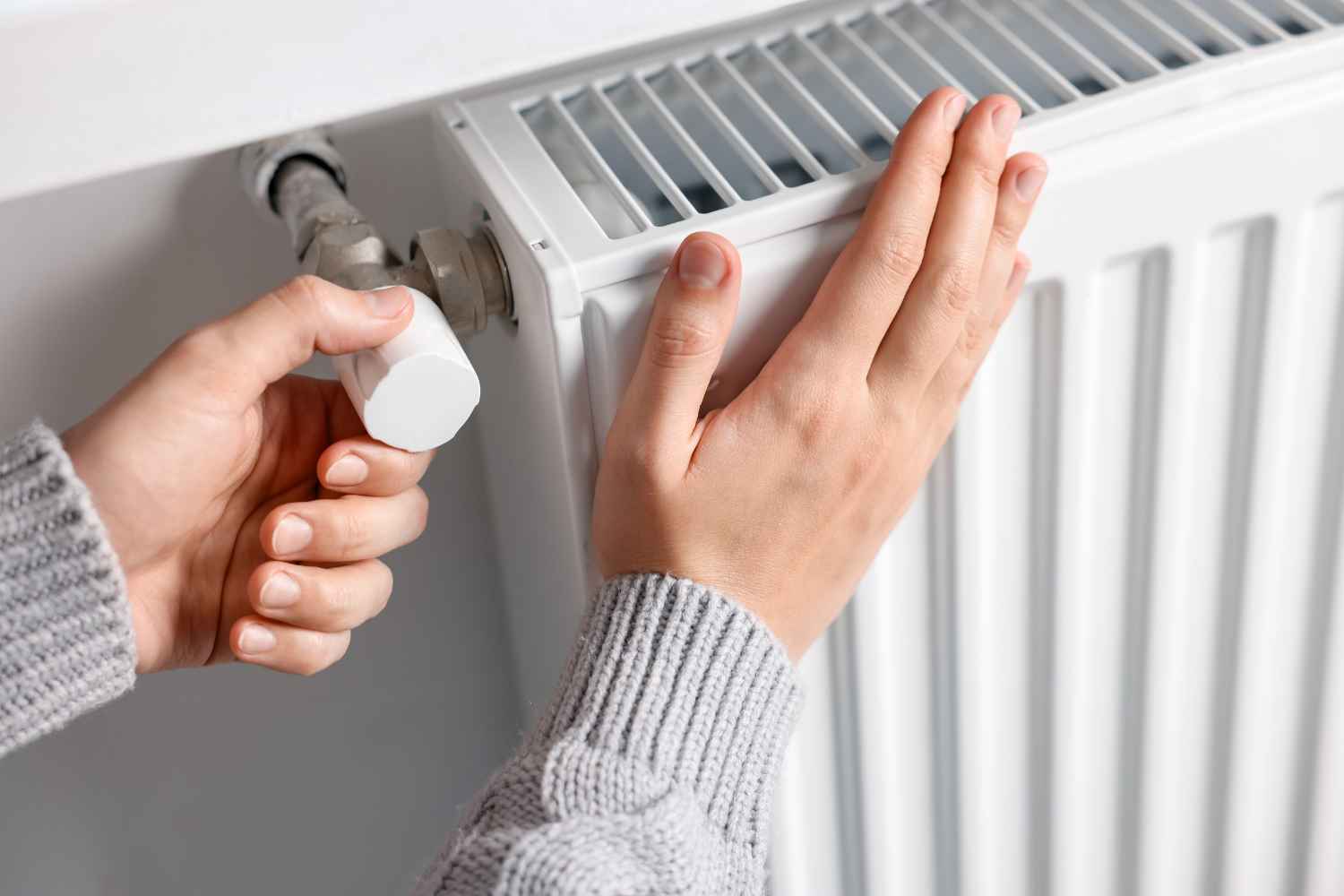
You turn on the heating, wait a bit, then place your hand on the radiator: it’s nice and warm underneath, barely warm above, maybe you even hear a gurgling noise, as if there were water moving inside.
Before you think that your radiator is broken, check one thing: there may be air trapped inside it. This often happens when you turn the heating back on after months of hiatus. Hot water circulates in the radiators, but if an air pocket has accumulated at the top, that area can remain cold.
And in the meantime the boiler continues to work, even if the radiator is unable to heat as it should.
Because the radiator is hot below and cold above
Hot water must circulate inside a radiator, when air enters the system, this tends to collect at the highest points, precisely where the part of the radiator that remains cold is often located.
The radiator then heats up halfway. You can notice this by placing a hand close to the surface, without touching it if it is very hot: in the lower part you feel the heat, while as you go up the temperature decreases significantly.
Another clue is the noise, if the radiator gurgles, mumbles or makes that strange sound of water flowing in spurts, there could be air in the system.
Be careful though: a radiator doesn’t necessarily have to be hot in every point. A certain temperature difference between water inlet and outlet is normal, especially in systems that work at lower temperatures. However, when the upper part remains decidedly cold and the lower part is hot, it is worth checking for the presence of air.
How to bleed the radiator
To let the air out there is a small valve, usually at the top of the radiator, on one of the two sides. On some radiators it opens with a square key, on others a flat-blade screwdriver is enough.
Before you get started, get a rag and a small container. Because when the air comes out, a few drops of water often also come in. And of course it always ends up where it shouldn’t.
The first thing to do is turn off the heating and wait for the radiators to cool down. Better to work with the circulator stopped, without risking getting a splash of boiling water on you.
At this point locate the vent valve, place the rag underneath and bring a glass or tray closer. Insert the square key, or the screwdriver if your radiator has that type of opening, and turn slowly anti-clockwise.
Not much, you don’t have to unscrew the entire valve, if there is air inside, you will hear a small hiss. The classic «psss» which indicates that it is coming out which sometimes lasts a few seconds, other times a little longer.
Then water will start to come out, at first it may come in small splashes, mixed with the air. However, when a continuous stream comes out, without puffs, you can close the valve again.
Without tightening, just close it well, without forcing.
Check the boiler pressure after bleeding
This step is often forgotten. When you let the air out of one or more radiators, the pressure in the system can decrease. If you have an independent boiler, check the pressure gauge or the value on the display, possibly with the system cold.
In many domestic boilers the cold pressure is around 1-1.5 bar, but the correct value depends on the model and the system.
If it has dropped too much, it may be necessary to restore it using the fill tap, following the boiler’s instructions. Don’t add water randomly: excessive pressure can create other problems.
If you live in a condominium with central heating, however, avoid intervening on the filling system. For any pressure problems, contact the person who manages the system.
What if the radiator continues to stay cold above?
You let the air out, water comes from the valve without interruption, but after turning the heating back on the radiator continues to heat up badly.
At this point the problem could be different. Maybe the water is not circulating as it should, a valve is blocked or the system is unbalanced, in practice, some radiators receive enough hot water and others receive too little.
A useful check is to see what’s happening in other rooms. If the problem affects only one radiator, there may be a localized defect. However, if several radiators remain cold in the upper part, there could be air distributed in the system or a more general circulation problem.
There is also another situation to be aware of. If the radiator is hot above but cold especially below, one of the possible causes is the accumulation of sludge and deposits inside. It happens in older systems, where over time residues can form which obstruct the passage of water.
In that case you can open the vent as much as you want, but it will hardly change anything. The system may require cleaning.
Why does air continually return to radiators?
If you have to bleed a radiator once after the autumn restart, it can happen. If, however, you hear gurgling every week and have to continually open the valve, there is something to check. Air can enter during filling of the system, after maintenance work or in the presence of problems that require frequent top-ups of water. Even a pressure that continually drops can be a sign of a leak or a fault that needs to be checked.
And continuing to bleed without understanding where that air comes from is of little use. After eliminating the air, turn the heat back on and let the water circulate for a few dozen minutes. Then check to see if the top of the radiator is starting to heat up too. If it remains cold, it is better to have the system checked by a technician.
