
It is nothing new that extra virgin olive oil is one of the most counterfeited food products in the world. Several studies have certified a high degree of alteration, where it was possible to observe a very high percentage of oils passed off as “extra virgin” actually mixed with lower quality oils. For this reason, knowing home methods of verification becomes a truly fundamental aspect for anyone who wants to purchase a genuine, good quality product.
The smoke temperature test
Of the various methods available to test the authenticity of olive oil, the smoke temperature test is among the simplest. This approach exploits a specific physical characteristic: each vegetable oil begins to decompose and produce smoke at a precise temperature, called the “smoke point”.
Quality extra virgin olive oil reaches its smoke point between 175 and 210 degrees Celsius (about 350 to 410 degrees Fahrenheit). A relatively high temperature, resulting from the chemical composition of the oil, rich in monounsaturated fatty acids and poor in polyunsaturated fatty acids, which degrade more easily when heated. In contrast, oils such as sunflower or corn have lower smoke points, generally between 160 and 180 degrees Celsius.
How to perform the test
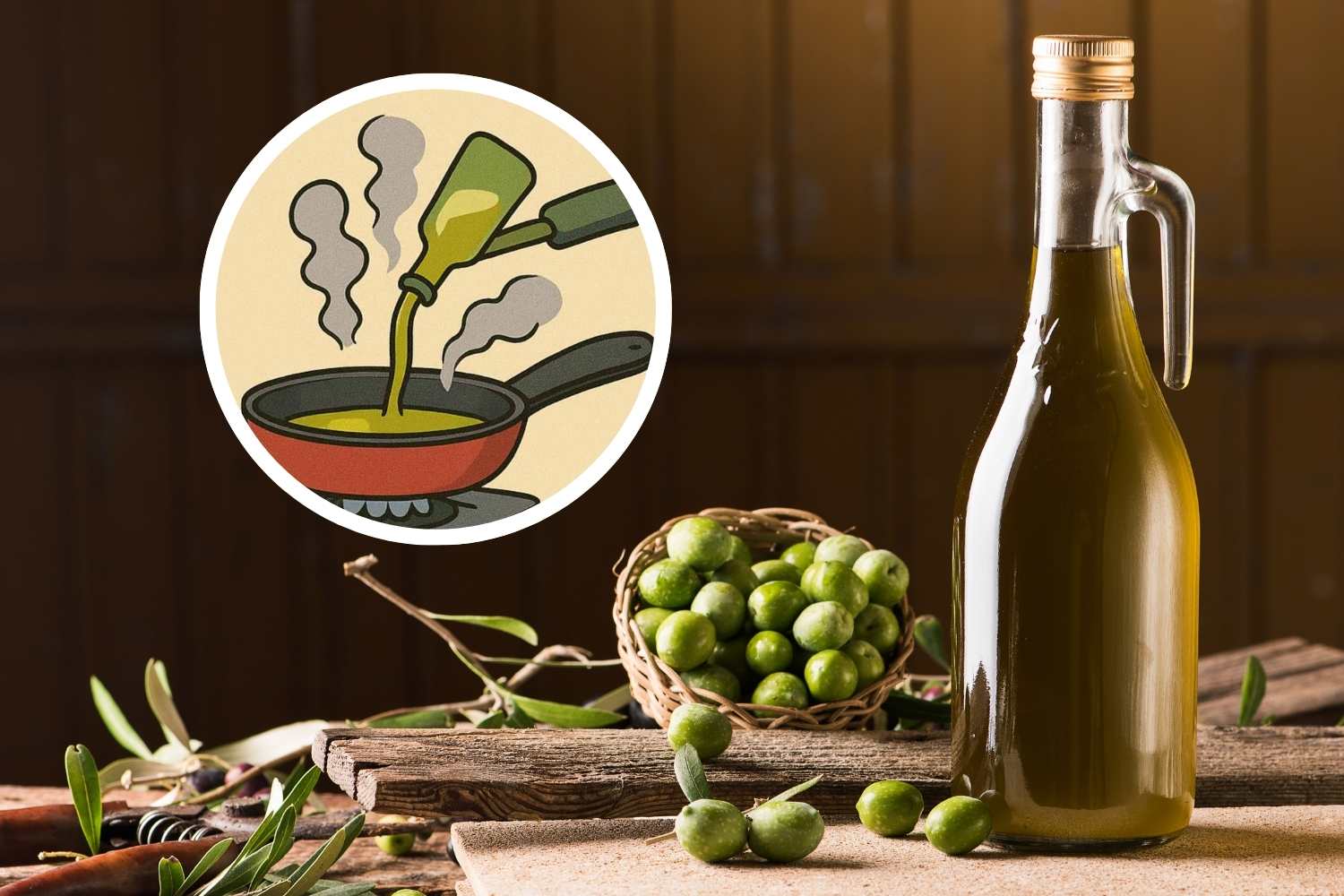
To carry out this check you need a pan, a kitchen thermometer and a small quantity of oil. Pour about two tablespoons of oil into the pan and turn the stove on to medium heat, then insert the thermometer into the oil and constantly monitor the temperature. Carefully observe the moment in which the oil begins to produce the first visible wisps of smoke, and if this were to happen before 170 degrees Celsius, the response would be merciless: probably, the oil you purchased contains mixtures with lower quality products. As mentioned, an authentic extra virgin olive oil resists heat well and only starts to smoke when the temperature exceeds 175 degrees.
What this test reveals
The presence of foreign oils manifests itself through a significant lowering of the smoke point. Seed oils, often used to cut olive oil and reduce production costs, change the thermal properties of the final product. Research conducted with advanced spectroscopic techniques has shown that adulterations of olive oil with sunflower and other seed oils can be detected through the analysis of physicochemical properties, including thermal behavior.
When the oil begins to smoke prematurely, in addition to signaling possible adulteration, it could also indicate the possible formation of potentially harmful compounds. In fact, smoking represents the decomposition of lipid molecules, resulting in the production of acrolein and other volatile compounds which can alter the flavor of food and reduce the nutritional value of the oil.
Limitations and considerations
The method just illustrated can offer useful indications, but should always be interpreted with a certain caution, because the quality of extra virgin olive oil varies based on various factors, such as the degree of acidity, the extraction method, conservation and age of the product. An extra virgin oil with high acidity, or one that is poorly preserved, could have a slightly lower smoke point than a fresh and well-preserved one.
Furthermore, the test requires attention and precision in measuring the temperature. To obtain reliable results you need an accurate thermometer and you must avoid overheating the oil too quickly, as this could distort the readings. It is also worth remembering that the smoke point of the oil, during storage periods, decreases over time, due to exposure to light and heat.
Other complementary checks
The smoke temperature test works best when combined with other sensory checks. Advanced analytical methods have shown that authentic extra virgin olive oil has specific characteristics: an intense green-golden colour, a fruity aroma and a slightly bitter or spicy flavour. Be wary of oils that are too light in color or have a neutral flavor, as they may contain added refined oils.
However, carefully reading the label remains the first step to take in the name of quality. Look for indications of origin, cold pressing method and quality certifications. A price that is too low compared to the market average should always arouse suspicion, given that the production of real extra virgin olive oil involves significant costs.
