
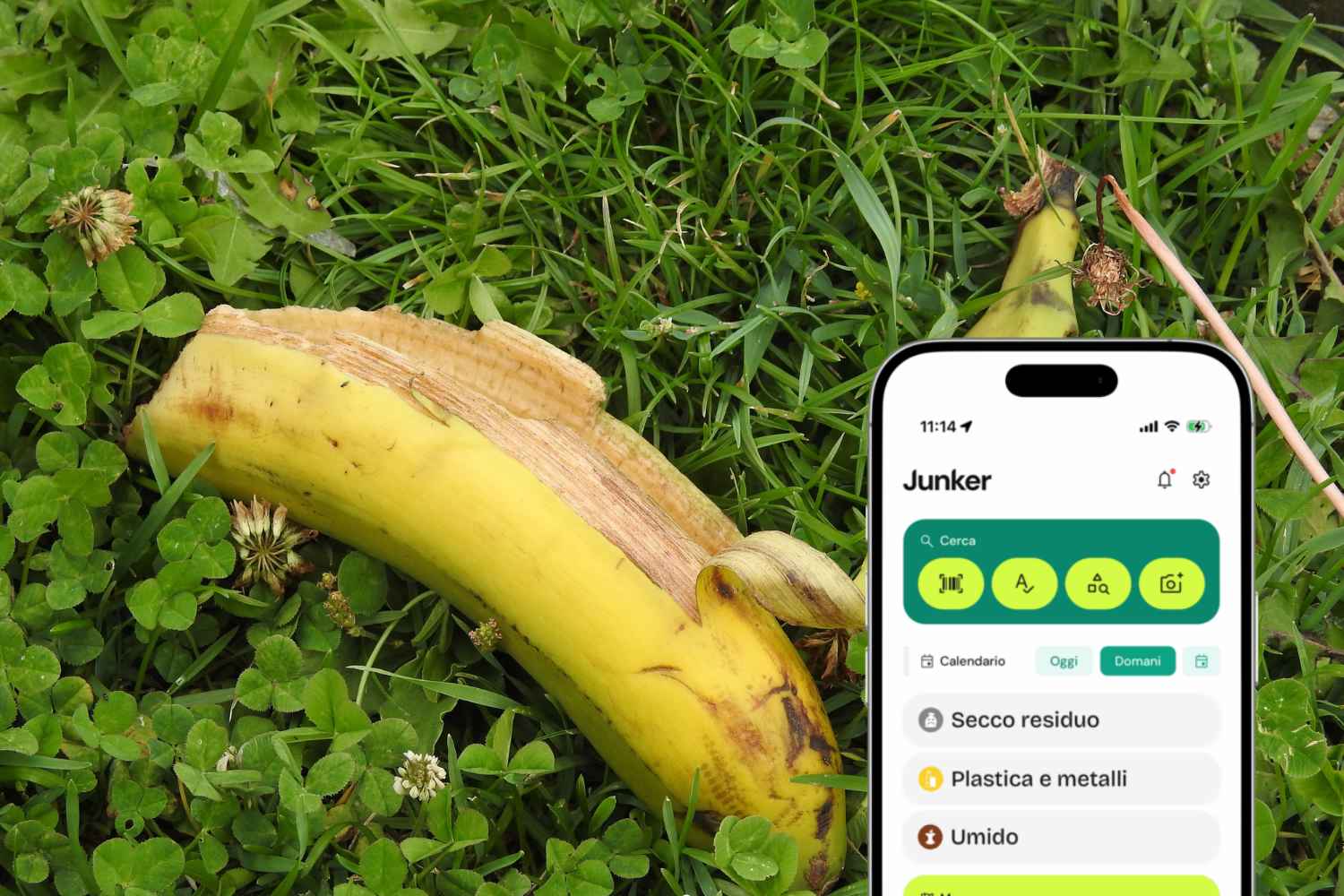
Autumn fills the woods with hikers, foliage enthusiasts, mushroom hunters and families looking for a quiet place for a nice picnic. But between the colorful dry leaves and the paths there are often hidden waste left around with extreme carelessness. A banana peel thrown into the bushes, the core of an apple left along a path, a paper handkerchief abandoned near a tree. How many times, during a walk in the woods or on a picnic, have you happened to see similar scenes? And perhaps, when you pointed out that that waste shouldn’t be left there, a friend dismissed the issue with a simple: “Okay, they decompose anyway!”.
Yet, biodegradable does not automatically mean harmless to the environment. Even a simple organic waste can alter the balance of ecosystems, attract wild animals and leave traces much longer than we imagine. Contrary to what one might think, the problem does not only concern plastic bottles, cans and snack packs. Even apparently less impactful waste deserves attention, especially in woods, mountains and protected natural areas. After all, a few precautions are enough to avoid many of the most common mistakes. And when we have doubts about where to dispose of waste, we can rely on Junker, the free app that helps us carry out separate waste collection correctly, even when away from home.
Peels and food scraps left in nature are not so harmless
One of the most frequent mistakes is to consider fruit waste a sort of natural fertilizer. We eat a banana while hiking and throw the peel into the undergrowth, convinced that it will disappear in a few days. In reality, decomposition depends on several factors, including temperature, humidity and soil characteristics. In cold or particularly dry environments, even a simple peel can take a long time to degrade.
But there is another aspect, often underestimated: food scraps can attract wildlife and change their habits. An animal, for example a fox or a wild boar, that regularly finds food abandoned by hikers may begin to associate the human presence with the possibility of feeding easily, approaching paths, car parks and roads more and more often, with a greater risk of accidents.
@migosmichael/123rf
Furthermore, foods intended for human consumption are not necessarily suitable for wild animal diets and can cause health problems. Even banana peels, apple cores and food scraps must therefore return home with us, just like packaging and everything else.
The (underestimated) impact of tissues and paper napkins
Another common mistake involves handkerchiefs, napkins and paper used during picnics and excursions. They are often abandoned because they are considered easily biodegradable, forgetting that decomposition is not necessarily rapid, on the contrary: the process can take months, as various studies have confirmed. In this regard, an interesting research, conducted by the University of Tasmania and published a few years ago on Journal of Environmental Management, analyzed the degradation process of handkerchiefs, toilet paper and tampons, which were buried in nine different natural environments. The researchers checked the materials after 6, 12 and 24 months, confirming that the times can vary greatly based on environmental conditions. Particularly an alpine area, even after two years the decomposition was still very limited.
We must also distinguish between handkerchiefs, napkins and wet wipes. The latter may contain synthetic fibers and must not be abandoned in the environment or thrown down the toilet. But where should they be conferred then? As Junker reminds us, paper napkins soiled with food and kitchen paper towels go into the organic waste, while handkerchiefs used for personal hygiene and wet wipes usually go into the unsorted waste. In any case, it is always important to check the rules of the municipality in which it is located. To avoid mistakes, especially when we are on holiday, we can consult Junker: by scanning the barcode of the packaging, taking a photograph of the object or carrying out a search by name, the app helps to identify the correct waste disposal. The information is geolocalized, so just change your location to always be sure you are doing the right thing.
Disposable cans, plates and cutlery: where are they thrown away?
During a picnic we can find ourselves with waste of different materials and not know where to put it. Metal cans and cans, such as tuna or legume ones, go into the metal collection. As Junker points out, you don’t need to wash them carefully: just empty them of food residue.
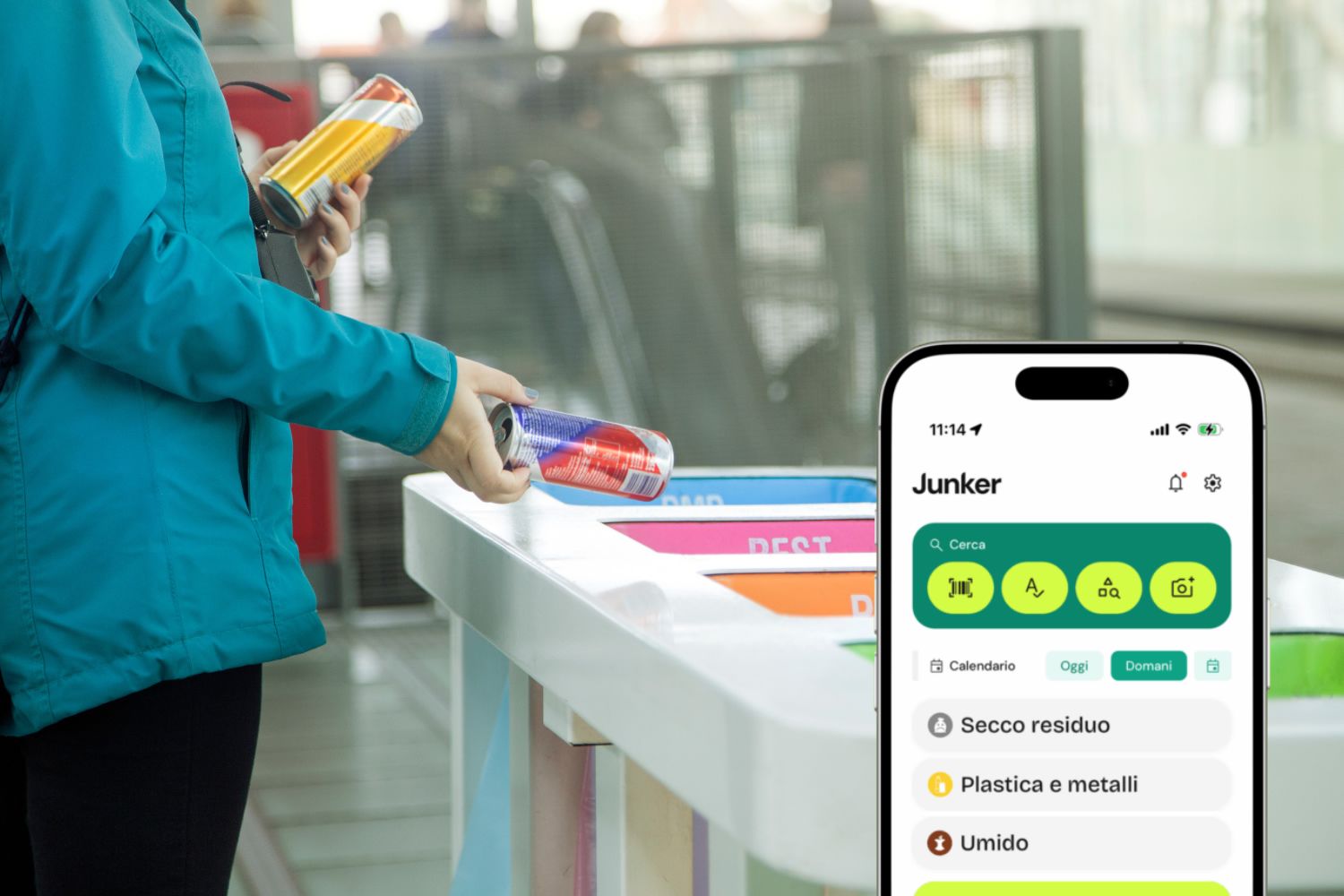
@Canva-Junker
Disposable plates and glasses made of traditional plastic, if we still have some at home, go into the plastic collection because they are considered packaging (even if their placing on the market is prohibited in Italy from 2022); while disposable plastic cutlery should be thrown into the residual waste. Pay attention, however, to compostable bioplastic tableware, certified according to the UNI EN 13432 standard: this waste must be disposed of in organic waste.
Dry leaves are not waste: because they should be left in nature
During an autumn day outdoors in the countryside, it would be better to resist the temptation to “clean up” by removing dry leaves with a rake. Although they may seem like simple plant remains, they actually play a valuable role in the ecosystem. In fact, they form a natural layer called litter, which protects the soil from erosion, retains moisture, nourishes the soil and offers shelter to insects, hedgehogs and other small animals. But what to do with the dry leaves that accumulate in your garden in autumn, obstructing the passage? Those collected can be used for home composting or as natural mulch. If, however, you decide to dispose of them, it is important to follow the rules of the Municipality: small quantities can be disposed of in the organic waste, where applicable, while for larger volumes the municipal waste collection center is generally used.
What to put in your backpack for an environmentally friendly picnic
The best way to avoid leaving waste? Try to produce as little as possible. And to do this you just need to organize yourself. One of Junker’s recommendations is to prefer airtight containers, reusable glasses and cutlery, avoiding superfluous packaging and disposable tableware. We can prepare lunch at home and also bring back any leftovers, storing them in suitable conditions.
Be careful not to wash dishes directly in streams or lakes with soaps and detergents. These substances can be harmful to aquatic organisms, even when products are advertised as biodegradable. Better to wash everything once you get home. The backpack should also include two or three resealable bags, to separate food waste from packaging and non-recyclable waste during the day outdoors, and then throw it into the appropriate bins. Another indispensable ally for a picnic or an excursion in nature is the water bottle, preferably thermal: it reduces the consumption of disposable plastic bottles and keeps drinks hot or cold for longer.
Trekking and excursions: why buy everything new if you can choose to reuse?
Respect for the environment does not only depend on what we leave in nature, but also on the purchasing choices we make first. Boots, poles, snowshoes, skis, backpacks and technical clothing often end up being used a few times a year, and then remain unused for months. Before buying everything new, therefore, it would be a good idea to take a tour of the second-hand markets or opt to rent clothes and accessories that are still in good condition.
But there is also another alternative, little known and decidedly sustainable (as well as friendly to our wallet). In the Municipalities that have joined the service, the Junker app provides the Reuse Noticeboard, a virtual showcase where citizens can find objects still in good condition made available by their fellow citizens or by the municipal Reuse Centre. It is also possible to publish your own ads for free, inserting a photo and a description of the item you no longer use. Interested parties can then get in touch and organize the exchange directly. A simple and immediate way to avoid unnecessary purchases, save money and extend the life of objects, without necessarily having to resort to shipping and packaging. Unlike other second hand platforms, Junker’s Noticeboard is active on a municipal scale: in this way the reuse option becomes even more convenient and sustainable. For us and for the environment!
