
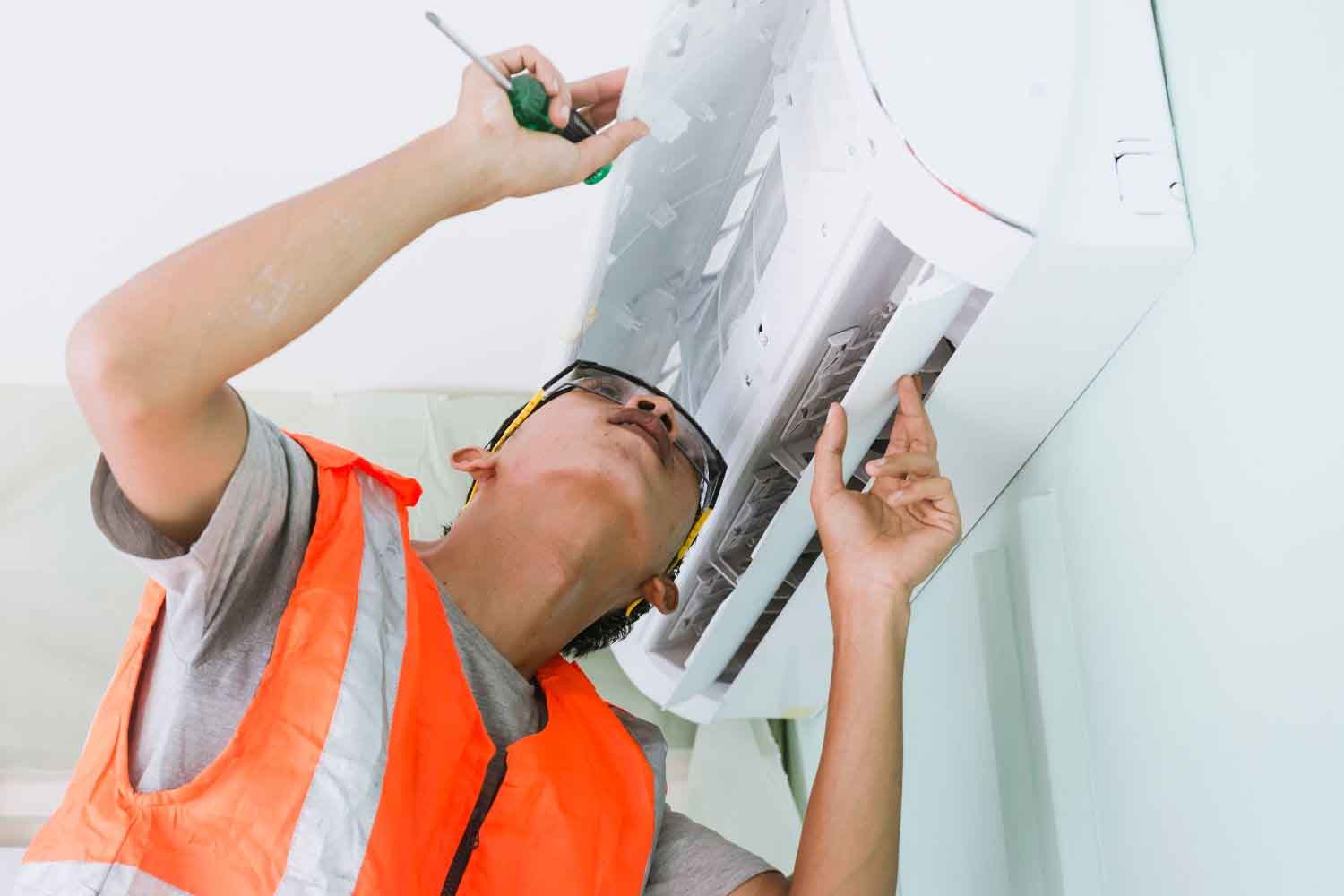
The failure of the air conditioner has its own domestic cruelty: it arrives when the room is already hot, the remote control becomes useless and patience evaporates. At that moment the online search resembles a rescuer, with ads promising immediate interventions, low prices, available technicians while everyone else puts it off. The trap works there, in those ten minutes of heat when you stop comparing and start calling.
The Japanese case
In Japan, where the summer is humid, dense and increasingly difficult to cope with for the elderly and frail people, the National Consumer Center has turned on a precise warning: reports of air conditioner repairs have gone from 451 in 2021 to 1,251 in 2025. In between there are 593 cases in 2022, 871 in 2023 and 975 in 2024. The leap tells more than one fashion: it tells of a service that has become essential, sought quickly, often through online advertisements that promise low prices and same-day intervention.
The scheme described by the Japanese authorities has the flat simplicity of successful scams. The user searches online, finds the technician, accepts an apparently low amount, then finds himself faced with a much higher bill, a device that is still broken, a job closed without proof of operation or a number that stops answering as soon as a second exit is needed. The official advice comes before the real heat: turn on the air conditioner early, check the fault, have the cause, intervention and price explained before anyone opens the car. Some Japanese analyzes on the topic also insist on the same passage: urgency is the weak point on which these practices leverage.
Italy already has the ground ready
The Japanese carbon copy in Italy, for now, is missing. But the land is all there. According to Istat, in 2024 56% of families had at least one air conditioning system, compared to 48.8% in 2021 and 29.4% in 2013. In the Islands the figure reaches 71.2%, in Sicily 73.1%, in Veneto 71.1%. In the lowland municipalities the share rises to 66.6%. More appliances, hotter, more homes exposed to urban heat islands: the maintenance market stops being marginal and becomes a small domestic infrastructure.
Italian consumer associations already see the same raw nerve in domestic emergency services. When the boiler fails in the winter or the air conditioner stops in the summer, many people call the first available service and later discover the weight of the word urgency. The hourly rates indicated as a reference for emergency services are often between 70 and 90 euros on weekdays, between 90 and 100 euros on holidays, over 100 euros on main holidays, to which the material is added. Faced with much higher figures, prudence becomes a practical, almost physical act. The National Consumers Union also reminds us of this, which invites us to always ask for clear costs before the intervention.
In Italy the most slippery side also comes from platforms and intermediaries who present themselves as a reassuring shortcut. The Competition and Market Authority has already examined a case linked to an emergency site for maintenance, repairs and installations, contesting information capable of making one believe that the technicians were selected based on their expertise and that the tariffs were controlled. Problems included inadequate assistance after surgery, failure to complete the work, prices judged to be too high and difficulty obtaining an invoice or clarification.
The true technician leaves traces
An air conditioner, then, has a particularity that distinguishes it from other home faults. Anyone who works on appliances with fluorinated gases must be able to operate within precise rules. Presidential Decree 146/2018 confirmed the obligation to register in the F-Gas Register for people and companies that install, repair, maintain or dismantle equipment containing fluorinated gases. The Register, managed by the Chambers of Commerce, serves precisely to make certified skills and activities visible. Translated into normal life: before accepting the repair, the name of the company can be checked.
The low price alone is worth little. A written quote that states output, diagnosis, labour, any gas, spare parts, VAT and warranty conditions on the intervention is more valuable. An invoice with legible data is worth more. A technician who explains before touching, tests the air conditioner before leaving and leaves a real reference for any problems is worth more. Haste has a cost; the trouble begins when that cost is hidden until the moment of payment.
Before the heat
The most uncomfortable part of the story comes before the breakdown. The Higher Institute of Health reminds that air conditioners must be checked, cleaned and maintained before the hot season, also to avoid bacterial contamination, and recommends temperatures around 25-27 °C to reduce temperature changes. A rehearsal in May or early June may seem like a hassle to put off; during a heat wave it becomes the difference between choosing a professional calmly and accepting the first sponsored ad with the air of salvation.
In terms of rights, the Consumer Code already offers a barrier. Misleading information about price, service features, maintenance needs or customer rights are unfair business practices. The Ministry of Business and Made in Italy reminds that an unfair commercial practice can be reported to the AGCM without payments and without a lawyer; those who have suffered damage can also turn to an ordinary judge to request remedies such as price reduction, termination of the contract or compensation. The proof, however, must be constructed immediately: screenshot of the ad, estimate, messages, receipt, invoice, photo of the work, name of whoever entered the house.
Japan shows us the scene in advance, with numbers already ordered and an alarm arriving before the height of summer. Italy has more air conditioners in homes, harsher summers and the same impulse to solve everything in ten minutes. The remote control remains on the table. Before pressing “call”, it is best to read the quote.
You might also be interested in:
