
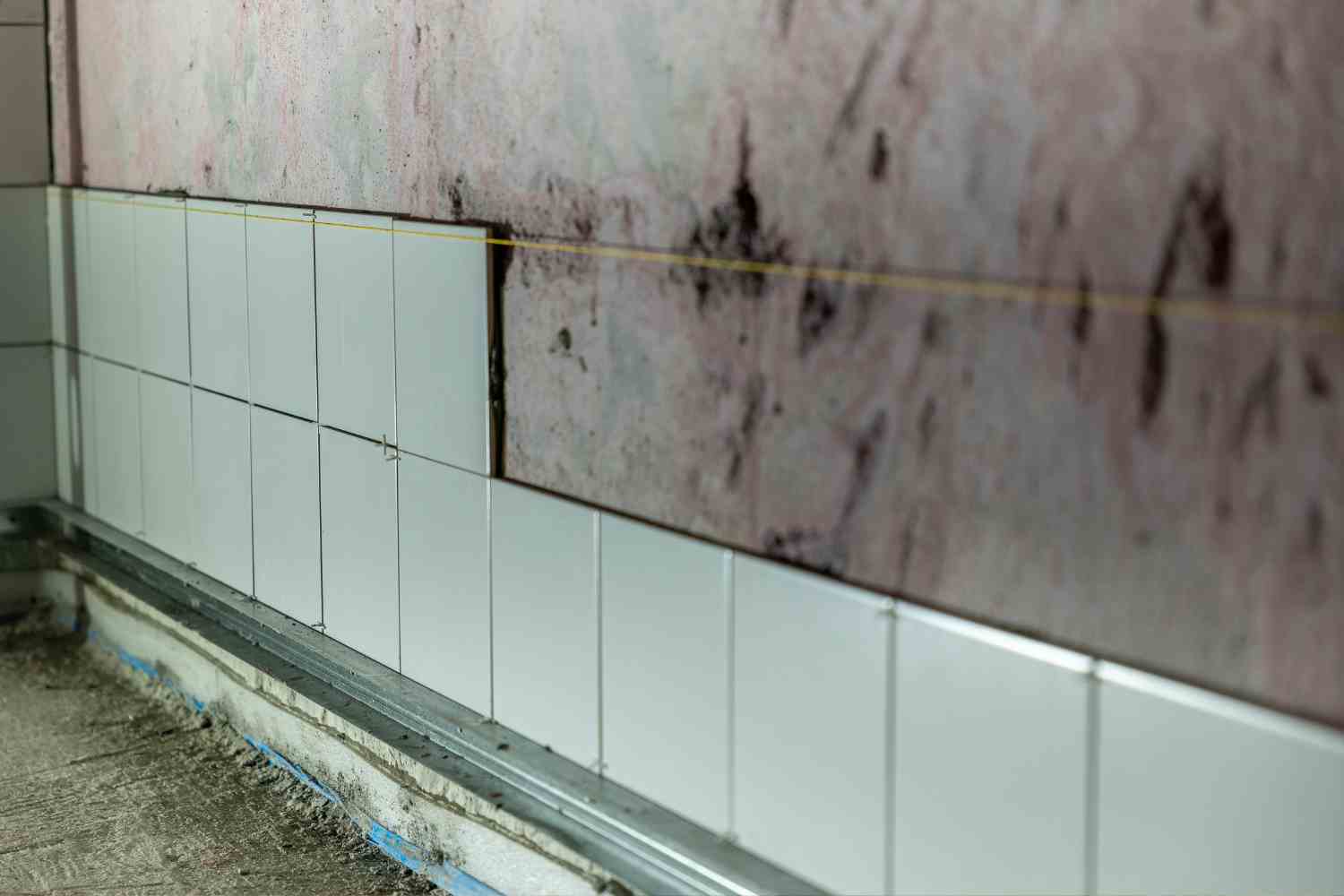
The bathroom is the home environment most exposed to humidity. Steam, splashes, stagnation: every shower releases water which, if not managed well, finds its way to places where it should not reach. And there, protected from light, the silent work of mold and bacteria begins.
Because humidity in the bathroom becomes a health issue
Mold spores spread through the air and can irritate the respiratory tract, especially in those living with allergies or asthma. Children and elderly people are the most sensitive.
Mold is not always visible. Sometimes it grows behind the tiles or under the shower tray, in areas that we only notice when the musty smell becomes insistent or when a stain appears on the wall of the next room.
Ventilating the bathroom well helps, but it is not enough on its own. If water manages to infiltrate the structures, the problem returns every season.
Tiles are not enough: what happens beneath the surface
There is a very common misconception, namely that tiles and grout are waterproof. In reality they are not at all.
The joints, in particular, are porous and over time allow water to pass through. What we see on the surface is only the last layer of a stratification made of screed, adhesive and covering. The real barrier against water is lower down, under the tiles, and is invisible to those who use the bathroom every day.
For this reason, the waterproofing of the shower is a layer in itself, spread before installing the covering. It is he who blocks the water before it reaches walls and attics.
The most delicate points
Corners, joints between wall and floor and pipe passages are the first places where water tends to creep in. Good waterproofing of shower walls pays attention to these discontinuities, usually with elastic bands and accessories that accommodate small movements of the surfaces without cracking.
How to waterproof a bathroom
In recent years, solutions have simplified a lot. There are ready-to-use liquid membranes that can be applied with a roller or brush, in two coats, and form a continuous and elastic sheath under the tiles.
Historic companies in the sector, such as Mapei, have developed systems designed for both new buildings and renovations, in which the waterproofing product for the bathroom works together with compatible adhesives and sealants. Anyone who wants to learn more can take a look at the bathroom waterproofing solutions and understand how the different materials combine with each other.
The principle, in any case, does not change with the chosen product: waterproofing the shower means creating a continuous barrier, without interruptions, which protects the structure over time.
An intervention that lasts and saves money
Taking care of the waterproofing of the bathroom during the works costs a fraction of what it would take to chase an infiltration years later. No tiles to remove, no walls to redo, no mold to chase.
It is one of those little visible choices that pay off in the long term, for the wallet and for the healthiness of the home. A dry bathroom beneath the surface remains healthy for longer, and with it the air we breathe every day.
