
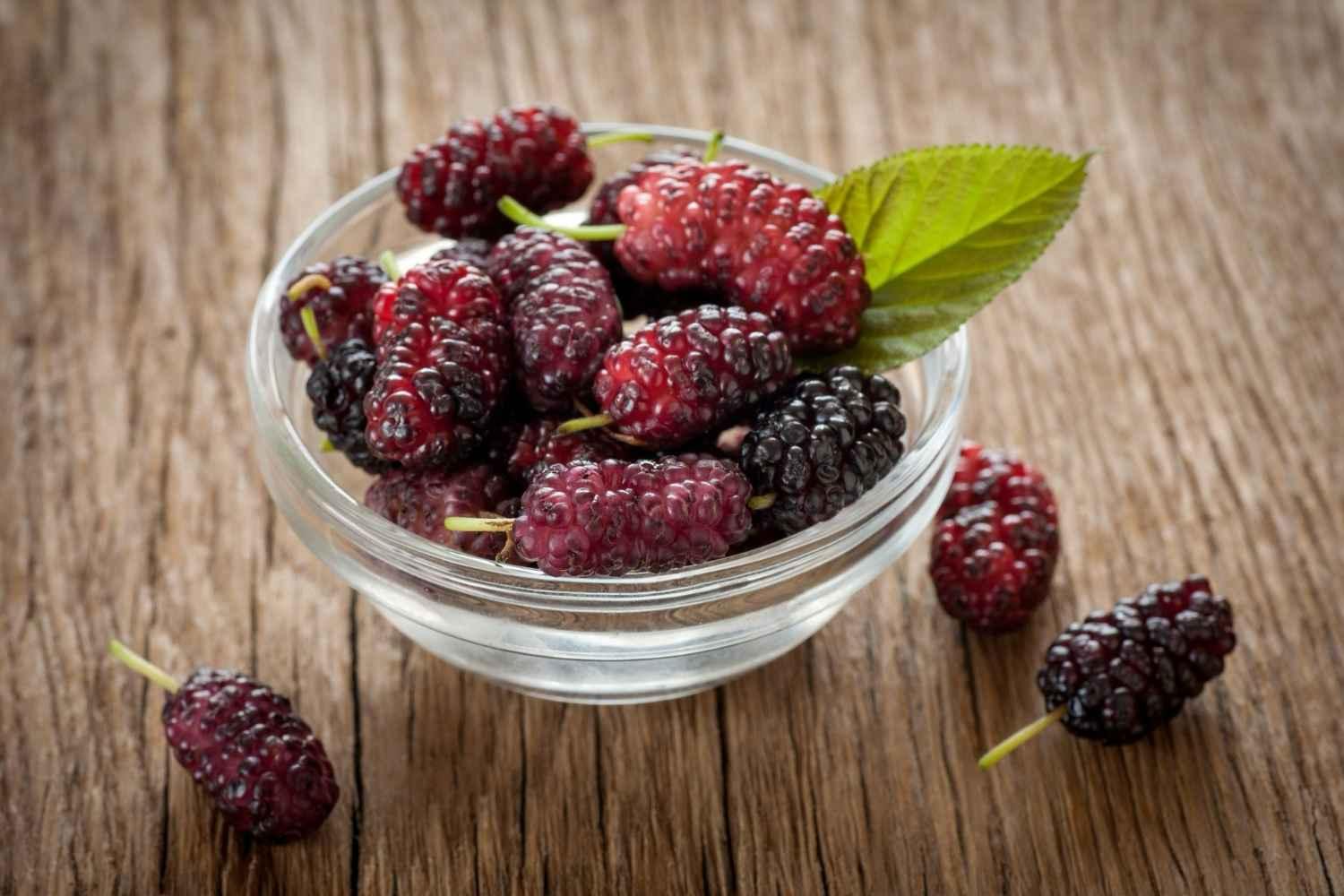
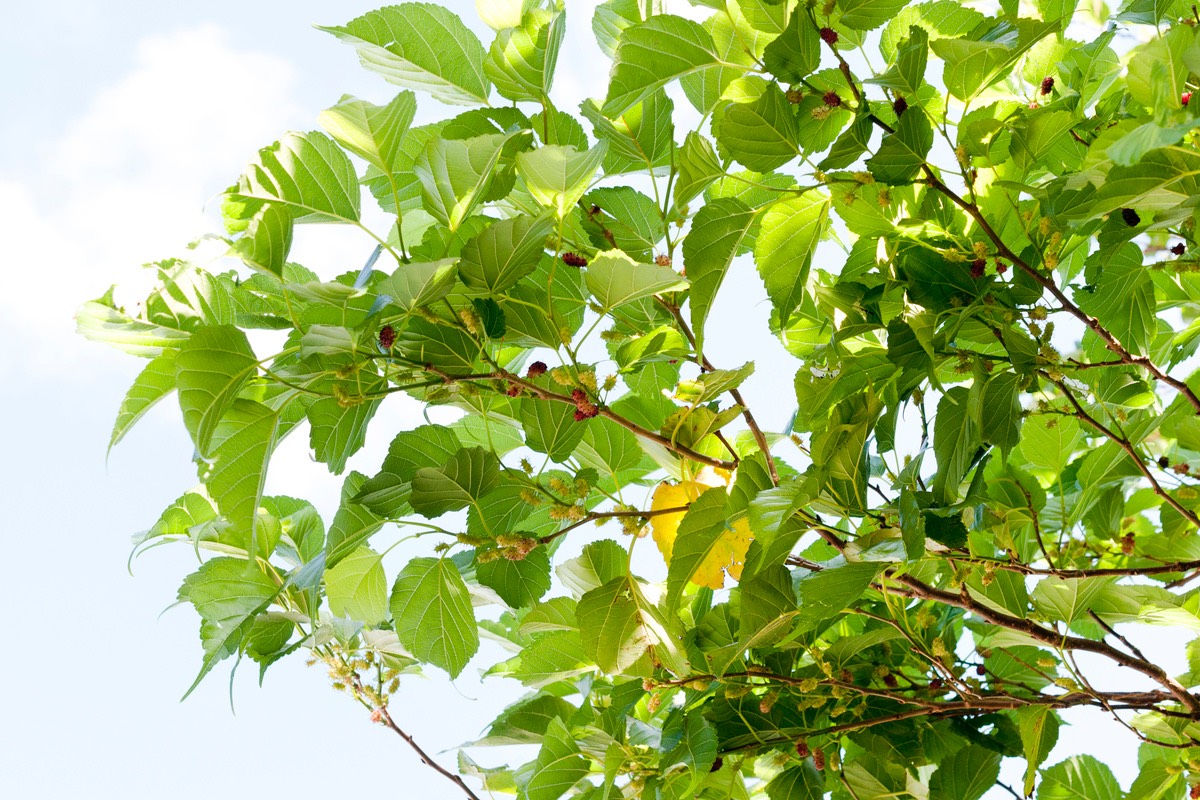
There are approximately 68 species of the genus Morus, to which the mulberry belongs. Most of these species are found in Asia, especially in China (24 species) and Japan (19 species), while the genus is poorly represented in Africa, Europe and the Near East, and is not present in Australia. We are talking about a plant belonging to the Moraceae family, already known to the ancient Romans with very juicy and thirst-quenching fruits. Mulberry is a fast-growing deciduous woody perennial with a deep root system. The leaves are simple, alternate, stipulated, petiolate, entire or lobed and the plants are generally dioecious.
The main pollinating agent in mulberry trees is the wind. The mulberry, white or black, (Morus alba, Morus nigra) is a plant that is well suited to our climate and has been cultivated since ancient times for the multiple uses of its foliage, for its positive impact in the recovery of degraded land, in the bioremediation of polluted sites, in water conservation, in the prevention of soil erosion and the improvement of air quality. The mulberry is also used as a medicinal plant thanks to the biologically active pharmacokinetic compounds present in the parts of the leaves, stems and roots, but everyone knows that it is exploited above all by the sericulture industries since its leaves are the nourishment of silkworms (Bombyx mori), as well as for pets. Even the tender leaves can be used for human consumption, being a little sweet.
Mulberry as a medicinal plant
In phytotherapy, most of the components of the mulberry tree are usable, therefore not only the fruits but also the bark, roots and leaves. In particular, white mulberry has diuretic and laxative effects and is therefore excellent for those who suffer from constipation. Black mulberry, on the other hand, in addition to its laxative properties, is an excellent decongestant, refreshing, tonic and soothing. It has purifying and antibiotic properties (which we find in the leaves) so much so that in the past it was used in the form of a mouthwash to soothe inflammation of the mouth and throat, but also against coughs and as an expectorant. Generally, the bark is used in decoctions, which are excellent for constipation, while the leaves, when infused, have diuretic properties. As mentioned before, the most important property is the hypoglycemic one and in this regard studies are still being carried out to understand exactly which components are responsible for this characteristic to be exploited specifically for patients suffering from type I and II diabetes.
The mulberry as an environmental purifier
The aerial parts of the mulberry tree can absorb air pollutants and its roots soil pollutants: the leaves of mulberry plants have a strong ability to absorb carbon dioxide, carbon monoxide, hydrofluoric acid, sulfur dioxide and chlorine from the atmosphere, and its roots to absorb pollutants from the soil. This plant can absorb 5.7 g sulfur dioxide per kg of dry leaves. Mulberry roots have a larger diameter near the stem portion and therefore rapidly decrease in size forming a fibrous mat-like structure that allows them to absorb high concentrations of carbon pollutants from the soil.
It is therefore the ideal plant to plant to recover contaminated land around chemical product industries and factories.
The topic, moreover, is more relevant than ever. A recent study by ENEA, conducted together with the University of Milan-Bicocca, the CNR and a French research institute, confirmed how the choice of tree species is decisive in making urban forestry projects truly effective against extreme heat and pollution. The research, published in the journal Communications Earth & Environment, simulated different planting scenarios around three European cities, demonstrating how different trees have very different impacts on air quality and mortality linked to extreme temperatures. In this scenario, plants like the mulberry, capable of absorbing pollutants without releasing problematic volatile organic compounds, once again become a strategic choice, not just a nostalgic memory of the countryside of the past. It is no coincidence that in recent years several urban reforestation projects financed also with public funds have brought attention back to native, low-maintenance species like this one, capable of taking root quickly even in difficult contexts.
How to use mulberry in the kitchen
In the kitchen, the mulberry is the protagonist of jams, ice creams, creams and yogurt but can also be consumed as is. We leave you with a simple recipe for making an excellent jam based on this fruit.
Mulberry jam
Ingredients
Procedure
As with all preserves and jams, get sterilized jars, otherwise carry out the usual operation first. In a large pot, place the well washed and cleaned fruits with the brown sugar, the juice of half a lemon and the grated apple. Stir until it begins to boil and bubble, then turn off and leave to rest overnight. The next day, boil everything again for half an hour, skimming it. Pour the jam while it is still hot and put the jars back to boil to obtain the vacuum.
Purifying mulberry decoction
If you want to free yourself from the winter revelry, here is a purifying decoction for you: get a good handful of mulberry leaves and boil them for five minutes in a liter of water. Filter and drink throughout the day.
How to grow mulberry
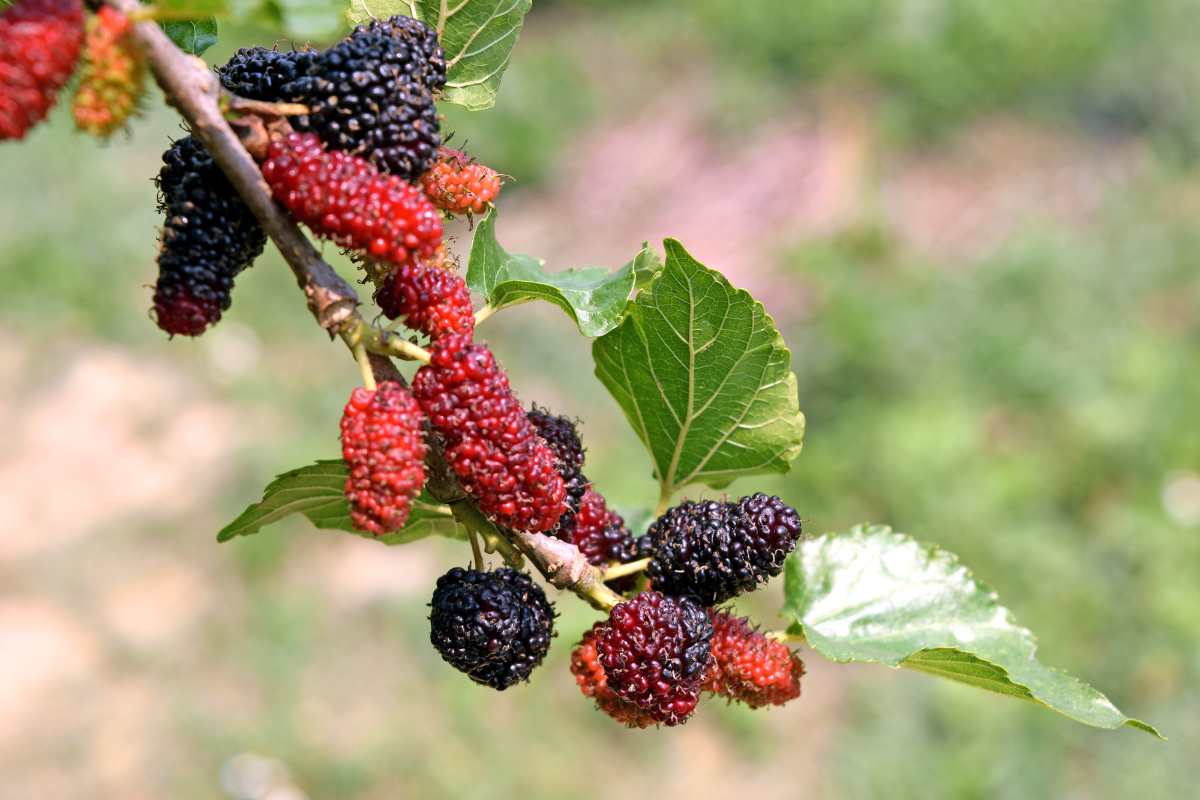
Mulberry trees are simple to grow. The simplest way to grow these plants is to purchase young specimens already equipped with roots and to prune the young trees at the end of winter to allow them to develop strong structural branches. Once the plant has grown, consider summer pruning of the branches to make the tree more rounded in shape. Fertilize in spring with compost and mulch to keep the soil evenly moist until the plant is large and robust.
Climate and exposure
Mulberry can be grown from sea level up to an altitude of 1 000 m. The black mulberry is a little less resistant to the cold than the white mulberry and is therefore a more widespread species in southern regions where it was widely cultivated for fruit production. Today it is mostly used as an ornamental tree; the presence of fruit mulberry trees is currently quite rare and the specimens present are often very old. Mulberry thrives in various climatic conditions ranging from temperate to tropical located north of the equator between 28° N and 55° N latitude. The ideal temperature range is 24 to 28°C. Mulberry grows well in places with annual rainfall between 600 and 2 500 mm. In areas with low rainfall, growth is limited by water stress, resulting in low yields. Mulberry requires on average 340 m3/ha of water every ten days in the case of clayey soils and 15 days in clayey soils. The availability of sun is one of the factors that controls the growth and quality of leaves.
Soil conditions and temperature
Mulberries thrive well in flat, deep, fertile, well-drained, loamy to loamy, porous soils with good moisture-holding capacity, but they can also grow in arid soils with coarse, nutrient-poor soil types and in soils disturbed by waterlogging conditions, under drought stress, and under salinity conditions.
The mulberry has a strong and deep root system that forms a very intricate and dense network, with secondary and tertiary roots in any type of soil, which allows it to resist dry and unfavorable periods. These characteristics have also allowed mulberry plants to resist storms and strong winds, to grow mulberry plants even in arid and highly contaminated soil and even to use them successfully for the reclamation of brackish lands and stony desert areas. It is a plant capable of resisting adverse environmental conditions from -30 °C to temperatures of over 40 °C. Mulberry plants have also been successfully used for ecorestoration of brackish lands and stony desert areas.
@rachenphotographer/123rf.com
Multiplication by cuttings
You can also create a cutting yourself from an existing plant, preferably starting in autumn:
- First prepare a pot with a mix of soil, perlite and sand and water.
- Cut several healthy branches measuring around 20cm in length using a sharp knife so as not to create tears in the plant tissue, cutting just above a leaf node, which is where a leaf or bud emerges from the stem.
- Remove flowers, buds and leaves from the lower half of the cut sprigs.
- If you want, buy some rooting hormone in powder or liquid form and soak a few centimeters of your cutting overnight before planting, following the product instructions.
- Plant the cuttings at a depth of about a third of their length.
- Place the pot in the shade and keep the soil well moist. After about four weeks, check that the roots have emerged and at this point you can transplant the cuttings into a larger pot, and then outdoors when the weather warms up in spring.
The harvest: mulberry fruits
The “fruit” of the mulberry is a blackberry, purplish-black or white in color. The fruits, improperly called mulberriesare compound infructescences formed by the union of a real fruit, the nucules, and a false fruit, which constitutes the pulp.
The correct name for this fruit is sorosio and resembles a small raspberry or a blackberry, but is larger and elongated. Mulberry trees have few admirers other than birds and a large tree will usually produce more mulberries than you and the birds can eat, but if you want to keep them all to yourself, cover the trees with netting during fruiting.
The “fruits” fall from the tree when they are ripe and in that period it is advisable to place sheets of mulching cloth under the plant so that they do not end up on the ground and to harvest by shaking the branches.
