
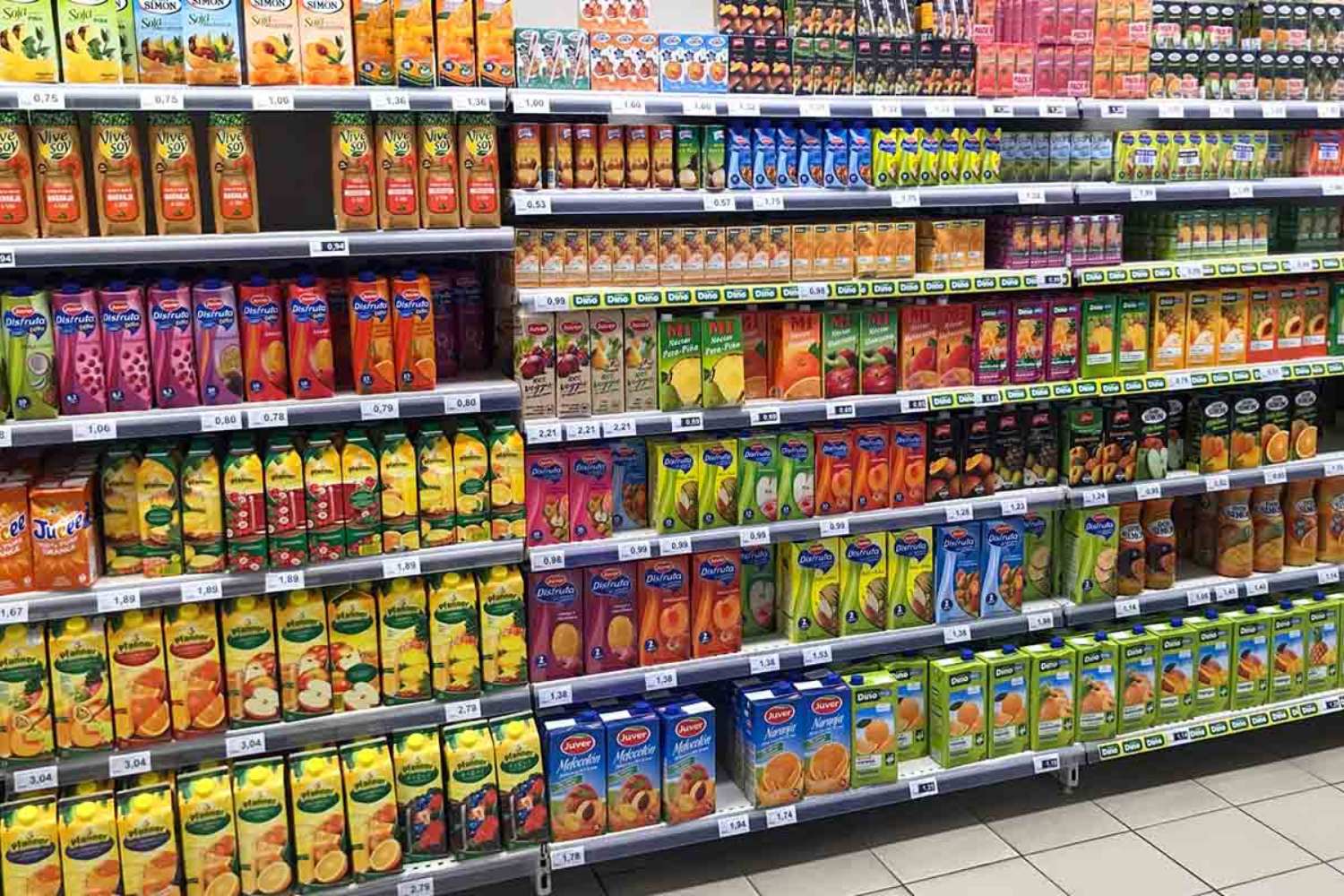
A glass of multivitamin juice in the morning and that’s it: vitamins for the whole day. Or at least that’s what some manufacturers would have us believe. But the reality, as often happens, is very different. The latest investigation by Oeko-Test on multivitamin juices, it reveals to us that many of these products contain excessive doses of added vitamins and pesticide residues.
Consider that, out of 18 products analyzed in Germany, only one obtained a “good” rating. A worrying result that should also give pause to consumers in Italy, where these juices are equally widespread.
The myth of “more vitamins is better”
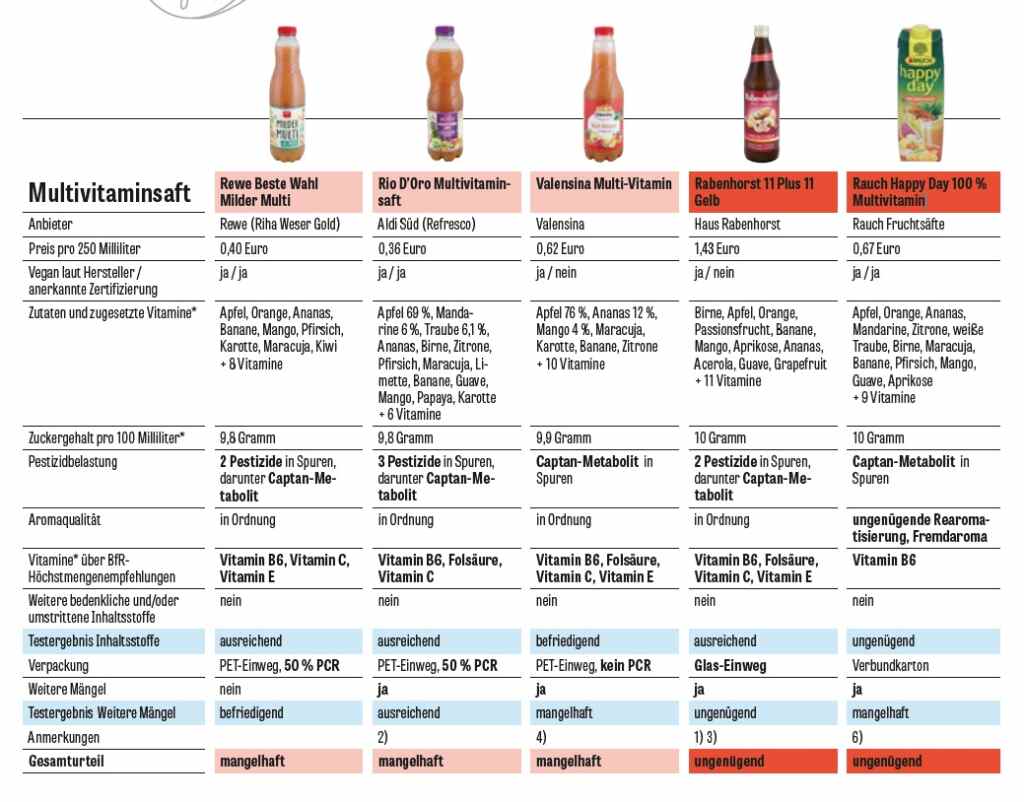
Eight, nine, ten, even eleven added vitamins: manufacturers seem to compete with the numbers on the labels. But the German Federal Institute for Risk Assessment (BfR) has developed precise recommendations on maximum levels of vitamin enrichment in foods and none of the juices tested met these recommendations for all added vitamins.
Particularly critical is the addition of vitamin A, a substance which according to the BfR should not be added to foods, given the risk of congenital malformations and liver toxicity in case of overdose. Yet several manufacturers continue to include it in their multivitamin juices.
Excessive doses of vitamin C (over 16 mg per 100 ml), vitamin B6 (over 0.14 mg), folic acid (over 26 µg) and vitamin E (over 2 mg) were also penalized in the test. Because, contrary to what we are led to believe, more is not always better and with some vitamins, excess can even be problematic for your health.
Pesticides in juices
In addition to excess vitamins, the investigation found the repeated presence of Captan, a pesticide classified as a probable carcinogen, or its degradation product. Although the measured levels do not represent an immediate health risk, Oeko-Test penalized the presence of this substance as it represents a real danger for people in the countries of origin who come into contact with it during the cultivation and processing of the fruit.
Even more widespread are multiple pesticide residues, i.e. traces of two or more different active ingredients in the same product. The effects of these “mixtures” of chemicals on the human body are not yet sufficiently understood, but recent studies have provided evidence of a possible link with Parkinson’s disease.
Even if the ranking in this case does not interest us that much, given that it is a test conducted on German references, it is still worth pointing out that among the worst in the test is Rauch Happy Day 100% Multivitamin. The product is also sold in Italy, although we cannot guarantee that the version available from us is identical to the one tested in Germany.
What’s Really Inside a Multivitamin Juice?
The answer that emerges from the test is quite surprising, at least for those who don’t usually read labels. On the packaging, manufacturers boast up to 15 different fruits but the reality is that most juices are mainly composed of apple juice, which can reach up to 80% of the total. The other fruits, often exotic and with a healthy appeal, are present in negligible quantities, some even at 0.1%.
The provenance of the ingredients is equally problematic. According to manufacturers, some juices contain fruit and vegetables from over 30 different countries. A significant ecological footprint, between transport and complex supply chains, which contrasts with the “healthy and natural” image that these products want to convey.
The analysis of the aromatic quality then reserved other surprises. Not all products present the complete and authentic aromatic spectrum of the fruits declared on the label, making the declared 100% juice content unverifiable. In one case, the presence of added flavorings was even detected, the product therefore does not comply with the requirements of the fruit juice ordinance and, according to Oeko-Testshould not have been marketed in that form.
Among other unwanted substances, the laboratory identified isododecane, a probable contaminant formed during packaging or cleaning operations on production lines.
On the communication front, several manufacturers have indulged in misleading advertising. One of the juices tested clearly states on the packaging “Vitamin C for the immune system and energy metabolism“, while the indication actually permitted by EU legislation – that vitamin C contributes to the “normal” function of the immune system – is hidden in the fine print. Finally, others emphasize obvious characteristics, such as the absence of sugar, when it is simply a question of complying with the law.
How the test was conducted
Oeko-Test purchased 18 conventional multivitamin juices between September and October 2025. The tested products, consisting of blends of up to 15 different juices with added vitamins, underwent extensive analysis. Organic juices were not included in the test as by law they cannot contain added vitamins.
Specialized laboratories analyzed over 500 different pesticides, as well as chlorate and perchlorate, and verified the quality of flavor through aroma spectrum analysis. Volatile acids, total acidity, hydroxymethylfurfural, patulin, lactic acid, ethanol, and methanol were also measured.
The declared vitamin content was compared with the maximum levels recommended by the BfR, while the labeling was examined to verify the presence of misleading advertising claims. The packaging was also evaluated, with particular attention to the presence of PVC/PVDC, the sustainability of disposable packaging and the recycled plastic content.
