
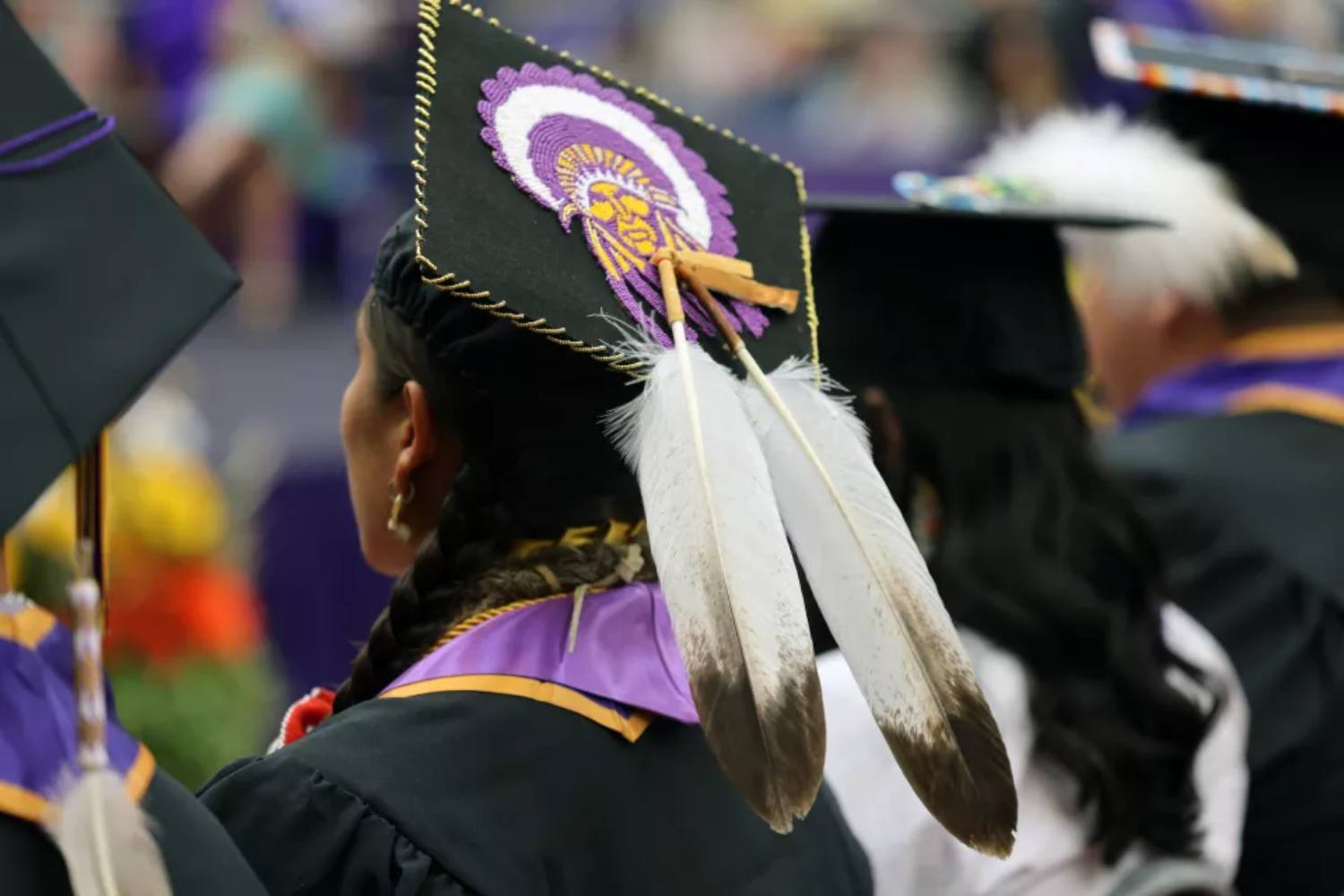
An unprecedented achievement marks a turning point for the education of indigenous communities in the United States. High schools funded and operated by the Bureau of Indian Education (BIE) have recorded the highest average graduation rates ever in the history of the federal agency.
In 8 high schools, 100% of the final year students of the 2025/26 class achieved their qualifications, while 13 other high schools reached or exceeded a 90% graduation rate. The overall data highlights how the percentage has jumped from 51% in 2015 to 79% in 2025, until it has steadily realigned towards the national average of 87-88%, eliminating a historical gap which for decades has penalized young indigenous people.
Education provided to over 400,000 Native American and Alaska Native students
The Bureau of Indian Education provides access to education to more than 400,000 Native American and Alaska Native students across the country. Commenting on the milestone, BIE Director Tony L. Dearman stated:
These schools are a testament to what is possible when students, families, educators and tribal communities work together. Our students are showing the nation what Native excellence looks like. Their success reflects the unwavering dedication of our school communities to keep students at the center of everything we do, to ensure they graduate and thrive after.
These words were echoed in statements by Deputy Secretary of Indian Affairs Billy Kirkland, who reiterated the centrality of workforce preparation and educational opportunities.
Digital innovation and reforms for educational success
The statistical leap derives from a series of profound structural and educational transformations applied to the school system. The agency has completely modernized data systems, integrating technology through real-time dashboards, advanced reporting tools and instructional pacing guides to identify student difficulties early.
At the same time, methodological updates have allowed an increase in skills: since 2016 there has been a 9% increase in mathematical skills and a 10% increase in English language arts. The correction of accounting criteria – which in the past penalized the statistics by counting transfers between institutions as dropouts – the continuity of distance learning for those with family or work responsibilities and greater openness to professional and technical training also contributed.
