
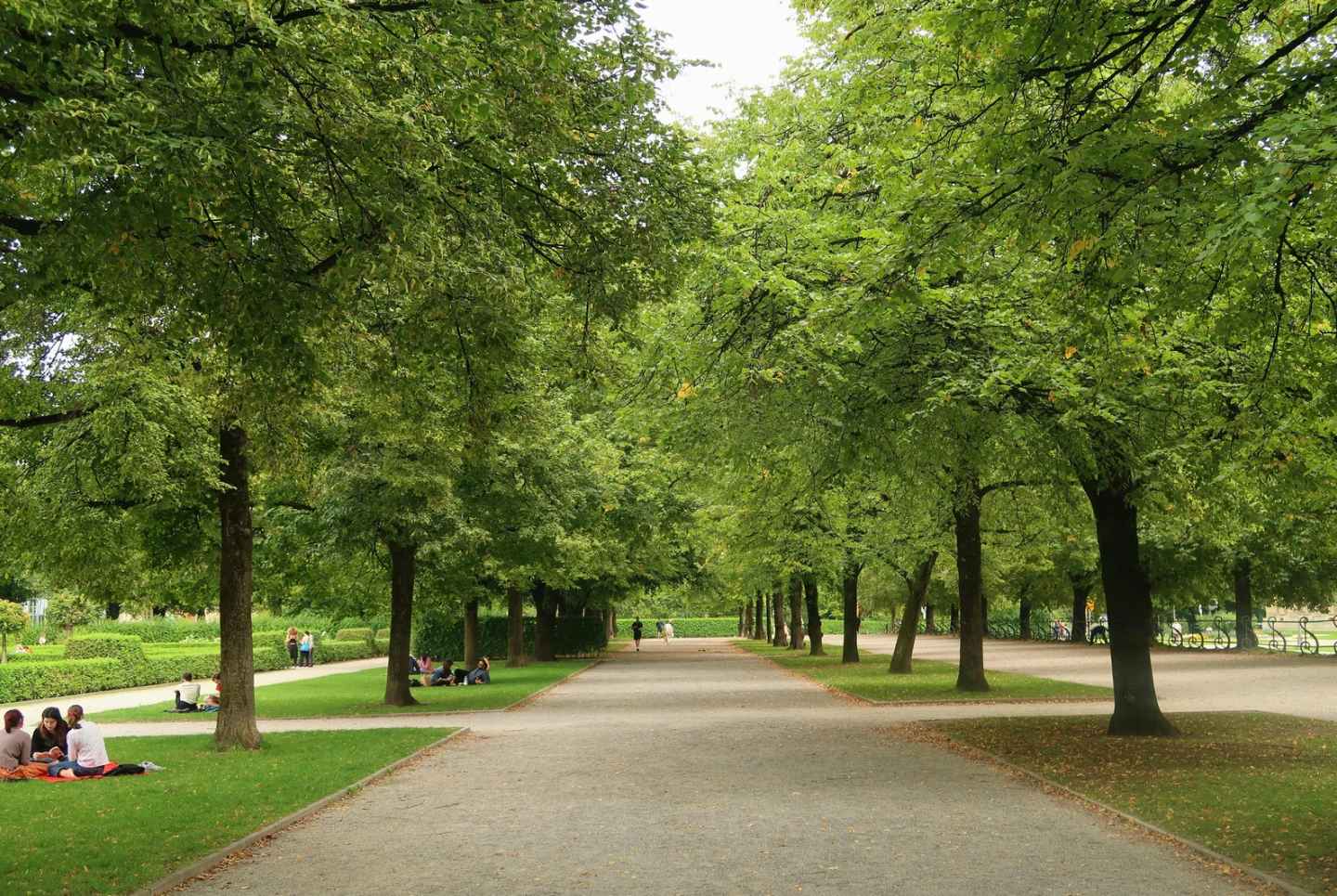
The trees of Italian cities could finally be better protected from wild pruning. On 17 November, an amendment to the Environment Decree was approved in the Environment Commission of the Chamber which introduces new protections for urban greenery, from the foliage to the roots, and provides for sanctions for interventions that compromise the health and stability of plants.
The news comes a few days before National Tree Day, celebrated on November 21st, and concerns an increasingly precious heritage in the face of the climate crisis. Adult trees provide shade, help cool streets, absorb carbon dioxide and are home to numerous animal species. Yet, cities continue to be subjected to drastic cuts, often justified by maintenance needs.
Stop pollarding: what the law requires
Amendment 2.012, presented by deputy Mauro Rotelli, modifies article 7 of law 10 of 2013 on the development of urban green spaces. Among the main objectives is the fight against pollarding, a practice which consists in drastically eliminating the upper part of the tree or large portions of the foliage. These interventions deprive the plant of an important part of the leaves, can favor the entry of pathogens through the wounds and cause the growth of new, more fragile branches. The new provisions also aim to protect roots during road excavations. Cutting or damaging them means compromising the tree’s ability to absorb water and nutrients, as well as potentially reducing its stability. Particular attention is paid to the fauna. Interventions on trees must respect nesting periods, avoiding damaging the nests and disturbing the birds during reproduction.
Sanctions and controls: what is still missing
The measure provides specific sanctions for violations, but several operational aspects have yet to be defined. According to what was communicated by the Ministry of the Environment, within sixty days a joint decree of the Ministries of the Environment and Agriculture will have to establish the technical criteria for the interventions, the methods of root protection, the measures to protect fauna and the rules for replacing felled trees.
The proposal was born from a process that lasted about a year, with the involvement of institutions, professionals and environmental associations, supported by the scientific expertise of the Higher Institute for Environmental Protection and Research (ISPRA). “It is not enough to plant new trees. We must above all protect the ones we already have”, declared the Undersecretary for the Environment Claudio Barbaro, commenting on the approval of the amendment.
Because adult trees are irreplaceable
The point is particularly important for Italian cities, increasingly exposed to heat waves. An adult tree, thanks to its developed foliage, can offer benefits that a young plant will only achieve after many years. Planting new trees remains essential, but cutting down mature specimens means immediately losing shade, cooling capacity and habitat for fauna. The new protections are part of the Nature Restoration Law, the European regulation which also provides for the restoration of urban ecosystems.
National Tree Day on November 21st therefore offers the opportunity to draw attention to an often overlooked aspect: the care of existing specimens. To evaluate the effectiveness of the reform it will be crucial to know the implementation rules and verify how they will be applied by the Municipalities.
