
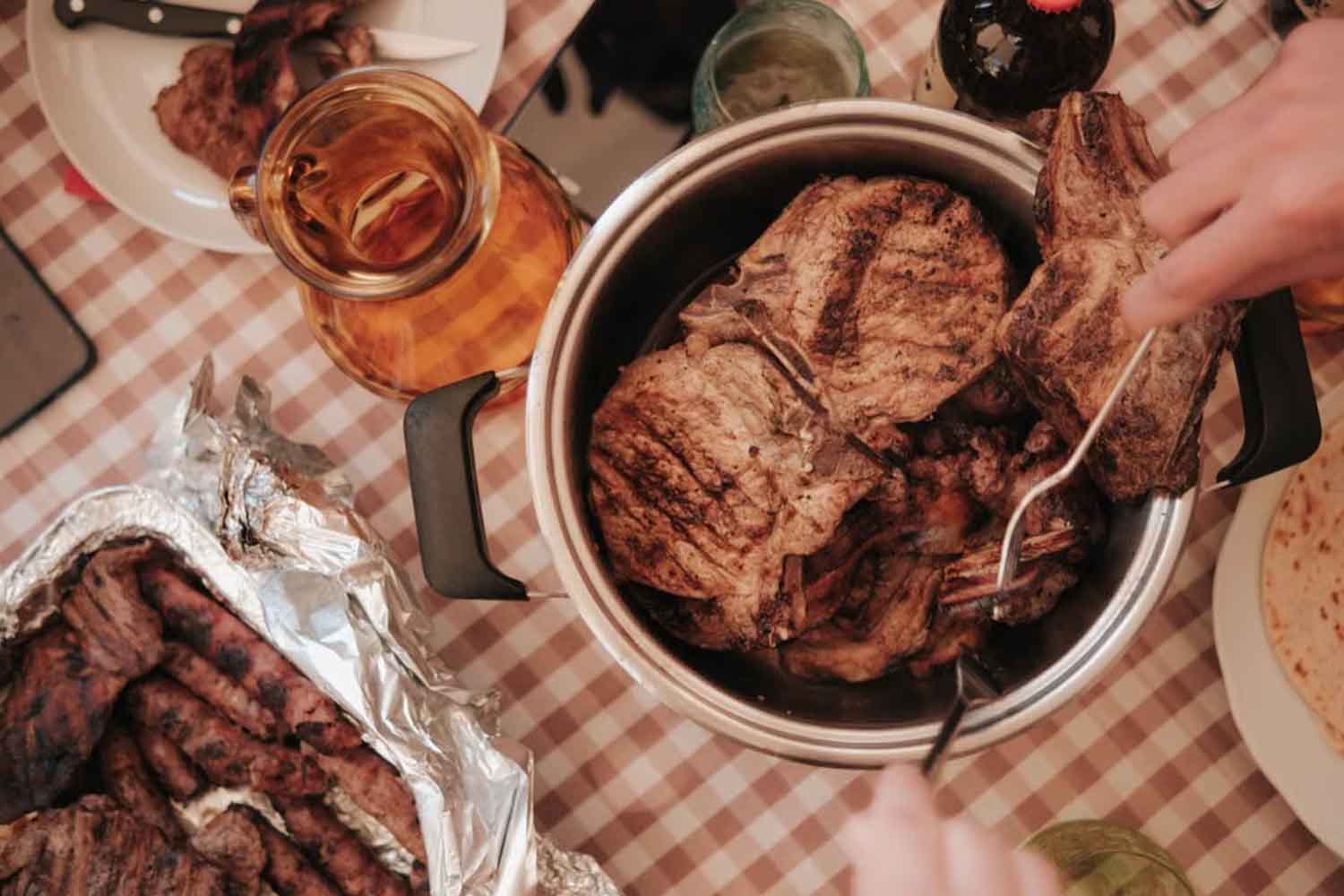
The Sunday roast, the lamb at Easter, that recipe that mother always prepared on special occasions. They are dishes that often retain a value far greater than their flavour, because they bring with them childhood memories, people and moments that we are fond of. And when you decide to change your diet, giving up certain foods can give you the feeling of having to leave part of your history behind. According to research from the University of Stirling in Scotland, food nostalgia could be one of the most underestimated obstacles in switching to a vegan diet.
The most curious discovery concerns the origin of this attachment. The people interviewed by the researchers, in fact, seemed to be linked above all to the moments spent together with others, rather than to the ingredients of the dishes themselves. In other words, what is missing could be lunch with the whole family gathered around the table, rather than the meat served on the plate. An apparently simple distinction, which however could help us understand why changing one’s eating habits is so complicated, even when one is willing to do so.
The study was published on Psychology of Human-Animal Intergroup Relations. Agnieszka researchers Marta Kosla and Carol Jasper interviewed 24 regular meat consumers, exploring the relationship between memories, family traditions and willingness to choose a completely plant-based diet.
When food becomes a family memory
To understand this link, the researchers asked participants to describe their food experiences, cultural traditions and memories associated with dishes consumed during childhood. Through semi-structured interviews, subsequently analyzed to identify recurring themes, they observed how food was intertwined with personal relationships. Convivial occasions, especially family ones, occupied an important place in the memories of the interviewees, so much so that they influenced the way in which they imagined a possible change in their diet.
Let’s think, for example, of baked pasta on Sunday or a recipe handed down from grandparents. Its value is hardly limited to the ingredients: there is the scent that invades the kitchen, someone who always takes care of the preparation and perhaps that relative who claims to have the last word on cooking. These are details that transform a dish into a family habit, often preserved for decades. Changing the recipe may therefore seem like a way to interrupt a tradition, even when the desire to change one’s diet is sincere.
However, an interesting detail emerged from the interviews: reflecting on their experiences, some participants recognized that the emotional meaning of their memories depended above all on the people and occasions shared. Food represented a sort of connection to the past, but the ingredients were not necessarily irreplaceable. An observation that led the researchers to consider the possibility of recreating the same dishes through plant-based alternatives, keeping their cultural and emotional value intact.
Going vegan can be harder with family than with friends
Nostalgia, however, isn’t just about what we ate as children. Changing our diet also means dealing with the habits of the people around us and, according to the study, family could represent a greater obstacle than friends. During the interviews, several participants expressed concerns about the possible reactions of relatives, especially during lunches and celebrations where certain dishes have been prepared for years.
Imagining becoming vegan meant, for some, having to ask family members to modify established recipes, prepare separate dishes or give up habits considered important. With friends, however, respondents generally expected a greater willingness to adapt to different food preferences. An understandable difference: organizing a dinner with friends often allows you to choose what to eat together, while convincing a family to change the holiday menu may require some more negotiation.
The fear of feeling excluded from convivial occasions therefore emerges as an element to consider. Because food is also a way to participate in social life and feel part of a group. Research suggests that making food traditions more inclusive, respecting different needs and preferences, could help those who want to change their diet without giving up moments shared with loved ones.
What if it was enough to change the ingredients?
During the interviews, the researchers proposed a reflection exercise: imagine how their lives would have changed by adopting a vegan diet and consider the possibility of continuing to prepare traditional dishes using plant-based ingredients. The responses showed an interesting change. After reflecting on this possibility, most participants began to look more positively at the food transition, also considering it an opportunity to experiment with new recipes and discover different flavours.
This result suggests that the relationship with traditions may be less rigid than we imagine. A recipe handed down in the family can be reinterpreted, maintaining the pleasure of preparing and sharing it. Of course, replacing an ingredient doesn’t guarantee you’ll get the same flavor, and not all people were convinced that plant-based alternatives could retain the sensations associated with the original dishes. Yet, for many interviewees, the ability to keep the shared experience alive made the change more acceptable.
Carol Jasper, psychologist at the University of Stirling and supervisor of the research, explained in the press release published by the university that recreating nostalgic or culturally significant dishes with vegan ingredients could make dietary change more accessible. This solution could also reduce some social difficulties, especially within families, where traditions tend to be more deeply rooted.
The researchers also hypothesize that the new preparations could, over time, become part of the traditions of subsequent generations. On the other hand, many recipes that we consider untouchable today are the result of adaptations, substitutions and changes that have occurred over the years. The ingredients can change, while the meaning attributed to a shared meal can live on.
Because memories can influence our food choices
The research therefore offers an interesting perspective on an often overlooked aspect of the relationship between nutrition and psychology. Campaigns encouraging people to reduce their consumption of animal products tend to focus on environmental benefits, ethical issues and health. All important topics, to which however a more personal component is added: the emotional bond with the foods that accompanied our growth.
The study is based on 24 qualitative interviews and explored participants’ opinions regarding a hypothetical dietary change. It therefore did not verify whether those people actually adopted a vegan diet. Rather, the results help to understand how nostalgia can intervene in our decisions and why, for some people, imagining a different diet also means rethinking their family habits.
There’s a particularly interesting aspect to all of this: memories don’t necessarily prevent you from changing. They can also offer a way to build new habits while maintaining what we care about most. Maybe continuing to organize Sunday lunch, setting the same table and preparing that much-loved recipe with a few different ingredients. The most difficult part will probably be convincing someone who has been cooking it the same way for thirty years.
