
From 50 grams to 2 kilos in just 33 days. It is the impressive growth of the so-called turbo chickens, animals genetically selected to reach slaughter weight in the shortest possible time. A production system that cannot fail to have serious consequences on their health and which Denmark now wants to ban, asking for a ban at European level too.
This is announced Christian Rabjerg MadsenDanish Minister for Nature and Animal Welfare, after the broadcast of a television investigation which raised strong controversy over the conditions of intensive farming in the country.
I want to work for a national ban, but it is clear that the issue must be examined from both a legal and economic point of view, the minister told broadcaster TV2, confirming his intention to promote a similar measure in the European Union.
For the moment, therefore, there is no ban yet, but the proposal is gathering widespread political support. Denmark, therefore, could become the first country in the world to legally ban the breeding of ultra-fast-growing chickens. A turning point that comes after Norway’s decision, where the poultry industry has already committed to abandoning the Ross 308 genetic line by the end of 2027, without however resorting to a ban imposed by law.
The investigation
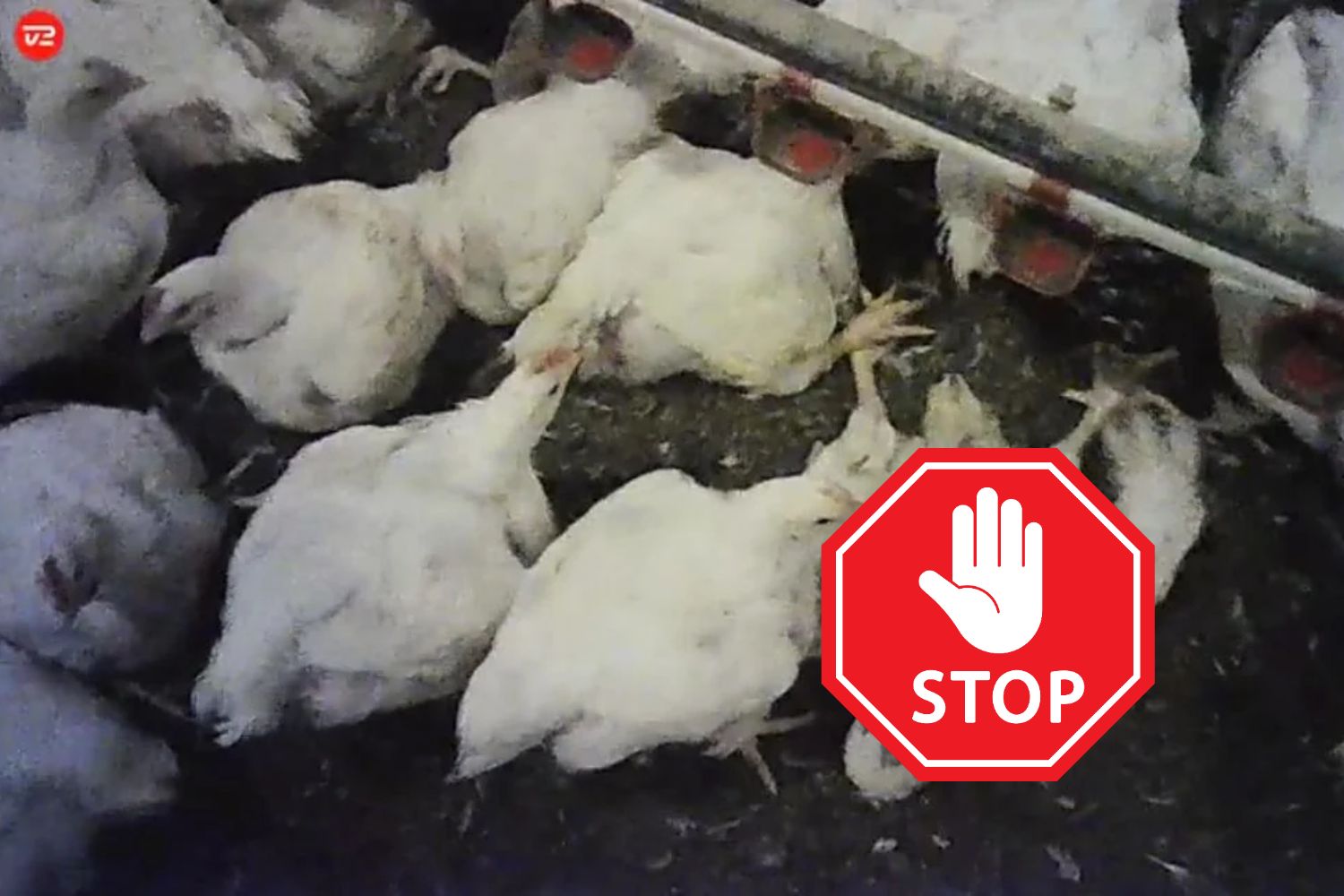
The debate was rekindled by an investigation by the Danish broadcaster TV2, which showed images secretly taken inside a farm in Northern Jutland.
According to what emerged, the manufacturer Christian Tvergaard would have left the chickens in the dark for only three hours a day, instead of the six required by Danish law. A choice aimed at extending feeding hours and further accelerating the animals’ weight gain. Interviewed by the broadcaster, the breeder acknowledged having made mistakes, declaring that he had changed the lighting program and strengthened the management procedures of the farm.
View this post on Instagram
What are turbo chickens
At the center of the controversy is above all Ross 308, one of the most widespread genetic lines of broiler chickens on Danish farms. These are animals belonging to the category of fast-growing broilers and which can reach around two kilos in weight in just 33 days. Other slower growing genetic lines take between 46 and 63 days to reach the same weight.
Extremely accelerated growth can cause paw problems, motor difficulties and alterations to the bones and internal organs. In essence, animals’ bodies are pushed to build muscle mass at a rate that can compromise their ability to move normally.
According to Eurogroup for Animals, 95% of chickens raised in the European Union come from intensive systems, in which genetic selection has been aimed above all at obtaining large quantities of meat at low costs.
View this post on Instagram
Denmark aims for a European ban
Madsen’s proposal has found support among several Danish parties, but also raises questions about the economic consequences for the poultry sector. Second Klement Hinkbøl RibergaardCEO of the producer Danpo, banning national production without intervening on imports would risk simply shifting purchases towards chickens raised abroad with the same methods.
For this reason, the government aims to involve Brussels, with a view to introducing common rules for the entire European market.
The issue is part of a broader debate on the welfare of farm animals. In fact, Denmark has also decided not to ask for exemptions from the European ban on mink farms, which are destined to cease operations by August 2029.
And Italy?
In Italy, however, politics is divided over intensive farming. Here, the debate has only raised a fuss and taken a very different direction. After the investigations by Food for Profit, the documentary by Giulia Innocenzi and Pablo D’Ambrosi on the conditions of intensive farming and the relationship between the meat industry and politics, the reactions were mixed.
In 2024 the Minister of Agriculture Francesco Lollobrigida criticized what he called a “generalized criminalization“of Italian farmers, while opposition members have asked for more incisive interventions on animal welfare. In April 2026, for example, the PD deputy Eleonora Evi presented a parliamentary question after a new Report investigation on the poultry supply chain. In August, however, Fratelli d’Italia, Lega, Forza Italia and Noi Moderati even raised doubts about the financing of the documentary Food for Profit, asking Rai for clarification on possible conflicts of interest.
In short, while Denmark discusses a national ban on ultra-fast growing chickens, in Italy the political debate continues to focus on the reliability of investigations and the protection of the livestock sector, rather than on the health of animals and people.
Meanwhile, the question raised by the Danish proposal is precise: to what extent is it acceptable to select animals to grow faster and faster, when their health and well-being pay the price?
HERE is the video of the investigation.
Sources: TV2 / The Guardian
