
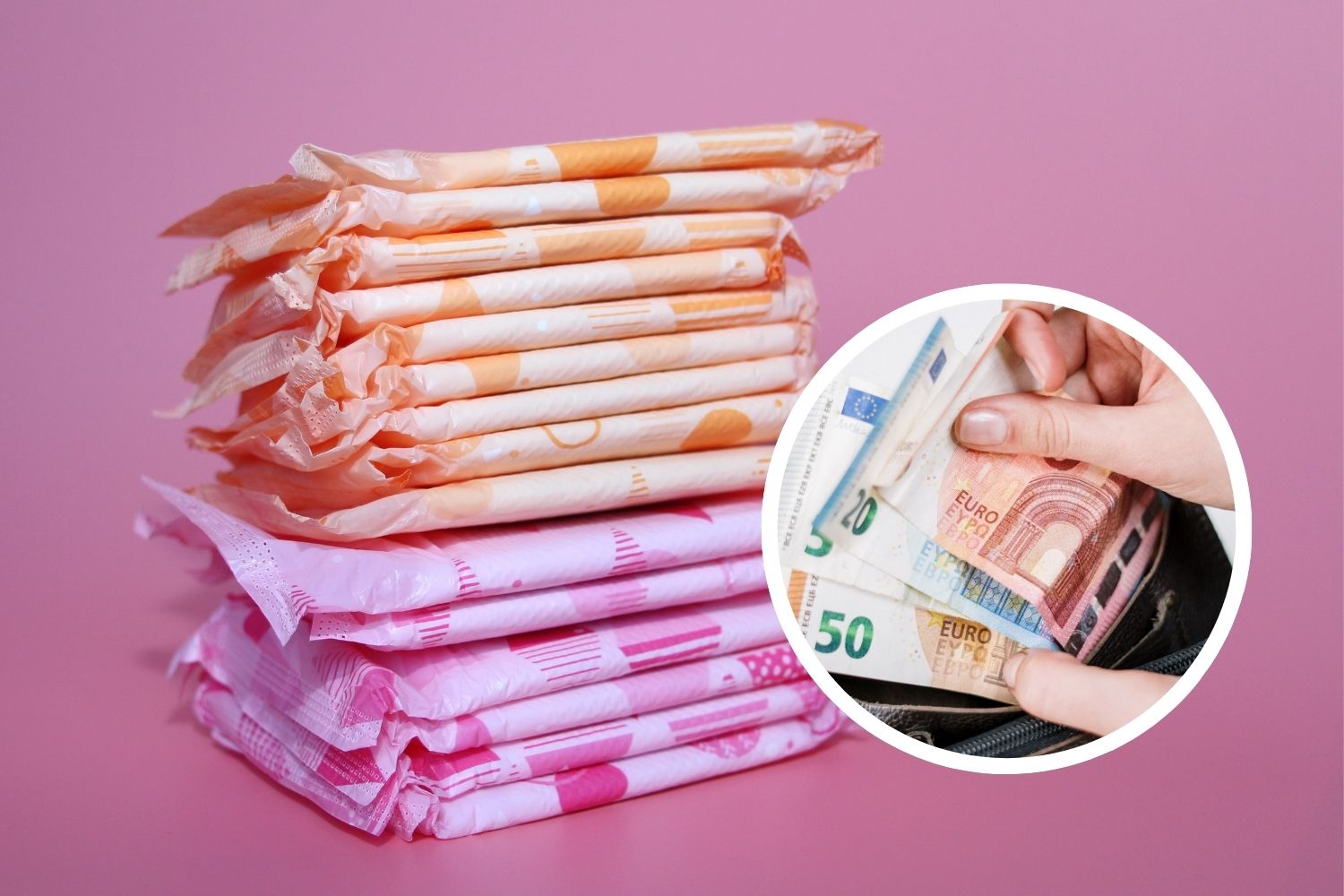
Having your period is expensive. Every month, for decades, millions of women have to buy tampons and other essential products, incurring an expense that not everyone can afford. And while in Italy we continue to discuss period povertymenstrual poverty, Sardinia chooses to intervene with an annual contribution of 100 euros to purchase menstrual hygiene products.
The measure, approved by the regional council led by Alessandra Todde, provides for a total allocation of 14.7 million euros over three years and is aimed at girls resident on the island between the ages of 12 and 20, regardless of family income, as well as women of any age who experience particularly fragile situations.
A significant innovation, especially due to the breadth of the resources allocated and the choice not to subordinate the benefit of the youngest to the ISEE. But it is not the first regional initiative against menstrual poverty: already in 2022 Lazio had approved a law to reimburse part of the VAT on tampons to women with lower incomes, a measure which, however, has not found continuity in funding.
Who can receive the 100 euros
The provision distinguishes two categories of beneficiaries: the first includes all girls and young women between 12 and 20 years old resident in Sardinia, without any income limit; the second concerns women of any age who are in conditions of particular need, documented by Family Centers or other competent public structures.
Priority will be given to situations of serious economic hardship, social marginality, housing emergency, reception in dedicated structures and women included in programs for protection from violence.
How the bonus will work and which products you can purchase
No refund to request after shopping and, above all, no obligation to advance money. The contribution will in fact be loaded in the form of a personal credit associated with the Health Card and can be used, even for multiple purchases, at participating shops.
The permitted products include:
Be careful, however: approval of the contribution does not mean that it is already possible to use it. The regional press release does not yet specify an activation date, nor does it indicate the operating methods for obtaining the credit. Further implementation measures will therefore be necessary.
And in the rest of Italy?
Sardinia is not the first Italian region to intervene against menstrual poverty, even if its measure stands out for the individual economic contribution, accessible to young people aged 12 to 20 without income limits.
Already in 2022, Lazio had approved a law to refund part of the VAT on sanitary pads to women between 14 and 50 with an ISEE of up to 20 thousand euros. A measure which, however, did not have continuity in funding. In Campania, however, the Regional Council has recently started a process to introduce free dispensers of sanitary napkins and tampons in lower and upper secondary schools, through a pilot project proposed by councilor Davide D’Errico. The initiative, which is also inspired by the experience of the Municipality of Bacoli, aims to guarantee female students immediate access to menstrual products, preventing economic difficulty or the lack of a tampon from turning into a reason for discomfort or absence from school.
We talked about it here: Free sanitary pads in schools in Campania, the pilot project starts: “the menstrual cycle must not be shameful, enough injustices”
The motion also includes menstrual education campaigns and asks the Region to promote a reduction in VAT on feminine hygiene products from 10% to 4%. However, this is a proposed experiment, not a distribution already extended to all schools in Campania.
In Valle d’Aosta, free sanitary napkin dispensers have been introduced in high schools since 2025, while in Emilia-Romagna the Legislative Assembly approved a resolution in March 2026 to combat menstrual poverty and evaluate economic benefits for the most vulnerable people.
Emilia-Romagna has also taken action: in March 2026 the Legislative Assembly approved a resolution which commits the Council to tackling menstrual poverty and evaluating economic benefits for the weakest groups.
The peculiarity of Sardinia therefore lies in having provided for an individual annual contribution, financed on a three-year basis and accessible without income requirements to an entire age group. Of course, the Sardinian bonus will not erase all inequalities and 100 euros per year will not necessarily cover all expenses related to the menstrual cycle, but publicly recognizing this need, providing dedicated resources and also involving schools and health services, represents a concrete step.
