
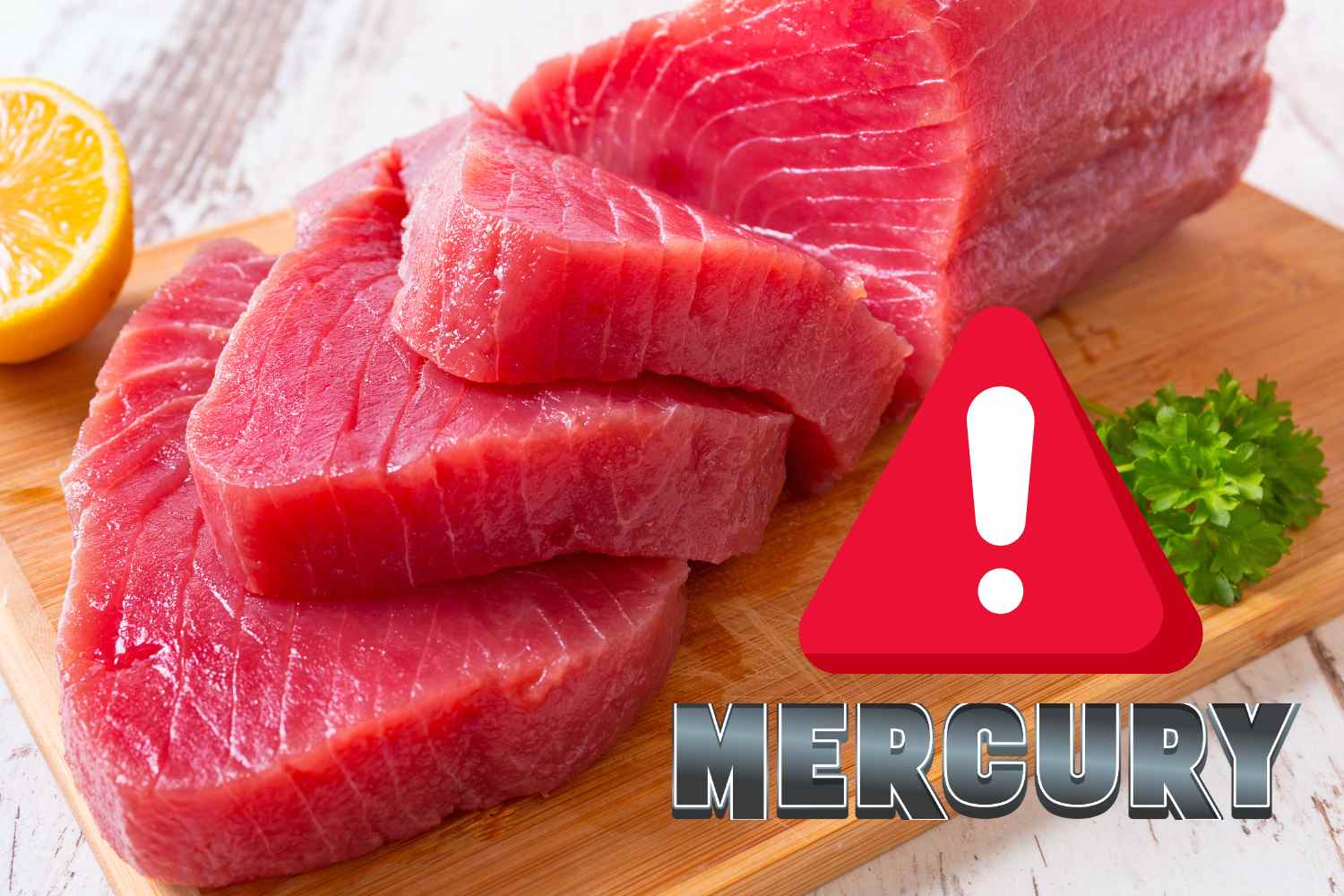
In recent years there has been more and more talk of mercury in tuna, a problem that not only concerns classic cans, often at the center of tests and analyses, but also fresh fillets sold in supermarkets. Precisely on the latter, the Swiss magazine Balance conducted a detailed investigation, revealing a worrying scenario: half of the fillets analyzed exceed the safety limits set by the European Food Safety Authority (EFSA).
For comparison, two fresh salmon fillets were also analyzed in the same test, which contained significantly lower quantities of mercury than tuna, demonstrating how the risk can vary greatly between different species.
Tuna, predator and accumulator of toxins
Tuna is a predatory fish that feeds on other fish, crustaceans and squid. This makes it rich in valuable nutrients such as omega-3 fatty acids and vitamins, but it also leads to the accumulation of environmental toxins. Of these, methylmercury is the most worrying: it is a highly toxic form of mercury that can damage the nervous system, impair brain development in children and cause neurological disorders.
According to EFSA guidance, a 60kg person should not take more than 78 micrograms of methylmercury per week. In the test conducted by Balance5 fillets out of 10 exceeded this limit already with a 200 gram portion.
Packaged fillets vs fish counter
The highest levels of mercury were found in packaged supermarket products: Migros Sélection (131.6 µg), Aldi Almare Seafood (118.2 µg), Coop Fairtrade (102.2 µg), Coop Qualité & Prix (83.2 µg) and Migros Filet Thuna (81.8 µg).
In contrast, fresh fillets sold over the counter, such as those from Globus Delicatessa, Coop and Migros, contained between 23 and 43 µg of mercury per portion, values well below the risk threshold. The difference could arise from the type of tuna used and the age of the fish: cheaper fillets often come from larger, longer-lived tuna, where methylmercury accumulates more.
In addition to heavy metal contamination, Balance also evaluated the microbiological quality of the fillets. Luckily, 9 out of 10 were perfectly fresh and safe. Only the Spar sample showed a higher bacterial load, although it remained within the legal limits.
If you are thinking that, given that the test was conducted in Switzerland, the problem does not concern us, you are wrong: even in Italy fresh tuna can contain mercury, it is in fact a global problem.
Safety tips
Experts urge you to limit the consumption of fresh tuna, especially for children, adolescents and pregnant women, preferring fish with low levels of mercury such as salmon, trout, char and pangasius. Canned tuna also poses less of a risk, as it often contains bonito (also called skipjack tuna or Katsuwonus pelamis), a younger and smaller species, with less accumulation of methylmercury.
However, Swiss experts point out that canned tuna may contain bisphenol A, a substance potentially harmful to the immune system and fertility, so consumption should not be excessive in any case.
How the test was conducted
Balance sent 10 fresh tuna and 2 salmon fillets to a German laboratory. The samples were heated and analyzed with mass spectrometry to measure the mercury content. To evaluate hygiene, however, the fillets were incubated on nutrient media to evaluate the total bacterial load, Pseudomonas and the presence of pathogens such as Escherichia coli, Listeria and Salmonella, which were found to be absent in all samples.
