
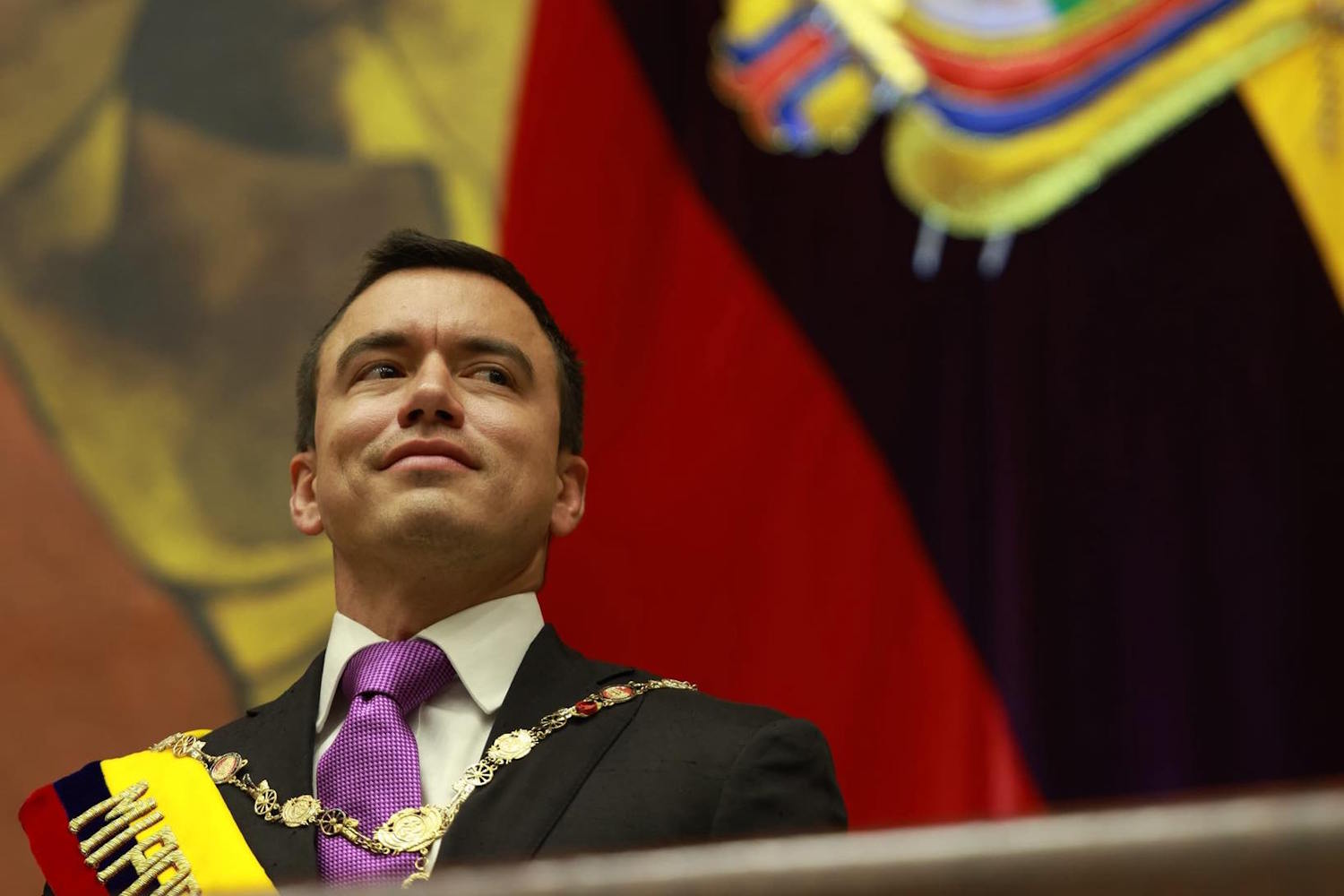
A decree that suppresses six ministries: so the president of Ecuador, Daniel Noboasigns the dismissal thousands of employees, including those of the Ministry of the Environment. A move that is part of a wider reduction strategy of public spending and that has already led to 5 thousand expulsions in the public sector. With immediate effect.
And beyond the official statements that justify these choices with the need to “improve efficiency and guarantee better service to citizens”, the decision raises many concerns.
The decision to eliminate the Ministry of the Environment and merge it with that of energy, for example, has unleashed a series of critical reactions. Ecuador has been a country for years has been at the center of crucial environmental battles and which sees the rights of indigenous populations often at risk. Noboa’s move could further weaken the institutions that protect the environment and the rights of local peoples, In fact, by favoring the oil and mining industrieswhich constitute the heart of its economic strategy to attract foreign investments and relaunch the country’s economy.
Eso El Video que noboa difundó por apsolutally tadas las rees socials during on the campaña, promising those of the hempleus to the people that votar will Por él. Hoy dejó en la Calle at 5,000 trabajadores. Instravel Cómo Este type Estofó tan fácil a sus votentes. pic.twitter.com/u3zllrqbf
– Daniel Salcan (@Danielsalcan_) July 25, 2025
According to the organization Amazon Frontinesthis decision represents a dismantling of the Ecuador environmental monitoring system, with the risk of accentuating the impunity of large oil and mining oil companies. The concerns also extend to the rights of peoples indigenouswhich could be deprived of the constitutional protections in their favor, including the right to free and informed consultation on the activities concerning their ancestral territories.
The economic context, however, cannot be ignored. Ecuador is under pressure by the International Monetary Fund (IMF), which recently approved a loan of 600 million dollars for the country, in exchange for rigid economic reforms. The IMF has imposed austerity measures which, as seen, translate into draconian cuts, which concern in particular the sectors related to the environment and human rights. The priority, for the IMF, seems to be to restore public finances to the detriment of any other long -term consideration.
In parallel, and paradoxically, the oil sector plays a crucial role in the country’s economy. Despite the problems related to pollution and environmental damage, the reopening of the main Ecuadorian oil pipeline, the Saterepresented a breath of oxygen for the country, which had seen a contraction of its oil production of about 90% due to the temporary closure of the pipeline, with economic losses estimated at around 20 million dollars a day. Reason why a resumption of the extraction and sale of petrolium It is seen as an immediate solution, despite serious long -term implications.
The problem, however, is that this approach risks being short -sighted. The relaunch of oil as an economic engine is not only a temporary remedy, but also a further step towards the exhaustion of natural resources and the worsening of climatic damage. And we know it well.
Global warming is already causing devastating effects in Ecuador: from the beginning of 2025, the country has recorded 52 dead, thousands of destroyed houses and tens of thousands of people affected by extreme events related to climate change.
Ecuador, as well as the rest of the world, urgently needs an alternative plan that does not depend on fossil fuels. The idea of focusing exclusively on oil could prove to be a choice not only harmful to the environment, but also for the economy if not accompanied by a transition strategy towards a model of sustainable and diversified development. After all, what today may seem like a short -term savings measure, risks turning into a very high account to be paid in the future.
