

There are around 20 million boys and girls between the ages of 12 and 17 who, in just one year and in 21 countries analysed, have experienced at least one form of sexual exploitation or abuse facilitated by technology and in most cases everything happens in the digital places they frequent every day: social networks, chats and video games. Less than 1% of incidents are reported to the authorities.
This is what emerges from the new UNICEF report Through Children’s Eyes: How Digital Technologies Enable Child Sexual Abuse (“Through the Eyes of Children: How Digital Technologies Facilitate Child Sexual Abuse”). A very harsh photograph, constructed by putting together the direct testimonies of the children and one of the largest sets of data available on the phenomenon.
In fact, abuse often occurs in the same digital spaces in which children and adolescents study, play, talk with friends and spend a significant part of their days.
The UNICEF report
In just one year, according to estimates:
Numbers which, UNICEF warns, could only be the tip of the iceberg, because many episodes are neither told nor reported. Behind every percentage, in any case, there is a child who may feel scared, confused, betrayed or a teenager who cannot find the words to tell what happened or fears being judged.
Almost 60% of incidents occur on the most common social networks
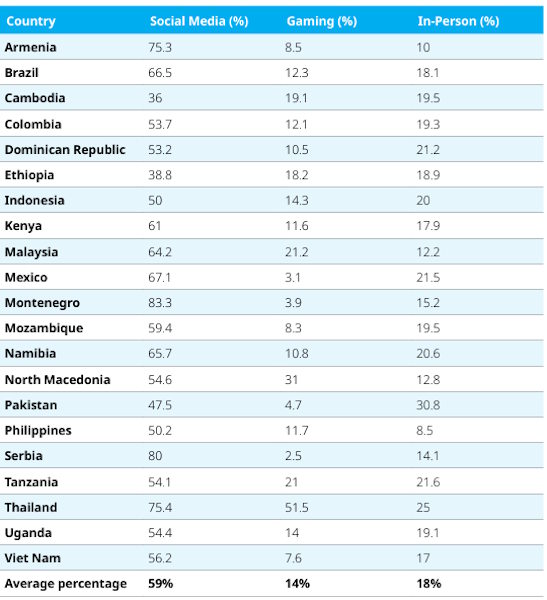
The report also dispels the idea that the danger lurks exclusively on unknown sites or in the most remote areas of the web. Nearly 60% of the cases analyzed occurred through social platforms, including Facebook, Instagram, Snapchat, TikTok and WhatsApp. An additional 14% occurred in online video games.
@Unicef
In Montenegro, for example, more than 80% of reported cases were linked to social media; in Colombia, more than half. Apparently normal functions, such as private messages, the possibility of creating fake accounts, recommendation systems and direct contact, can be used to gain the trust of younger people and progressively bring them closer.
@Unicef
The question we arrive at is therefore whether simply talking about “responsible use of smartphones” by children is sufficient. Safety cannot depend only on the ability of a thirteen year old to recognize a manipulative adult in time. Most of the time the abuser is not a stranger: in 57% of cases, the person involved was someone the minor already knew – a peer, a friend, a partner, a person belonging to the family circle -; in 38% of cases, however, the first meeting with the perpetrator of the abuse took place online:
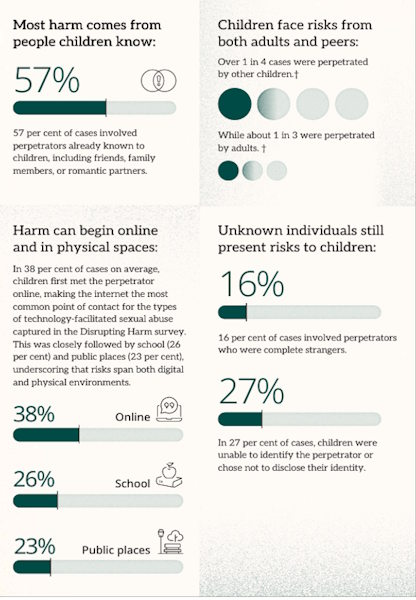
Abuse can arise within a relationship of trust. It can start with a seemingly innocuous request, turn into psychological pressure and lead to the dissemination of intimate images or the sextortionsexual blackmail used to obtain more images, money or further services.
As if that wasn’t enough, according to the UNICEF analysis, children and adolescents who have experienced technology-facilitated forms of sexual exploitation are four times more likely to report suicidal thoughts or behaviors and self-harm, as well as significantly higher levels of anxiety than their peers.
More than 4 out of 10 children don’t tell anyone; more than 40% of incidents are not told to anyone and less than 1% are reported to the police, social services or a helpline.
The reason most frequently given by young people is disarmingly simple: not knowing who to turn to or where to ask for help. This is why UNICEF is calling for urgent interventions from governments, technology companies, schools, families and communities.
Digital platforms, first and foremost, should be safe by design, with stronger privacy protections for minors, limits on unwanted contact by adults, safer recommendation systems, and more effective tools for spotting and reporting abuse. What are we waiting for?
HERE is the full report.
