
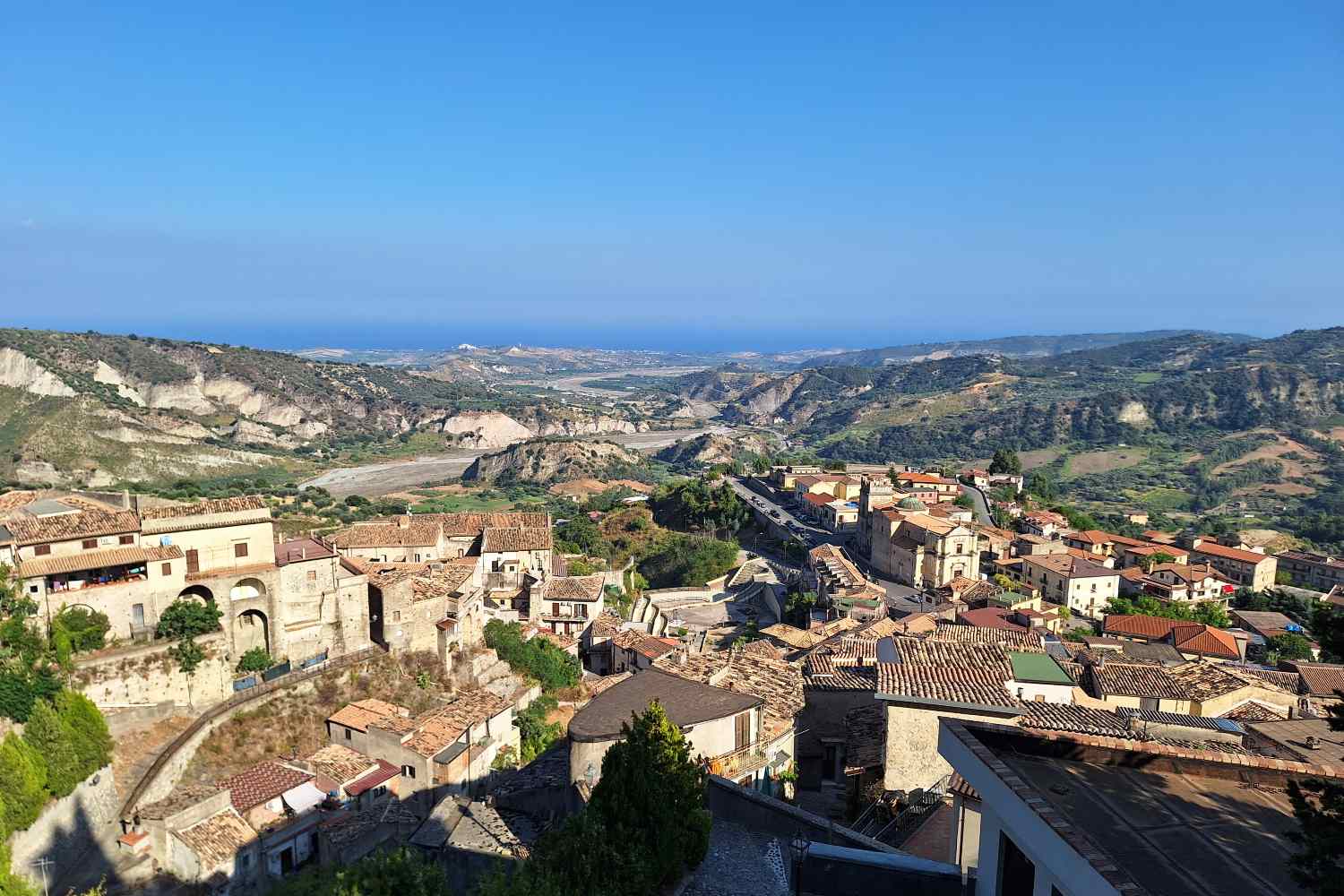
Climbing on the rocky slopes of Monte Consolino, with its gaze turned towards the suggestive Costa dei Gelsomini overlooking a crystalline sea, stands Stilo. We visited this extraordinary village in the province of Reggio Calabria, included in the prestigious circuit of The Most Beautiful Villages in Italyto breathe the unchanged atmosphere of a historic center entirely carved in granite. Walking through its narrow alleys and dark stone staircases, you immediately feel the charm of a place that in the 10th century was the fulcrum of Byzantine power in southern Calabria, becoming an impregnable refuge and a beacon of spirituality for oriental monks.
@RebeccaManzi/GreenMe
The Convent of San Francesco with the Church and the Tower
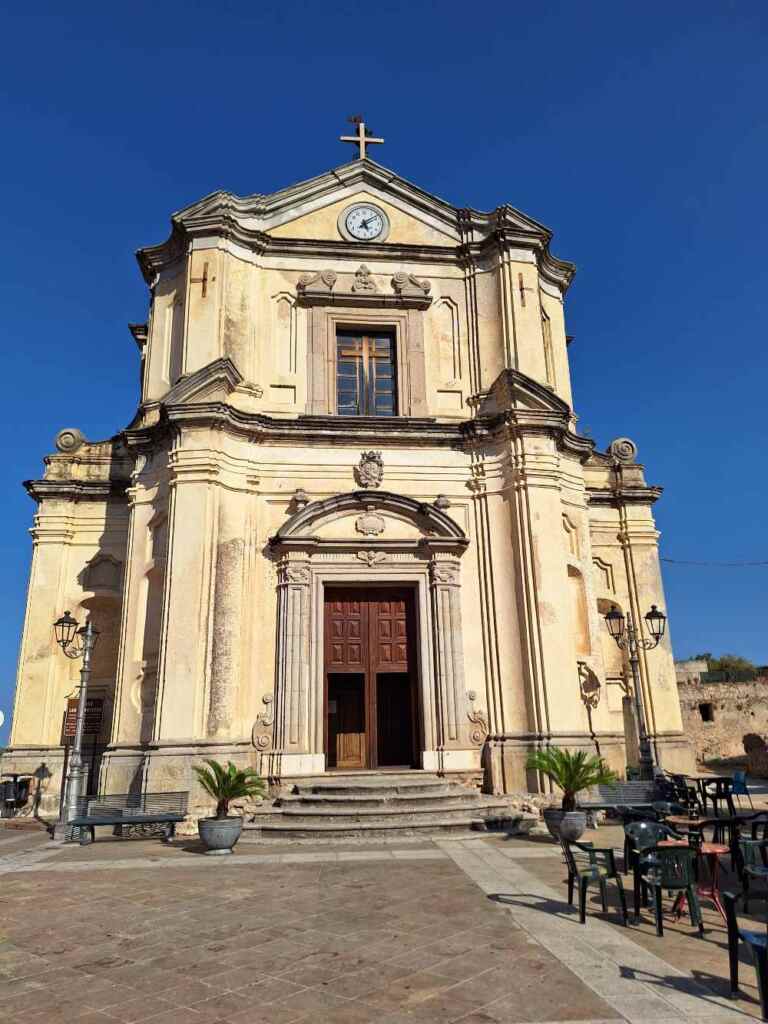
Our first stop could only be a visit to the monumental complex of San Francesco, a jewel founded in the 14th century by the Franciscan order and located in a splendid panoramic position. The Church of San Francesco, restored in the Baroque era, struck us with its solemn external simplicity and the richness of the interior, where the local community once gathered in prayer.
@RebeccaManzi/GreenMe
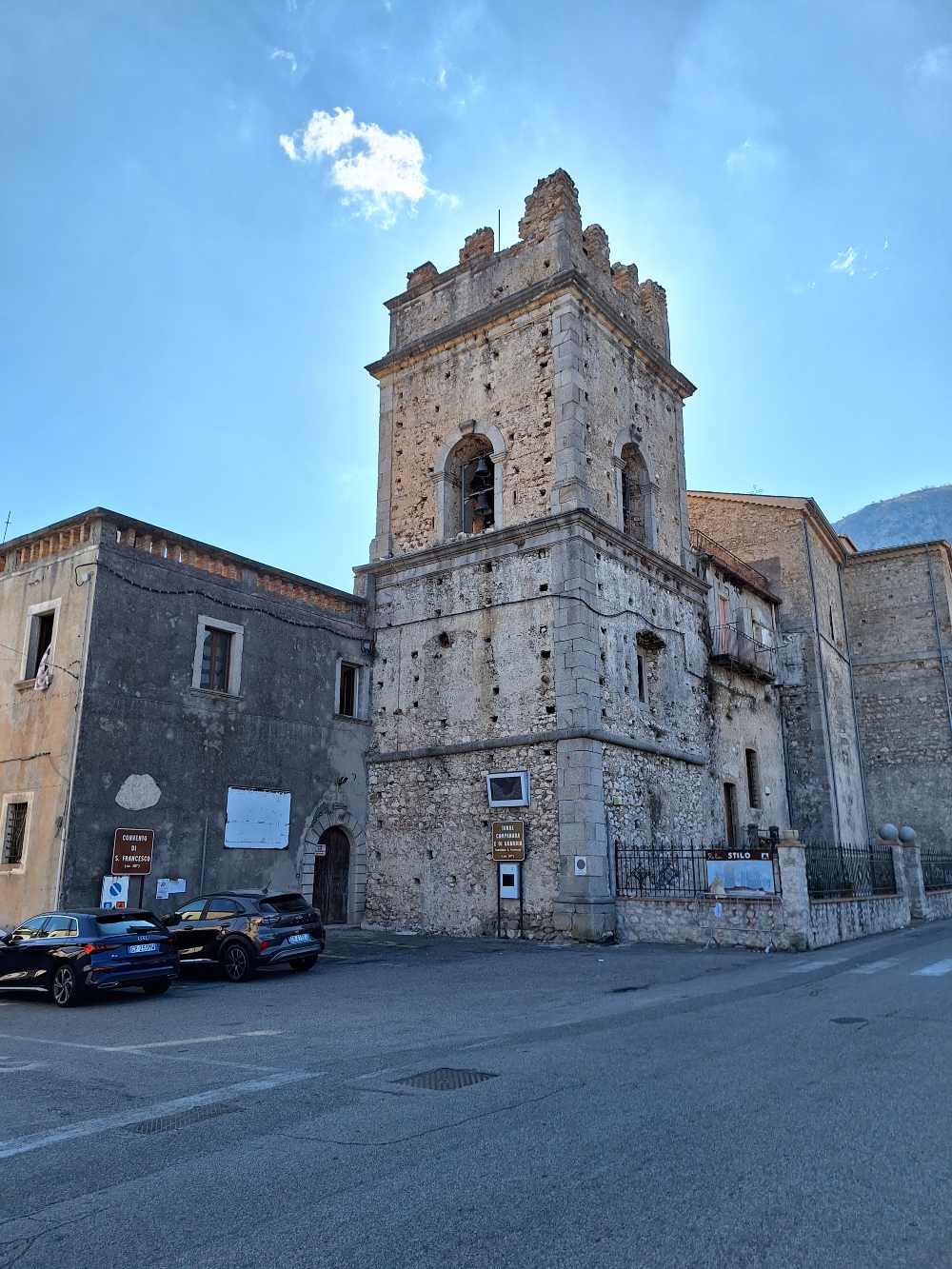
But what dominates the entire complex is its imposing bell tower, which stands proud against the profile of Monte Consolino. This square-shaped bell tower, originally conceived as a watchtower and defense against Saracen incursions, represents one of the most fascinating testimonies of Stilo’s defensive past, combining monastic sacredness and the historical need to protect the village in a single architectural element.
@RebeccaManzi/GreenMe
The Cattolica of Stilo, a wonder of Byzantine architecture
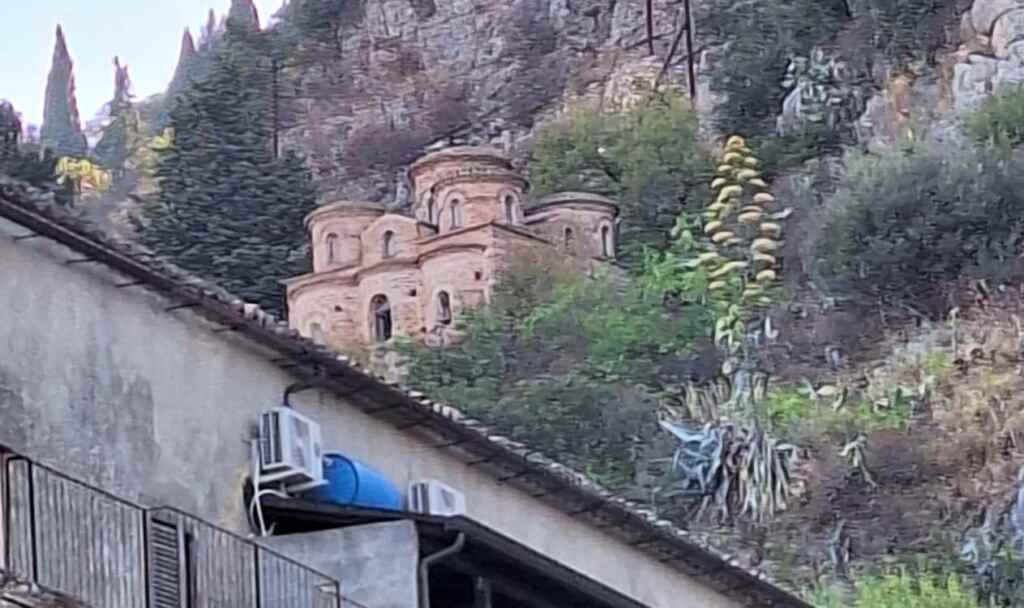
in Cattolica di Stilo, the symbolic monument of the region, currently a candidate to become a UNESCO World Heritage Site. This tiny 10th century church, nestled on the bare rock outside the inhabited centre, is striking for its cubic shape in red bricks and its five cylindrical domes covered in tiles.
Entering the small Greek cross-shaped space, we were fascinated by the four reused columns, all different from each other: one of them even bears an ancient Arabic engraving praising Allah, testifying to a probable temporary use of the structure as a place of Islamic worship. The internal walls still retain fragments of the precious frescoes that once covered them entirely.
@RebeccaManzi/GreenMe
On the trail of Tommaso Campanella in the Convent of San Domenico
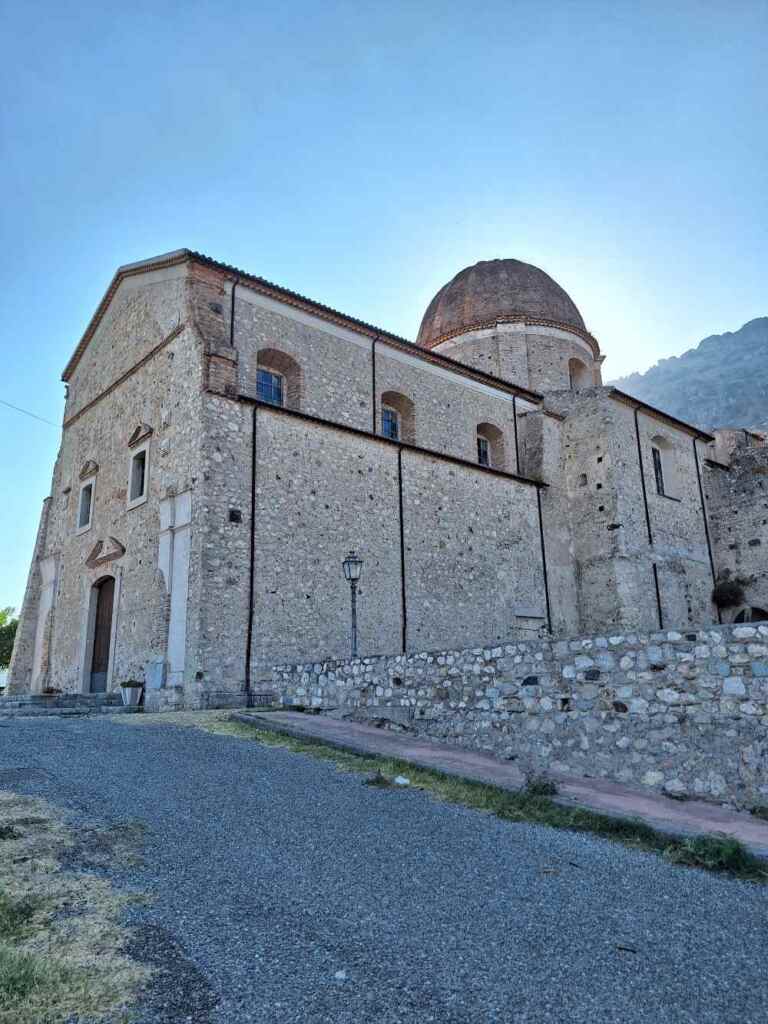
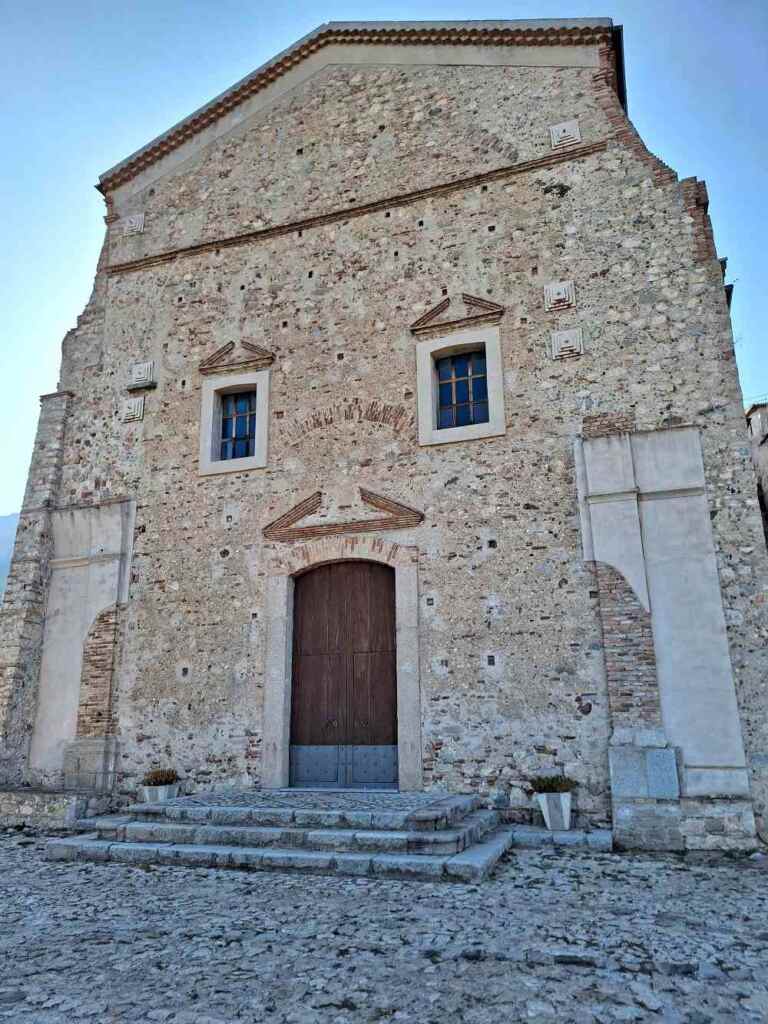
Going down towards the heart of the village, in Piazza Carnovale, we were greeted by the bronze monument dedicated to the most illustrious citizen of this land: the philosopher and Dominican friar Tommaso Campanella. Right here, inside the Convent of San Domenico, we had the opportunity to visit the cell where the thinker lived before being accused of heresy by the Inquisition.
@RebeccaManzi/GreenMe
The inspiration for the writing of his masterpiece was born within these austere walls, The city of the sunthe utopian work in which Tommaso Campanella theorized an egalitarian and peaceful society, profoundly influenced by the geometric harmony of his native Stilo.
@RebeccaManzi/GreenMe
Tommaso Campanella’s birthplace
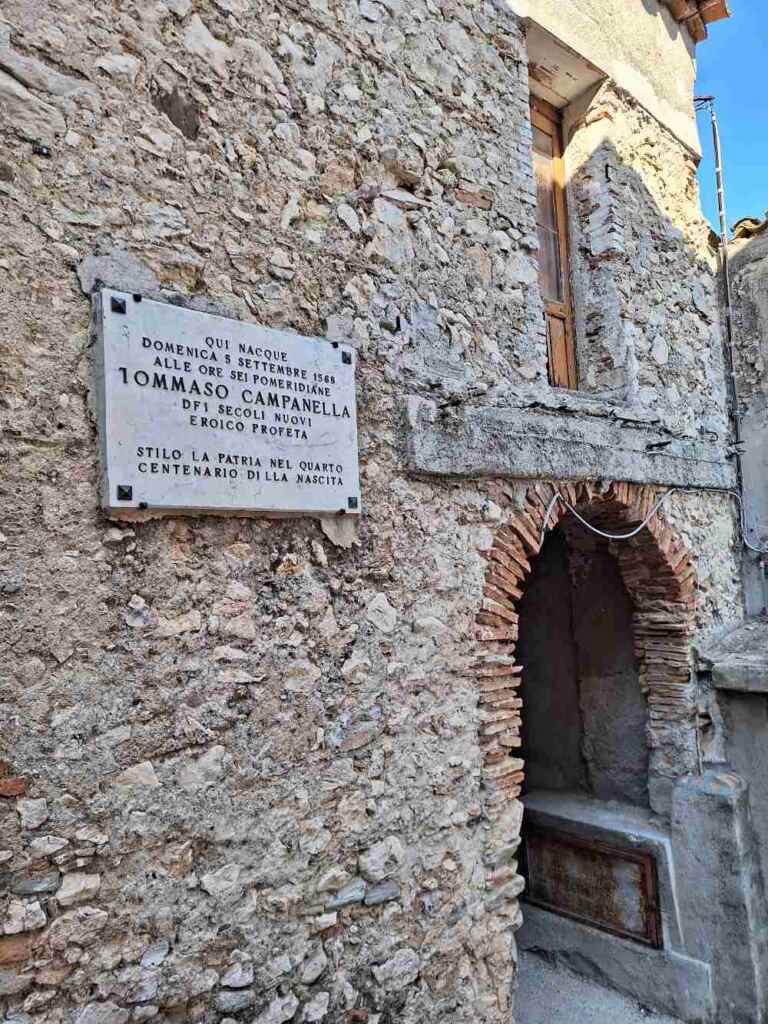
A short distance from the Dominican complex, our itinerary in the footsteps of the great philosopher led us to the remains of what local tradition identifies as the birthplace of Tommaso Campanella. Located in the heart of the most characteristic alleys of Stilo, this modest dark stone house represents the starting point of the troubled existence of the Calabrian thinker, born right here in 1568.
Although today the building appears simple and partially marked by time, stopping in front of its stone entrance gives a profound emotion: it is within these domestic walls that the very young Tommaso began to develop that extraordinary intellectual vivacity that would lead him, years later, to challenge the dogmas of his era and to conceive the social utopia of his most famous work.
@RebeccaManzi/GreenMe
The fourteenth-century Cathedral and the Dolphin Fountain
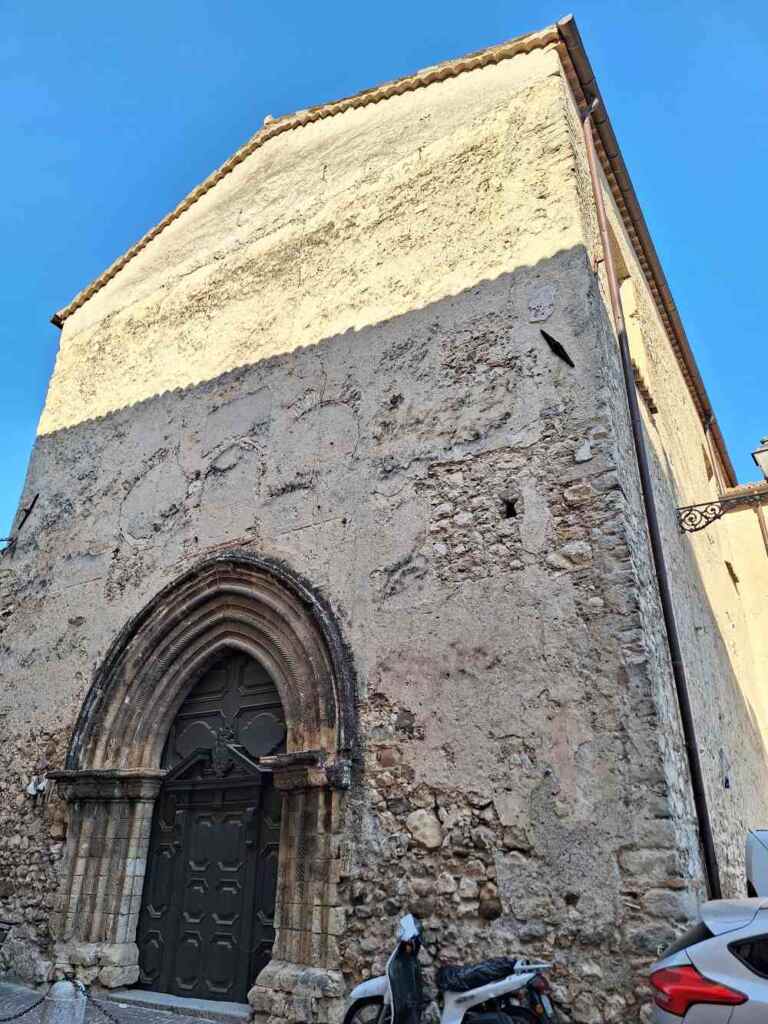
The historic center is a constellation of religious architecture of enormous value. We visited the fourteenth-century Mother Church, known as the Cathedral of Stilo, which stands on the remains of an ancient pagan mausoleum and boasts a magnificent Gothic portal enriched by an internal baroque restoration which houses a sculpture of San Vito. Not far away, we took a break in front of the Dolphin Fountain, also called Gebbia, an evocative public work in granite with clear references to the Arab style, and we admired the Church of San Giovanni Therestis with the adjoining Liguorini convent, now the seat of the Town Hall.
@RebeccaManzi/GreenMe
The climb to the Norman Castle along the Via Crucis
For the more adventurous, the path that starts from Cattolica and goes up Monte Consolino offers an extraordinary experience. Walking along the 14 stations of the Via Crucis, we reached the ruins of the Norman Castle, built around the year one thousand by order of Count Roger the Norman. Although only the majestic circular entrance towers and large sections of perimeter walls remain visible today of the original fortress, the effort of the climb was amply rewarded by a breathtaking panorama that ranges from the gorges of the Stilaro Valley to the infinite blue of the Ionian Sea.
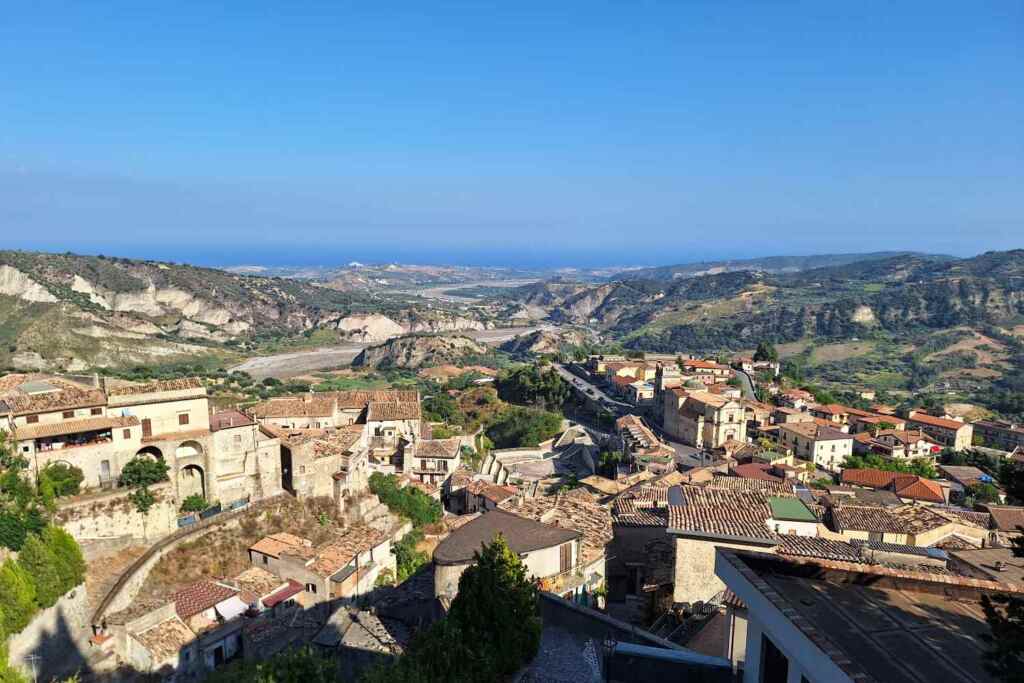
@RebeccaManzi/GreenMe
At this point our visit ended but by leaving this corner of Calabria we brought with us the profound contrast between the bare rock of Consolino and the refined Byzantine geometry. Stilo is a village suspended in time, where history, philosophy and hermit spirituality come together in a single, unforgettable embrace.
