
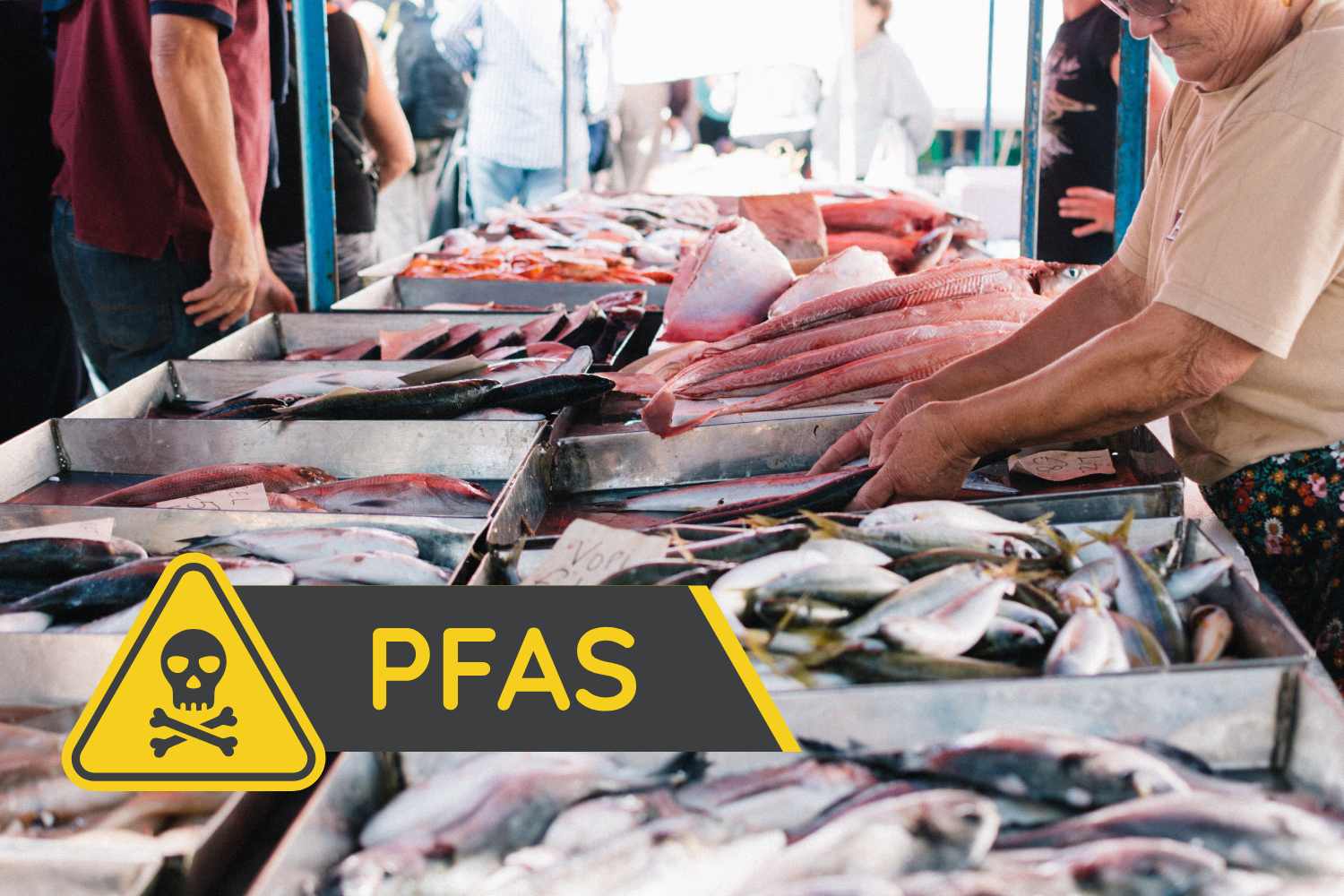
The international fish trade not only moves tons of food from one continent to another, but also contributes to moving an invisible risk, that linked to PFAS, the so-called eternal chemicals. This is shown by a new study published in Sciencewhich reconstructed for the first time a global map of exposure to these substances through the consumption of marine fish.
Pfas – let us remember – are extremely persistent chemical compounds, used for decades in numerous industrial processes and everyday products. Precisely because they do not degrade easily, they end up accumulating in ecosystems and living organisms, including fish. And when the fish travels, so do the contaminants that ultimately end up on our tables.
The study
The work, coordinated by Wenhui Qiu of Southern University of Science and Technology of Shenzhen together with a large international team, used an innovative approach: combining environmental data collected in over 3,100 different sites between 2010 and 2021 with information on fish trade routes and food consumption from 44 countries.
The objective was to calculate what is called “estimated daily intake” (EDI), i.e. how much each inhabitant of a given country takes on average through the fish consumed, both that caught in its own waters and that imported from abroad.
The researchers estimated the presence of Pfas in 212 commonly consumed marine fish species, focusing on two specific compounds – Pfoa and Pfos – which represent the most frequently detected contaminants. The result is a detailed snapshot not only of where pollution is highest, but more importantly of how human exposure to these substances is “redistributed” through global fish trade flows.
According to the study, the risk of exposure to PFAS through fish consumption is highest in North America, Oceania and Europe. But it is precisely Europe that emerges as one of the main hubs of this system.
The European fish trade, the authors explain, significantly contributes to moving fish from more contaminated areas to regions that, from an environmental point of view, would be less exposed. In practice, the global market ensures that the risk does not remain confined where the pollution is highest, but is “exported” elsewhere.
One of the most innovative aspects of the study is precisely the attention to the role of international trade. It’s not just where the fish is caught, but also where it is consumed. Countries with relatively less contaminated waters may face higher exposure simply because they import large quantities of fish.
The risks
As already mentioned, the study focused in particular on two long-chain Pfas: Pfoa (perfluorooctanoic acid) and Pfos (perfluorooctane sulfonate). Both are associated, according to scientific literature, with negative health effects, including hormonal alterations, immune system problems and increased risk of certain diseases.
The good news is that, after the restrictions introduced starting in 2009, the risk index linked to Pfos has decreased on average by 72%. However, unregulated long-chain PFAs remain a source of concern, especially given their ability to accumulate over time.
However, in most of the countries examined, the risk index remains below the threshold of one, the value above which specific interventions are necessary. The most significant exceptions concern Greenland and Denmark, where exceeding the threshold is mainly linked to eating habits; per capita fish consumption in these areas is in fact particularly high.
Obviously, a direct correlation emerges between the quantity of fish consumed and the risk index: the more you eat, the greater the exposure. It is no coincidence that the highest values are recorded in the Nordic countries, which however are also found in the areas geographically closest to the areas where, historically, the industrial production of Pfas has been concentrated.
It is important to point out that the research does not invite us to demonize fish, a precious food from a nutritional point of view, but highlights an often ignored reality, namely that pollution knows no borders and follows the same routes as global trade.
Where do PFAS come from and what should be done?
The main entry route for Pfas into marine ecosystems, the researchers explain, is fresh water: rivers and lakes collect waste from industrial plants and those coming from water networks, concentrating the substances before they reach the sea. The problem is aggravated by the fact that in inland waterways the turnover is much slower than in the oceans, favoring accumulation.
Proximity to certain sources of contamination also makes a difference. Concentrations in coastal waters are higher when there are nearby factories that produce or use PFAS, or facilities that release large quantities of it, such as some military bases.
Reducing exposure to Pfas, the researchers explain, does not only mean intervening on individual consumption, but above all limiting the sources of contamination, strengthening controls and adopting a more ambitious approach to the regulation of these substances.
Because as long as “eternal chemicals” continue to be produced and released into the environment, they will also continue to end up – silently – in seas and on plates around the world.
