
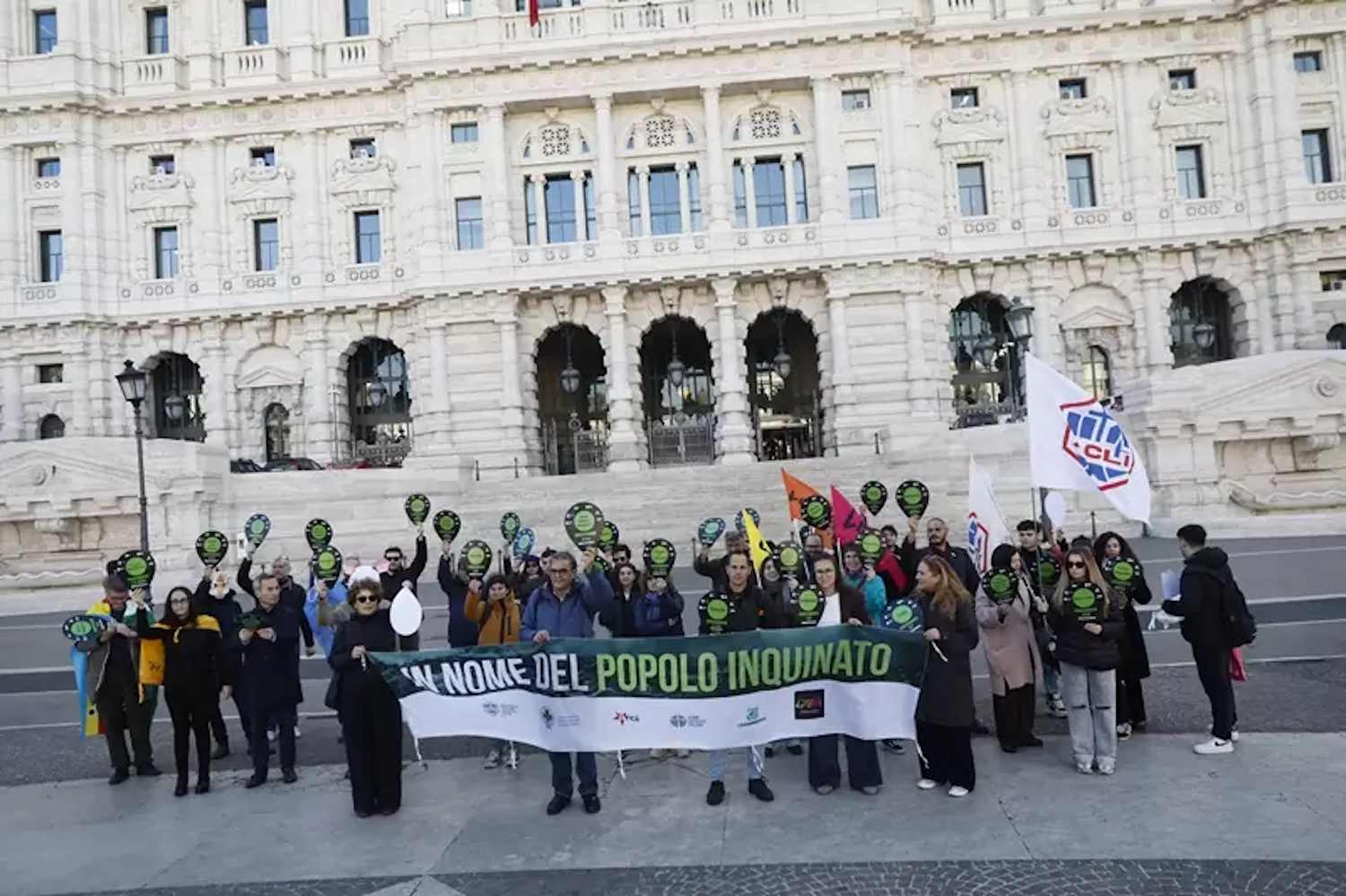
There are almost 1000 years of total delay accumulated in Italy due to the failure to reclaim the 42 SINs, the sites of national interest established between 1998 and 2020 and which are still awaiting ecojustice. There are 148 thousand hectares on land and 78 thousand hectares at sea still polluted with heavy repercussions and impacts on the health of citizens, on the environment and on the economic and social sphere of the territories.
In the aftermath of the sentence of the Campania TAR which effectively gives the green light to the works to upgrade the water and sewerage networks in the Posillipo-Bagnoli area, in Naples, including the renovation of a collector that will discharge near a Marine Protected Area – to name one – this is what ACLI, AGESCI, ARCI, Azione Cattolica Italiana, Legambiente and Libera denounce.
For the associations, the delays in the reclamation of the 42 SINs represent how little the Italian State is doing, which among other things was also condemned last January by the European Court of Human Rights (ECHR), for the inaction demonstrated on the Tierra dei Fuochi affair and on the burial of toxic waste by eco-mafias in Campania.
What would be desirable, in short, is that the ECHR ruling itself represents an important warning for the Italian State which must accelerate, on the one hand, the reclamation activity in the 42 SINs and on the other hand must firmly condemn those who commit the crime of failed reclamation, introduced into the Criminal Code by law no. 68/2015, guaranteeing the judiciary all the resources necessary to ascertain particularly complex illegal phenomena.
According to data from the Ministry of Justice, from 2022 to 2024 in Italy, 131 criminal proceedings were initiated by prosecutors for this crime, with 320 people under investigation, in addition to another 61 investigations against unknown persons. In the same period of time, criminal proceedings for environmental disasters also increased, from 24 in 2022 to 36 in 2024, for a total of 92 investigations in the three-year period, with 346 suspects, to which must be added another 63 against unknown persons.
Italy should equip itself with a national strategy for land reclamation, a priority that has been forgotten for too long and is fundamental to making the turning point that the country needs on this front also in the name of ecological transition – declare the associations. An appeal that we will also relaunch in the new stages of our traveling campaign ‘Ecogiustizia Subito’ which will see us engaged from 26 November, starting from Piombino, to continue in many other places where unfortunately reclamation is still a pipe dream”.
Ecojustice now
ACLI, AGESCI, ARCI, Italian Catholic Action, Legambiente and Libera have announced the start of the second edition of the national campaign “Ecojustice Now: In the name of the polluted people” which from November 26th will resume its itinerant journey across Italy to various places that are symbols of the failed land reclamation.
Another theme that will be brought to the fore in this second edition of “Ecogiustizia Subito” will also be the question of the improper management of substances that are dangerous and toxic to the environment and health.
Finally, the associations recall that the increase in waste production and the spread of the use of chemical substances, starting after the Second World War, have produced sources of contamination of the soil and groundwater which can also be traced back to improper management of substances that are dangerous and toxic to the environment and health. The revision of the REACH regulation (2006), the first and only one at European level for the registration and limitation of use of chemical substances, needs to be more transparent and effective.
A country that is unable to heal its environmental wounds is a country that struggles to also take care of the people who live in it.
Every year lost in reclamation means dirtier air, sicker seas, more fragile communities. It’s not just a question of bureaucratic delays, but of environmental and human justice. Giving life back to contaminated territories would mean giving back a future to future generations.
