
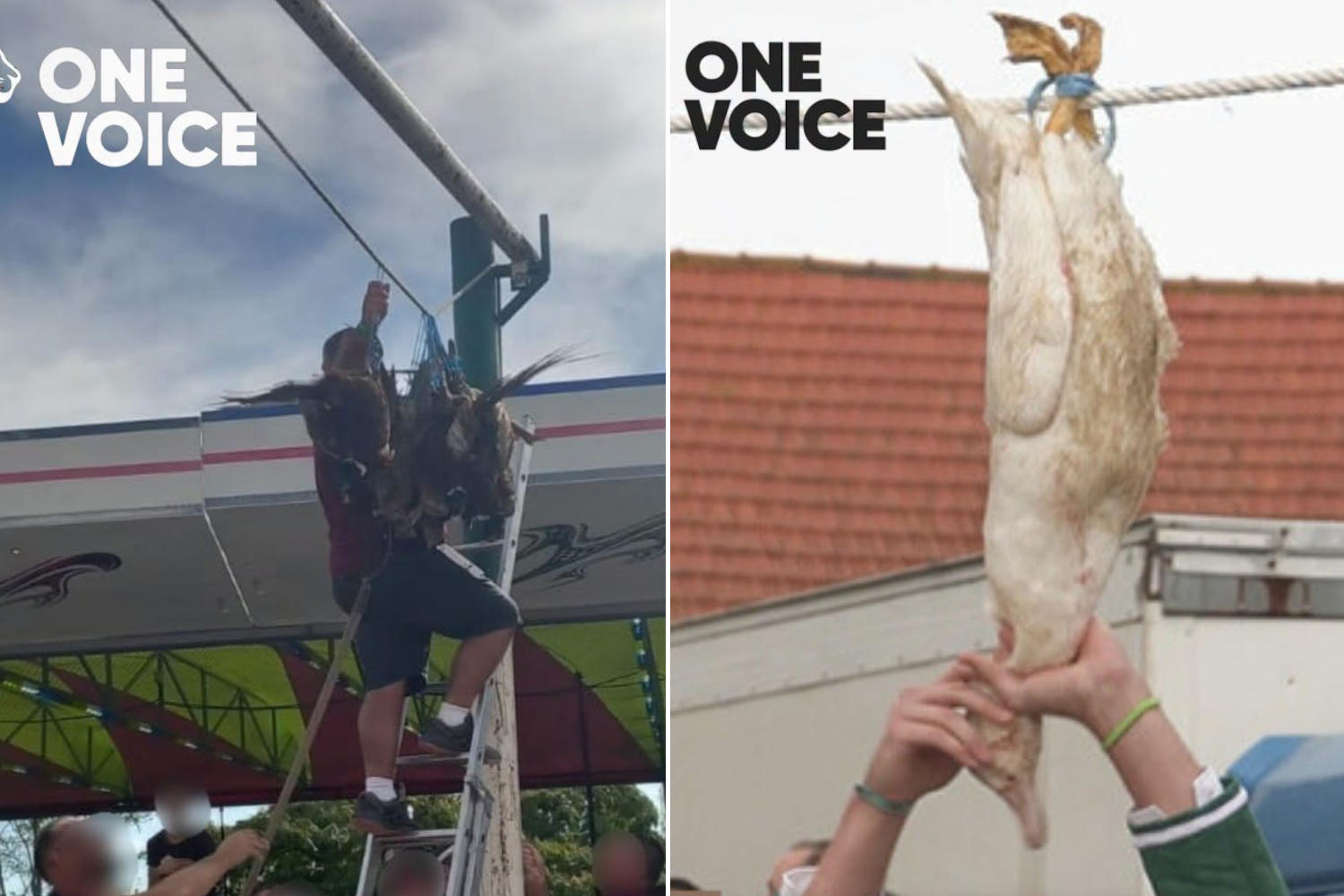
Barbarism disguised as tradition has struck again, trampling on every rule of civilization and respect for life. Between Friday 18 and Sunday 20 September, in the French municipality of Saint-Bonnet-près-Riom, located in the Puy-de-Dôme department, an unacceptable massacre took place during the usual patronal festival organized by local conscripts. Despite a clear and severe decree issued by prefect Anne Frackowiak-Jacobs to nip any form of abuse in its tracks, around 200 people witnessed and actively took part in the infamous and gruesome gooseneck game.
This anachronistic practice consists of hanging carcasses of already dead animals – in this case specific wild pheasants – to forcefully pull the head until the neck breaks or gives way in an atmosphere of popular celebration. A real outrage that immediately triggered the harsh reaction of the animal rights association One Voice, ready to present a formal complaint to denounce the incident and demand the verification of every single political and civil responsibility, including the level of the municipal authority led by the mayor.
View this post on Instagram
The rubber wall of tradition and the need for a radical ethical change
The ban imposed by the state authorities was based on unequivocal health and public order reasons. The use of animal carcasses in public events violates European regulations on animal by-products, which require disposal through authorized companies to prevent hygiene and epizootic risks. Furthermore, the public display of post-mortem mutilations and mistreatment profoundly impacts the collective conscience and the consciences of the minors present.
Faced with all this, the participants’ response was the most contemptuous of replies: the carcasses were used anyway, demonstrating that respect for animals is regularly sacrificed on the altar of violent and obtuse folklore. The competent authorities offered peaceful and perfectly legal alternatives, such as the use of fictitious replicas, padded objects or inert shapes, promptly snubbed by those who prefer the macabre spectacularisation of animal death. It’s time to say enough to these barbaric customs: the protection of life and the intransigent defense of animal rights cannot be subject to these alleged traditions.
