
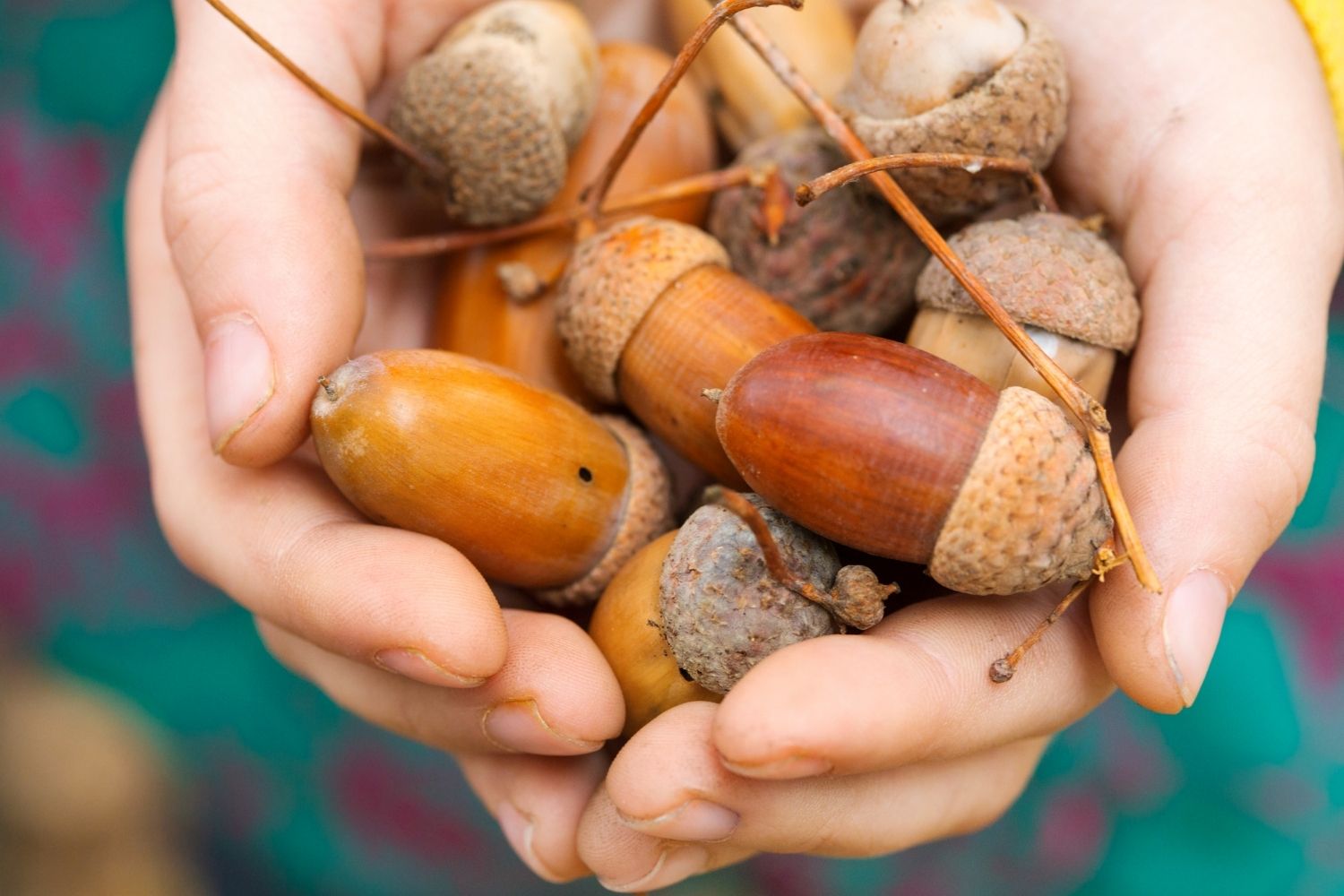
Before peanuts and almonds arrived in the United States, in the eighteenth century, there were already acorns on the tables of Native Americans, which seem to have just been “rediscovered” by the Anglo-Saxon press. The Washington Post reports recipes that are popping up like mushrooms in blogs and cookbooks, The Independent promotes them as a superfood full of antioxidants, while in Ogliastra the news would have aroused some perplexity, given that bread was made there with acorns until the mid-twentieth century.
What’s Really in an Acorn
The most cited numbers come from the nutritional tables of the University Hospitals of Ohio. One ounce of raw acorns, about 28 grams, provides 110 calories, 153 milligrams of potassium and just under two grams of protein. There are also manganese (0.38 mg), folate (about 25 micrograms) and vitamin B6 (0.15 mg), while of the almost 7 grams of fat, over 4 are monounsaturated. Vitamin A, listed among the fruit’s antioxidants, appears in little more than symbolic doses.
The literature agrees on the fat profile. A review published in August in the magazine Foods, written by researchers from the University of Osijek, in Croatia, recalls that oleic acid (the same one that made olive oil famous) makes up around 70% of total fatty acids. Omega-3, which the British press presents as allies of the brain, instead act as extras, because alpha-linolenic acid varies between 0.27 and 8.5% depending on the species. In acorn oil there are also tocopherols, i.e. vitamin E, phytosterols and carotenoids. The authors themselves, however, put their hands forward, given that no controlled study has ever tested acorn oil alone, and the benefits attributed to its lipids remain hypothetical for now, deduced from research conducted on other foods.
Some more substantial data concerns flour. A 2025 study on English oak acorns recalls that it is gluten-free and rich in fibre, between 13 and 52% of the dry weight, and that when roasted and transformed into a coffee substitute it maintains a good antioxidant power, with polycyclic aromatic hydrocarbons below safety thresholds. And again, a small clinical trial in 2022 on patients with type 2 diabetes recorded a moderate improvement in glycated hemoglobin after consuming acorn flour muffins for eight weeks.
The knot of tannins
If no one munches on the acorns at the stadium, as happens for example with lupins, peanuts and bruscolini, the fault lies with the tannins, bitter and astringent polyphenols that abound in raw fruits. The Independent writes that in large quantities they damage the kidneys, although the source it links is a veterinary clinical case published in 2021 in the Canadian Veterinary Journal, in which the patient was a dog. As regards humans, the Osijek review cited in the previous paragraph speaks of lower digestibility of proteins and reduced absorption of minerals, and adds that the allergenic potential has been little studied. The good news is that tannins dissolve in water, so both soaking and repeated boiling eliminate them, provided you have time and patience. In this regard, dietician Makayla Meixner, consulted by Healthline, recommends choosing brown acorns with the cap still attached, because the green ones are unripe and more full of tannins.
The clay bread of Ogliastra
In Sardinia the problem had been solved with a method that today would shock many nutritionists. In the municipalities of Baunei, Urzulei and Talana, as reported by a document from the Forestas Agency, acorn flour was mixed with ash and clay rich in iron, which neutralized the tannic acid. The analyzes cited in the same text confirm that clay really breaks down tannins. Already in the mid-twentieth century, the geographer Osvaldo Baldacci, in a study on the practice of geophagy (intentionally eating earth and clay) in Sardinia, observed that the custom now survived only on certain days of the year. Today, research is trying to bring the acorn back to the table: with the PRIMA programme, supported by the European Union, the MEDACORNET project was born, which right from its name aims to save it as a traditional Mediterranean superfood. The consortium brings together partners from Portugal, Spain, Italy, Croatia, Türkiye, Tunisia, Algeria and Morocco.
