
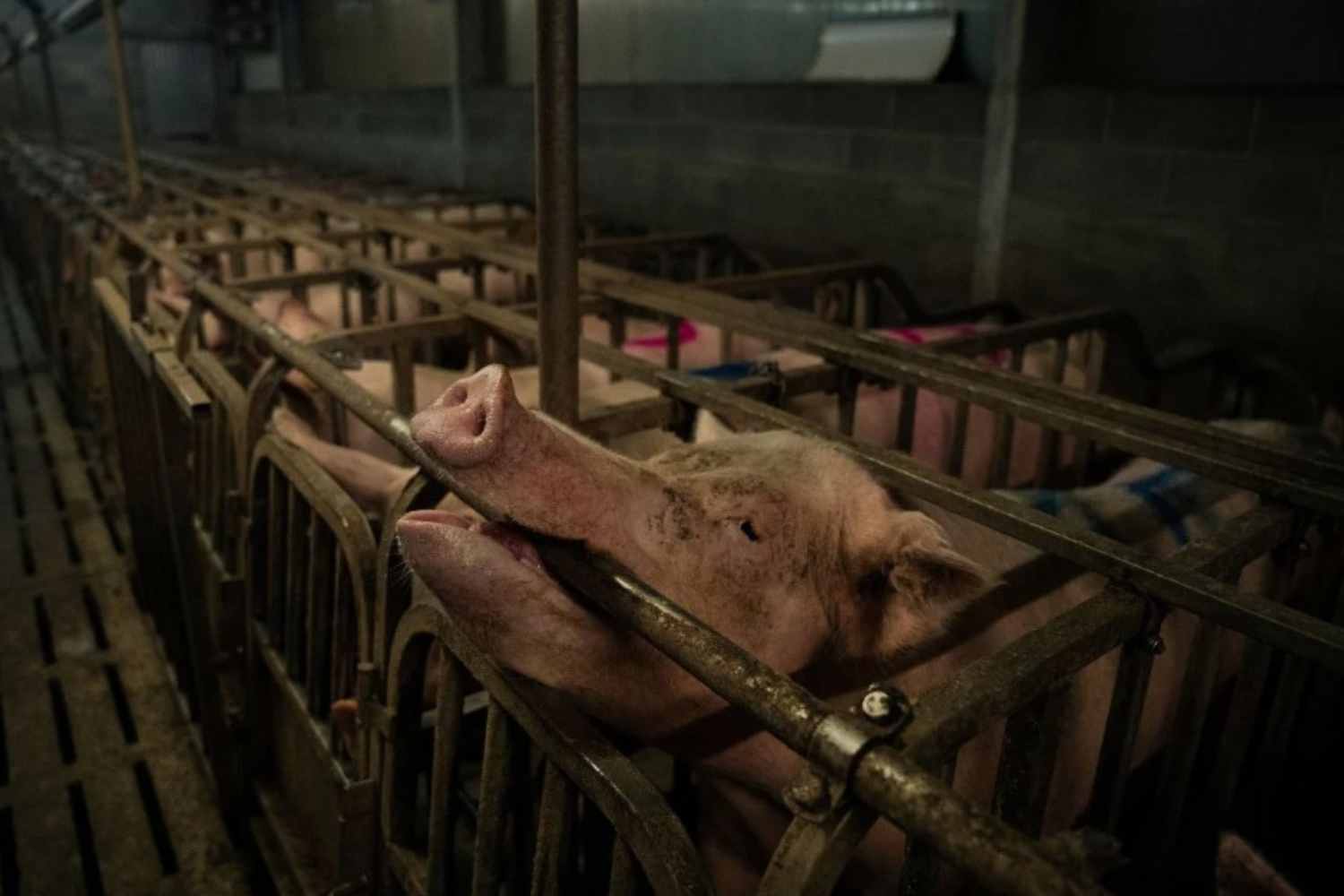
Piglet carcasses left to rot, injured and neglected animals, rats moving freely between cages, widespread dirt and cramped pens without any natural light. This is the dramatic reality documented by Greenpeace in an intensive pig farm in Roncoferraro, in the province of Mantua.
We are talking about the breeding of the La Pellegrina company, owned by the Veronesi Group which, as Greenpeace writes:
It is not a small unknown company, but a true giant in the sector, owner of well-known brands such as AIA, Negroni and Wudy, with annual revenues of billions.
Once again we find ourselves faced with an investigation that opens a glimpse into what too often remains hidden in intensive farming: real “meat factories” where the reassuring image of Made in Italy collapses, revealing a daily life made up of cruelty, systematic neglect and silent suffering of animals.
The investigation
The images released by Greenpeace tell of a real hell. In the pig pens, rats running around freely, dead piglets left between the bars, feces and dirt accumulating without any intervention. Some small corpses lie right where the sows have just lost their cubs: chilling details that highlight a reality of abandonment and systematic cruelty.
The presence of rodents is not a simple hygiene problem: every drop of urine, every excrement or carcass represents a vehicle for dangerous diseases such as salmonellosis, leptospirosis and toxoplasmosis. Feed can be contaminated, pipes damaged and pigs themselves exposed to very serious risks. A health degradation that should not exist in a civilized country.
The sows then show devastated bodies with open wounds, deep lacerations, uterine prolapses left without treatment, the result of cramped cages where they cannot even turn around. Remains of severed tails testify to mutilations practiced to contain the animals’ stress, while dead piglets remain abandoned for hours, invisible to the eyes of those who should take care of them.
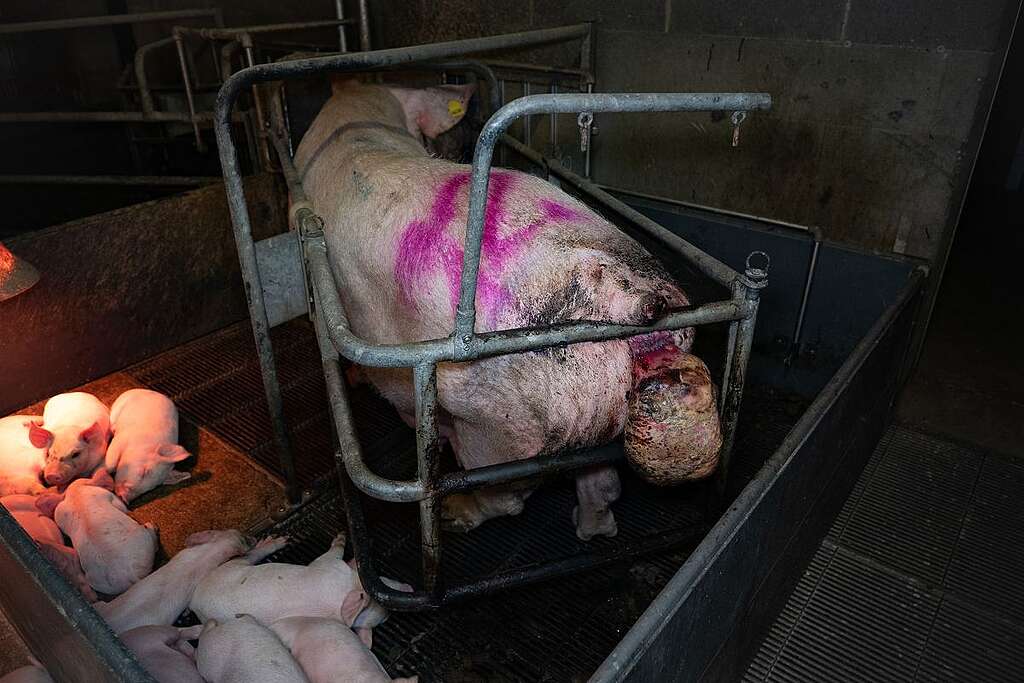
As if that wasn’t enough, Greenpeace has also documented the presence of hormonal drugs such as oxytocin, administered to speed up childbirth and stimulate milk production, and generic anti-inflammatories (ketoprofen). They are not prohibited, but their presence tells a picture of chronic illness and suffering.
And as a symbol of general neglect, there are also gloves abandoned in maternity wards which testify to the inability to apply minimum safety and hygiene protocols. Every detail tells of a sick system, where the lives of animals are really worth nothing.
Not only animal suffering but also environmental risk
The degradation does not stop inside the farm. Aerial footage shows sewage leaks from the waste disposal system: a mixture of feces and urine spilled directly onto company land. An announced environmental disaster, which could pollute land and aquifers a few kilometers from areas of great naturalistic value such as the Special Conservation Area of Vallazza, along the Mincio river.
Once again, the logic of profit prevails over that of protecting the environment and public health. And the La Pellegrina farm is just the tip of the iceberg of a rotten system.
As Greenpeace reminds us:
The complaint that was sent to us, and which we were able to independently verify by consulting legal and veterinary experts, is unfortunately not an isolated case. It is an integral part of an unsustainable system – that of intensive farming – based on a hyper-production mechanism that serves to support excessive meat consumption, enriches big brands, crushes small companies, pollutes production areas and puts at risk the health of those who live there and the food safety of all of us.
A bill to say enough is enough
Greenpeace and other associations have launched the bill “Beyond intensive farming”, which aims to reduce the number of animals raised in Italy, stop the expansion of “meat factories” and encourage an ecological transition towards sustainable and animal-friendly models. A proposal that still lies in Parliament, waiting to be discussed. And meanwhile, every day, millions of animals continue to live and die in unacceptable conditions.
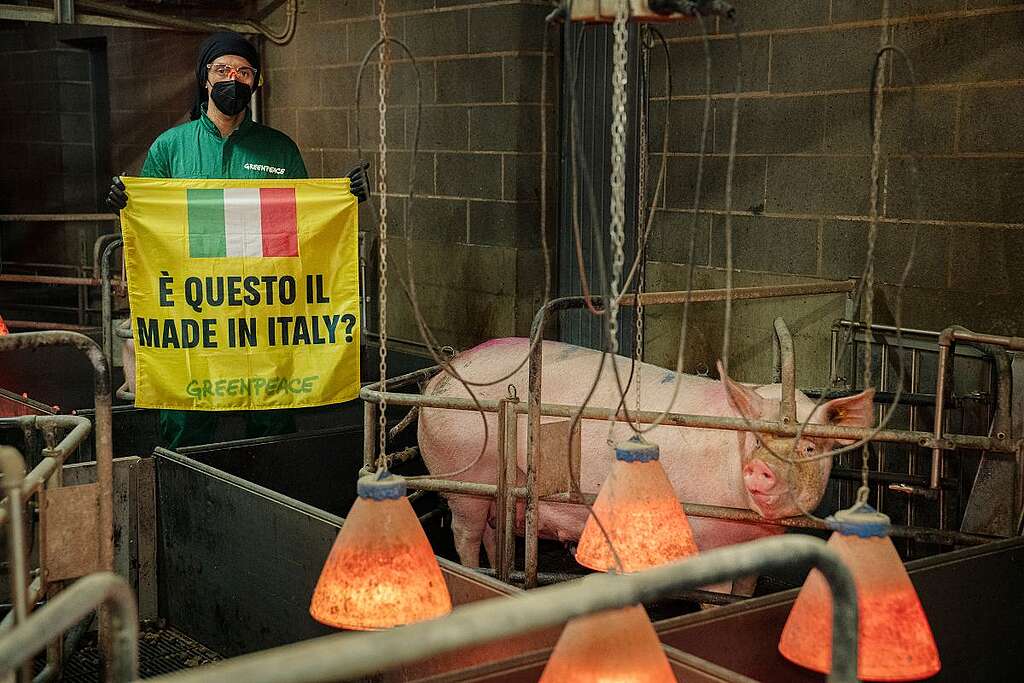
Is this Made in Italy? The question is inevitable. Faced with these images, it becomes difficult to talk about excellence, quality or tradition. Behind the brands we all know, a systemic horror is too often hidden.
HERE you can find the complete report.
