

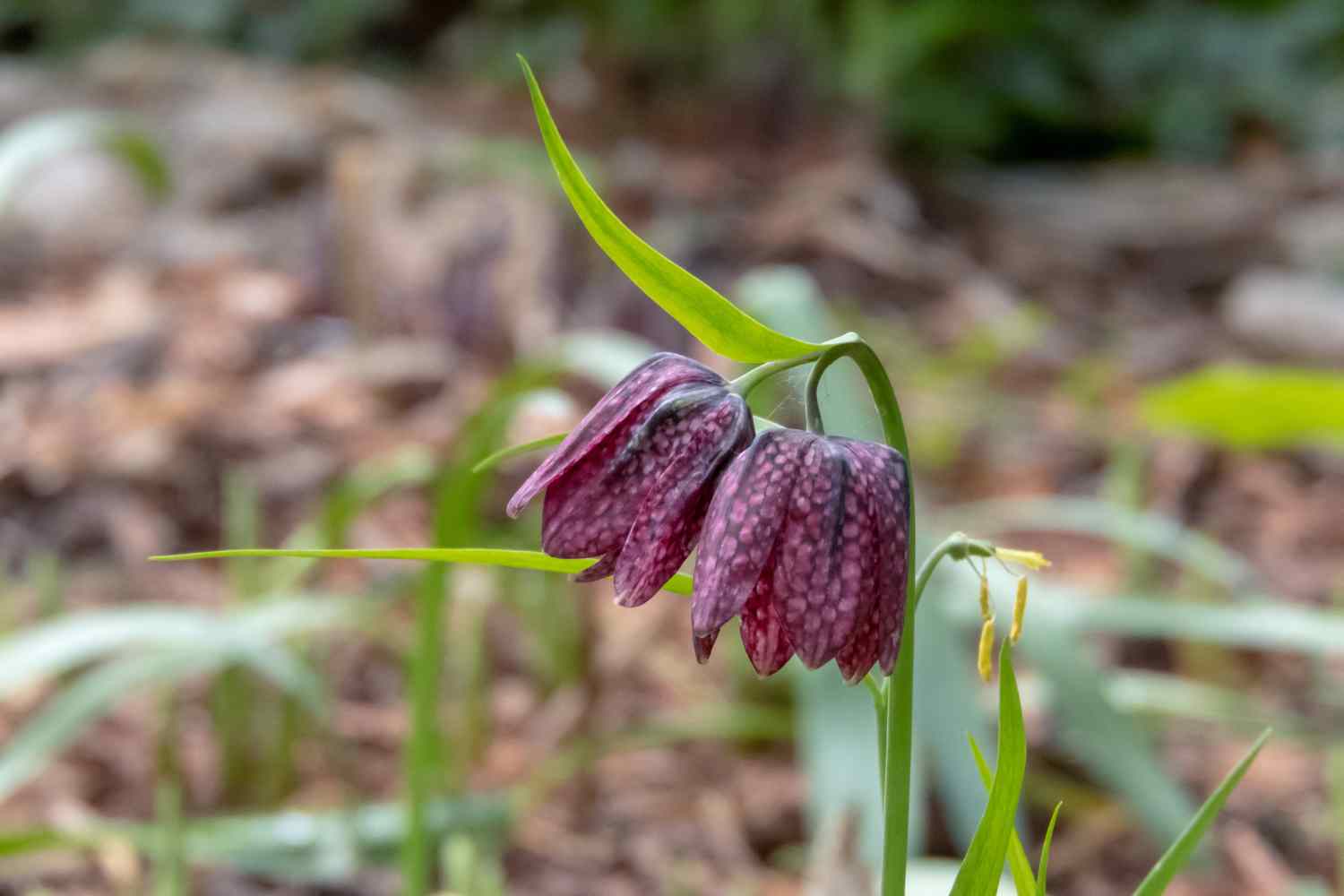
The Fritillary is one of those plants that are never forgotten. Elegant, different, with a demeanor that catches the eye even of those without a green thumb. Its flowering, which arrives in spring after months of underground rest, transforms the garden into a palette of colors ranging from bright orange to dark purple, passing through more delicate tones such as white and light green. It is a bulbous plant that is not satisfied with little: it needs the right soil, a careful hand and a well-used autumn season. But when it explodes, it offers satisfaction that few flowers can match.
Planted in autumn it flowers in spring
If you want to enjoy its flowering between March and April, you have to move in time. Fritillaria bulbs should be planted in autumn, ideally between September and November, when the soil is still workable but no longer warm. It is in those months that the plant begins to take root, silently preparing for the arrival of spring. If you wait too long, you risk seeing weak shoots or even no flowers appear. Autumn, for the Fritillaria, is not a season of pause, but of construction: its strength is decided precisely in those months.
Which soil to use
Compact or clayey soil condemns it to rot, and once the bulb deteriorates there is no way to save it. You need well-drained, soft soil rich in organic matter. If your soil is heavy, you can lighten it with sand or fine gravel to allow the water to drain away. There is no need to fertilize it too much: the plant does not like excess nutrition, especially nitrogen, which favors the leaves to the detriment of the flowers. The position also matters: full sun or light partial shade are ideal, while windy or too exposed areas can ruin the stems.
How to plant bulbs
Planting is a delicate but not complicated step. The bulbs should be planted at a depth equal to at least double their height, generally between fifteen and twenty centimeters. It is important to leave enough space between each one so that the roots and stems do not get in the way as the plant grows. For larger varieties, such as Fritillaria imperialis, it is useful to position the bulb slightly inclined. This simple trick prevents rainwater from stagnating on the top of the bulb and causing mold or rot. After arranging them, just cover with soil and water only once to settle the soil. Then you let nature do the rest.
How to protect bulbs during the winter
Once planted, the bulbs just need to rest. During the winter there is no need to intervene if the climate is rainy: the soil must remain slightly moist, never wet. If you live in an area where frosts are frequent or the ground tends to freeze on the surface, you can cover the area with a light mulch of dry leaves or straw.
However, be careful not to overdo it: as soon as the first buds begin to appear, the covering must be removed so as not to hinder growth. Winter is a silent rooting phase. The Fritillary works underground, preparing its spring show.
How to water and fertilize in spring
When the plant begins to emerge, the needs change. From March onwards, the soil must remain just moist, never soggy. Water only when the surface feels dry to the touch. If you grow it in a pot, check more often, because it dries out more quickly.
You can add a specific fertilizer for bulbous or flowering plants, preferably based on potassium and phosphorus, which stimulate flowering and strengthen the bulbs. Avoid products that are too rich in nitrogen: they make the leaves grow but weaken the flowers. After flowering, stop fertilizing: the plant must go into rest, not be pushed to produce anything else.
How to manage the plant after flowering
When the flowers wither, the temptation is to cut everything. Wrong, the leaves and stems need to stay in place until they turn yellow completely. It is at that time that the bulbs absorb the nutrients necessary to survive and flower again the following year.
Cutting too early means depriving them of energy and reducing future flowering. Only when the aerial part is completely dry can you intervene with shears. Afterwards, leave the bulbs in the ground or, if you want to move them, carefully remove them and store them in a cool, dry place until the following autumn.
How to divide bulbs to multiply the plant
After a few years, you may notice less abundant flowering. It is not a sign of decline, but simply of overcrowding. The main bulbs produce small lateral bulbils that over time consume space and nutrients.
At the end of summer, when the soil is dry and the plant is resting, you can extract the bulbs, clean them carefully and separate the more robust bulbils. The smaller ones can be replanted in a different area: they will take a couple of years to reach maturity, but they will produce new and vigorous plants. The mother bulbs, on the other hand, can return to their original place after having aerated and renewed the soil.
How to protect the Fritillary from diseases and parasites
The number one enemy of the Fritillary is excess water, which favors rot. But some insects can also become a problem. The red beetle, for example, feeds on the leaves, leaving visible holes and weakening the plant. It is better to periodically inspect the leaves and remove insects manually or with natural products.
Snails, attracted by tender shoots, can cause nocturnal damage. You can keep them away by creating barriers of ash or crushed eggshells, or with beer-based traps. In general, keeping the area clean and free of stagnant water drastically reduces the possibility of infestations.
How to evaluate plant health and correct errors
If your Fritillaria doesn’t flower, there is always a specific cause. There are three most common reasons: too wet soil, poor light or bulbs planted too deeply. Another frequent mistake is fertilizing too late or incorrectly. Look at the leaves: if they are yellow and soft already in spring, the problem is almost always an excess of water. If, however, they are green but no flowers appear, the bulb probably has not yet accumulated enough energy.
The good news is that the Fritillary is resilient. If you correct the conditions and give it time to regenerate, it will come back to flower strongly the following season. The key is consistency: drained soil, measured irrigation and the patience to wait for nature to follow its times.
How to get spectacular blooms every year
Fritillaria is not a plant for those who want immediate results, but for those who love the rhythm of the seasons. Every year, with the right care, it becomes stronger, bigger, more spectacular. The secret is to respect its natural cycle: preparation in autumn, rest in winter, explosion in spring and retreat in summer.
Those who learn to follow this rhythm discover that the Fritillary is not just an ornamental flower, but a small lesson in balance. It requires little, but that little must be done well. And when it blooms, with its hanging corollas and intense colors, you understand that the patience spent during the cold months has been repaid with interest.
