
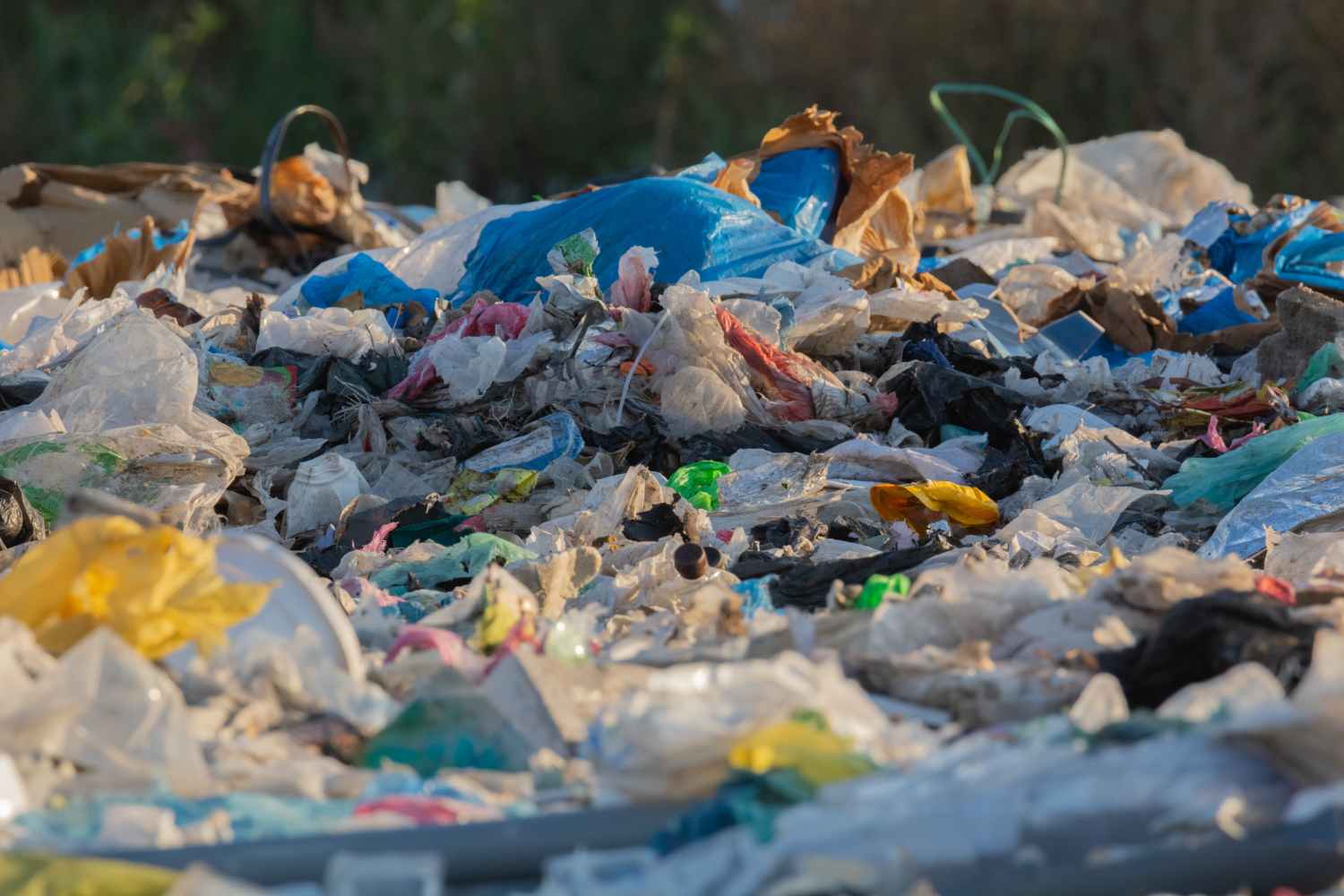
There is a precise date that marks the moment when our ability to manage plastic waste that we produce is officially overcome. For 2025, that day is today, September 5th. It’s called “Plastic Overshoot Day” and is a symbolic but dramatic indicator: from this moment until the end of the year, every single plastic object produced risks not being managed safely, transforming itself into potential pollution for the planet. It is estimated that about 616 thousand tons of plastic per day will risk ending up dispersing in the environment.
Calculated by the EA EA – Earth Action, this “Overload Day” puts us in front of an alarming reality. By the end of 2025, 72.1 million tons of plastic is expected will not be correctly managed globally. A problem fed by per capita consumption which, on average, reaches 28 kilograms of plastic per year. Faced with these data, the WWF Italia has launched the #plasticfreeweek, an initiative on social media to promote practical advice and raise awareness of the urgency of acting.
The situation in Italy: better than the average, but that’s not enough
Each country has its own specific plastic overshoot day, which varies according to the production of waste and the efficiency of national management systems. For Italy, the date is set for October 24th. Although this sets us in a better condition than the world average, we are late than more virtuous nations such as Germany and Spain, which reach their limit in November, or Switzerland and France, which even touch it in December.
From the environment to our body: the risks to health
But the plastic crisis is no longer just an environmental question. Its consequences on human health are increasingly evident and worrying. “Plastic dispersion is not a problem just for nature, as it was once thought,” explained Eva Alessi, a sustainability manager of WWF Italia in a press release. “More and more evidence show direct consequences also for human health: in some analyzes up to 7 grams of microplastics in the human brain, raising concerns on potential neurological effects have been detected. The microplastics have been found in the blood, in breast milk, in the liver, in the kidneys, in the lungs and in the placenta, suggesting that they can cross fundamental biological barriers”. As the expert pointed out, some chemical additives such as phthalates and bisfenol A, are also associated with “hormonal dysfunctions, infertility and development disorders in children”.
What to do? The proposals to reverse the route
To face this systemic emergency, the WWF asks the Italian government to adopt concrete policies. Among the proposals, the extension of separate collection to all production sectors and not only to packaging, the introduction of taxes on the use of virgin plastic to discuss their production, and the offer of incentives for reuse -based solutions. It is also crucial to enhancing waste management infrastructures to overcome territorial disparities that still afflict our country. The Plastic Overshoot Day is an opportunity for governments, companies and citizens to collaborate and act, following the philosophy of the “4R”: reduce, reuse, recycle, recover.
Don’t you want to lose our news?
